


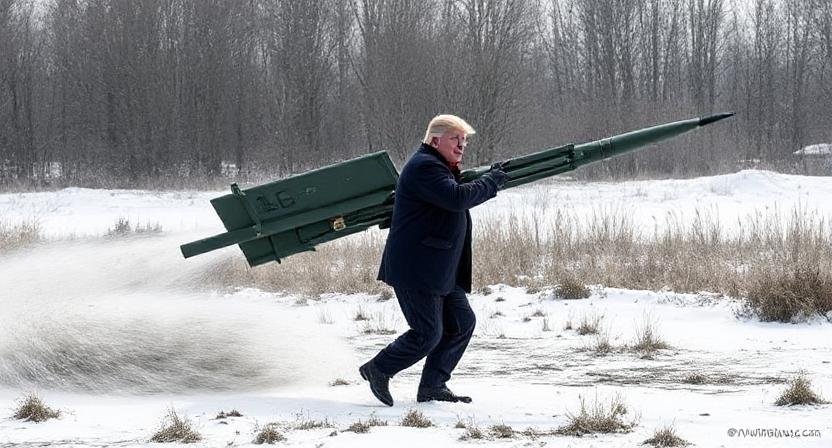
- Trump warns the Russia-Ukraine war is far from over, citing limited Patriot missile availability and shifting U.S. focus.
- Kyiv faces uncertainty as Trump offers ambiguous support, raising questions about whether Patriot systems will be donated or sold.
- Middle East tensions may be overshadowing Ukraine, with Trump prioritizing strikes on Iran and peace mediation in the region.
- Lack of new sanctions on Russia signals caution, prompting concerns about weakening Western resolve and diplomatic momentum.
At the NATO summit in The Hague, U.S. President Donald J. Trump did not mince words when asked about the trajectory of the Russia-Ukraine war. “I don’t think it’s likely to end soon,” he said. That sobering remark—delivered alongside a vague offer of Patriot air defense systems to Ukraine—underscores the challenges facing Kyiv, the West, and President Trump’s evolving foreign policy.
Now into its third year, the Russia-Ukraine conflict has entered a deadly stalemate. Neither side appears ready for compromise. Russia is ramping up its missile assaults, and Ukraine is exhausting its air defense stockpiles.
Read More:
For President Trump, the challenge is to maintain support for Ukraine without overcommitting U.S. resources, especially as Washington is increasingly consumed by tensions in the Middle East.
Patriot Missiles: Lifeline or Bait?
At the summit, President Trump revealed that his administration is considering providing Patriot missile systems to Ukraine. However, the language he used was cautious. “We’re going to see if we can make some available,” he said—stopping short of pledging direct military aid. It remains unclear whether the U.S. would donate these systems, as was done under President Biden, or sell them to Ukraine.
This ambiguity fits Trump’s transactional leadership style. He has long emphasized deals over donations, and air defense systems like the Patriot are in high demand. The U.S. is already supplying some to Israel amid escalating tensions with Iran. For Kyiv, that means even potential purchases are uncertain.
In April, President Volodymyr Zelensky proposed buying ten Patriot systems—worth nearly $15 billion. Trump’s response now suggests that even a purchase may hinge on larger diplomatic considerations.
A Difficult but Strategic Alliance
The relationship between Trump and Zelensky is complex—characterized by open arguments, delayed meetings, and political undercurrents. Their planned meeting at the G7 summit in Canada was scrapped due to Trump’s sudden return to Washington to deal with the Israel-Iran conflict. Prior Oval Office interactions had been tense, even embarrassing. Yet Zelensky described their recent NATO meeting as “meaningful.”
READ MORE: Trump Says He May Send Additional Patriot Systems to Ukraine
It’s clear Zelensky wants Trump’s backing—not only for weapons but for political cover. However, Trump’s focus appears divided. At his press conference, the President devoted more time to recent U.S. strikes on Iranian nuclear sites than to Ukraine’s urgent security needs. The optics were unmistakable: the Middle East is once again dominating America’s strategic bandwidth.
Why Trump Thinks the War Won’t End Soon
Trump’s dim forecast for Ukraine’s war has multiple layers. First, Russia’s President Vladimir Putin shows no interest in compromise. Trump even acknowledged the possibility that Putin “harbors territorial ambitions beyond Ukraine.” Yet, he offered no concrete strategy to counteract that threat—only vague allusions to wanting peace “sooner rather than later.”
Second, there is growing NATO fatigue. European allies are grappling with their own economic woes, rising populism, and shifting threat perceptions. If Washington signals even partial disengagement, the rest of NATO may follow suit.
ALSO READ: America Bombs Iran’s Nuclear Sites: What Triggered Trump and What Comes Next?
Third, the U.S. has only so many military resources. Patriot systems are not only expensive—they’re also limited. Trump’s warning that they’re “very hard to get” reveals a reality of defense logistics and strained supply chains. The implicit message to Ukraine: be patient—or pay.
Escalation or Strategic Balance?
For Moscow, even the possibility of fresh U.S. Patriots in Ukraine may be seen as a hostile escalation. Though primarily defensive, these systems could shield Ukrainian infrastructure, buy Kyiv breathing room, and tilt battlefield dynamics. Whether Trump’s announcement was meant to deter Russia or pressure Putin to negotiate remains unclear.
Zelensky himself acknowledged the tightrope. Speaking to Sky News, he said he hopes Trump’s mild tone toward Putin is tactical. “Let us hope so,” he remarked, hoping it reflects a behind-the-scenes effort to bring Russia to the table—not appeasement.
Yet, President Trump’s reluctance to endorse further sanctions on Russia tells a different story. A bipartisan bill proposing sweeping sanctions has been stalled in the Senate, reportedly waiting for Trump’s nod. That nod hasn’t come.
The Bigger Picture: Is Ukraine Losing Washington?
For Ukraine, the most dangerous development may not be Russia’s missiles—but Washington’s shifting priorities. The focus on Iran, the reluctance to deliver decisive support, and Trump’s cool stance on sanctions all suggest that Ukraine could soon lose its central place in U.S. strategic thinking.
Zelensky’s attendance at the NATO summit was meant to rally allies and keep Ukraine at the top of their agenda. But the President of the United States—leader of the free world—was more preoccupied with Iran. That alone speaks volumes.
Conclusion: Caught in the Crosswinds
President Trump’s latest moves offer little clarity but plenty of insight. He wants the war in Ukraine to end—but not at any cost. He may support Ukraine’s defense—but only within logistical and political limits. He wants peace—but isn’t pushing new sanctions or decisive diplomacy.
If Trump does provide Patriot systems, they may serve more as bargaining chips than battlefield game-changers. Whether they deter Putin—or provoke him—depends on what comes next. For now, Ukraine remains trapped between Russia’s aggression and the West’s divided will.