


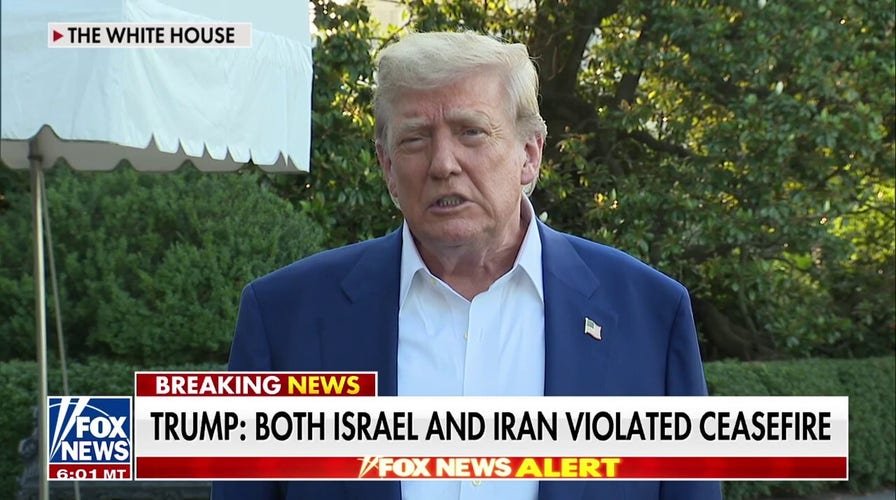
- Trump Iran War Airman Rescue shifts public opinion, giving the president renewed political momentum
- Dramatic extraction of downed U.S. airman becomes a symbolic victory amid rising war casualties
- Donald Trump hints at unprecedented military escalation targeting Iran’s infrastructure
- Ongoing conflict between Iran and Israel continues to destabilize the Middle East and global energy markets
The dramatic rescue of a stranded U.S. airman deep inside Iranian territory has handed President Donald Trump a powerful political lifeline at a moment when his leadership was under mounting scrutiny. What began as a battlefield crisis quickly transformed into a moment of triumph, reshaping the narrative of a war that has otherwise weighed heavily on public opinion across the United States.
Just days earlier, Trump had been facing one of the most precarious episodes of his presidency. The downing of a U.S. F-15E fighter jet and the capture risk facing one of its crew members inside Iran threatened to deepen skepticism about the war effort. With American casualties rising and no clear end in sight, critics were growing louder, and polls suggested declining support for continued military engagement.
But the successful Easter weekend rescue operation changed everything.
Asim Munir Iran War Diplomacy: How Pakistan’s Field Marshal Convinced Trump to Delay Strike on Iran
Standing before a crowd of energized supporters, Trump announced the safe recovery of the airman with visible confidence. The moment, broadcast widely across U.S. media, was met with thunderous applause. Supporters waved flags, chanted slogans, and celebrated what Trump framed as a testament to American strength and military superiority. The president leaned heavily into the symbolism of the operation, portraying it as a daring, high-stakes mission that demonstrated his command and decisiveness.
“This is what strength looks like,” Trump declared, casting the rescue as a turning point not only in the war but in his presidency.
Trump seizes on rescue of downed airman to recast unpopular Iran war
The political impact was immediate. Analysts note that the successful extraction helped Trump regain momentum with his base, many of whom had begun to question the cost and direction of the conflict. The imagery of a rescued American serviceman—brought home against the odds—resonated deeply, tapping into a long-standing narrative of U.S. military resilience.
Sources close to the president told this reporter that the operation has injected a renewed sense of confidence into Trump’s inner circle. According to these insiders, the president now feels politically emboldened, interpreting the public reaction as a mandate for stronger action.
That confidence, however, may carry significant consequences.
Oil Prices Surge Iran War: Singapore, Japan and China Brace for Shock as Trump Ultimatum Nears Deadline
Behind closed doors, discussions have reportedly intensified حول a potential large-scale military strike on Iran. One senior source described it as the “mother of all attacks,” suggesting that the administration is considering options that could dramatically escalate the conflict. While no official decision has been announced, the rhetoric from Trump himself has grown increasingly aggressive.
Speaking to reporters, Trump warned that Iran could face unprecedented destruction if it fails to meet U.S. demands. He spoke of targeting critical infrastructure, including power plants and transport networks, in what would mark one of the most severe military campaigns in decades.
The timing of these threats comes as the Middle East remains engulfed in crisis. Iran and Israel continue to exchange strikes, with casualties mounting on both sides. Israeli forces have intensified air raids on Iranian infrastructure, while Tehran has responded with missile launches and regional pressure tactics.
The situation has spilled beyond the immediate conflict zone. Saudi Arabia has intercepted multiple projectiles targeting its eastern regions, and neighboring Gulf states have issued public safety warnings amid fears of wider escalation. Meanwhile, Iran’s effective closure of the Strait of Hormuz—a critical artery for global energy supplies—has sent oil prices soaring above $110 per barrel, fueling economic anxiety worldwide.
Diplomatic efforts have so far failed to produce a breakthrough. A ceasefire proposal reportedly backed by Pakistan was rejected by Tehran, which has instead outlined its own conditions, including sanctions relief and regional de-escalation measures.
Despite the mounting risks, Trump has shown little sign of retreat. He has dismissed concerns about the humanitarian and legal implications of striking civilian infrastructure, insisting that decisive action may be necessary to force Iran into compliance.
For now, the rescue of a single airman has reshaped the political landscape in Washington, offering Trump a moment of strength amid uncertainty. But as the drums of escalation grow louder, the question remains whether that moment will lead to a broader military confrontation—one that could define not just Trump’s presidency, but the future of the Middle East.