


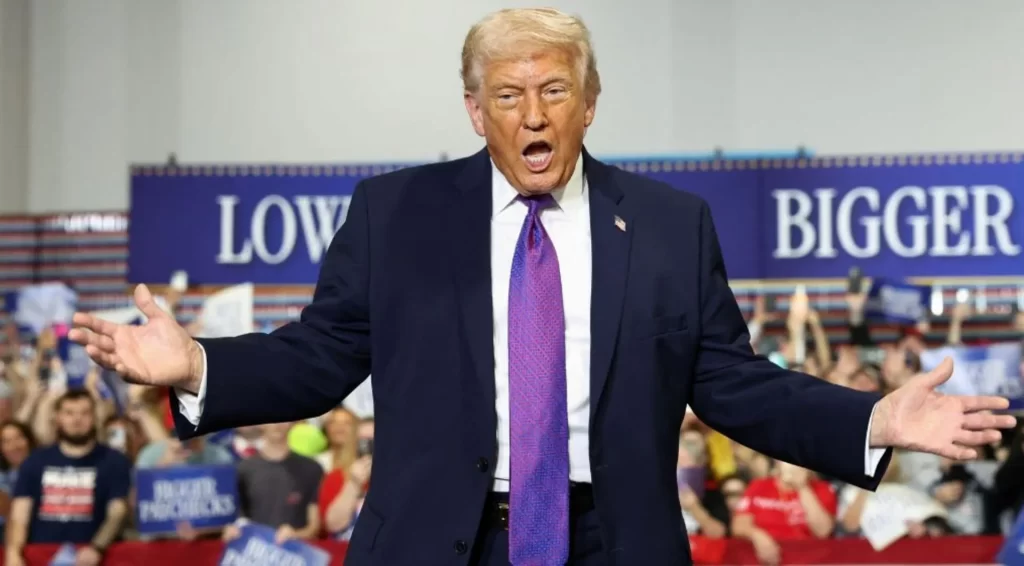
- Trump Iran War Exit Plan signals a possible end within weeks, but troop buildup raises concerns
- Backchannel diplomacy intensifies as Rubio confirms indirect US-Iran communication
- Iran threatens US tech giants while maintaining pressure through Hormuz disruption
- Pakistan and China push coordinated diplomatic framework to prevent wider regional war
In a week defined by contradictions, brinkmanship, and cautious diplomacy, the war between the United States and Iran appears to be approaching a turning point—yet not necessarily an end. With Donald Trump preparing to address the nation on Wednesday night, insiders suggest he will strike a triumphant tone, framing recent military operations as a strategic victory while unveiling what he calls a “roadmap to end Iran.” But behind the rhetoric, a far more complex and uncertain reality is unfolding.
According to senior officials, Trump is expected to declare that the United States could wrap up its military campaign within “two to three weeks.” At the same time, however, the administration is quietly reinforcing its military footprint in the region, deploying additional ground troops and maintaining pressure on Iranian command structures. This dual-track strategy—declaring victory while expanding presence—has raised alarms among foreign policy analysts, who warn that the conflict may enter a prolonged and destabilizing phase rather than conclude.
US Secretary of State Marco Rubio confirmed that backchannel communications with Tehran are underway, hinting at a possible diplomatic opening. “There are messages being exchanged. There is the potential for a direct meeting at some point,” Rubio said, while cautioning that Washington would not tolerate “fake negotiations” designed to stall military momentum. Despite this, Iranian officials, including Foreign Minister Abbas Araghchi, have publicly denied that formal negotiations are taking place, though they acknowledge receiving indirect messages.
Trump says US could be done with Iran war within 2 or 3 weeks
Defense Secretary Pete Hegseth has taken a harder line, emphasizing that the US objective remains the dismantling of Iran’s missile infrastructure and its ability to finance regional proxies. Pentagon sources indicate that recent strikes have significantly degraded Iran’s missile production capabilities, but have not eliminated them entirely—raising the prospect of continued low-intensity conflict.
On the Iranian side, the response has been defiant. Statements attributed to the Islamic Revolutionary Guard Corps warn of expanded retaliation if US operations continue or if senior Iranian leaders are targeted. Tehran has also escalated its economic warfare, threatening 17 major American corporations—including tech giants—with potential cyber and physical attacks, signaling a widening battlefield beyond traditional military domains.
Hormuz Crisis: Singapore’s “Great Reset” Amid Pakistan’s High-Stakes Diplomacy
Iranian President Ebrahim Raisi has adopted a more measured tone, indicating that Tehran is open to ending the conflict—but only if credible guarantees are provided that any agreement with Washington will be honored. “We will not repeat past mistakes,” he reportedly said, referencing previous failed agreements that unraveled amid shifting US policies.
Meanwhile, the global economic impact of the conflict continues to reverberate. The selective blockade of the Strait of Hormuz—one of the world’s most critical energy chokepoints—has disrupted maritime trade, driven up insurance costs, and pushed US gasoline prices to $4 per gallon, their highest level since 2022. Despite Trump’s assurances that prices will fall quickly after the war, analysts caution that supply chain disruptions and security risks could persist for months.
The situation has drawn in major global players. Pakistan has quietly intensified its diplomatic efforts, hosting backchannel discussions and urging de-escalation among regional stakeholders. Officials in Islamabad are working closely with allies to prevent the conflict from spilling over into a broader regional war. At the same time, China has stepped more visibly into the crisis, aligning with Pakistan in proposing a five-point framework aimed at immediate ceasefire, protection of maritime routes, and initiation of multilateral talks.
Financial markets, ever sensitive to geopolitical signals, have responded with cautious optimism. Asian indices surged following indications from Washington that the war may soon wind down, with Japan’s Nikkei 225 and South Korea’s Kospi posting significant gains. Yet this rally masks deeper structural concerns. The shipping industry—responsible for transporting 90% of global goods—remains under severe strain, with seafarer safety, insurance premiums, and navigational risks all posing ongoing challenges.
At the heart of the uncertainty lies one unresolved question: what happens after Trump’s declaration of victory? His assertion that the United States will have “nothing to do with” reopening the Strait of Hormuz has alarmed allies, who fear a power vacuum in one of the world’s most strategic waterways.
For now, the world watches as Washington prepares its narrative of closure, even as the machinery of war continues to move. The coming days—particularly Trump’s address—may shape perceptions of the conflict’s end. But on the ground, and across global markets, the aftershocks of this war are only just beginning.