


-
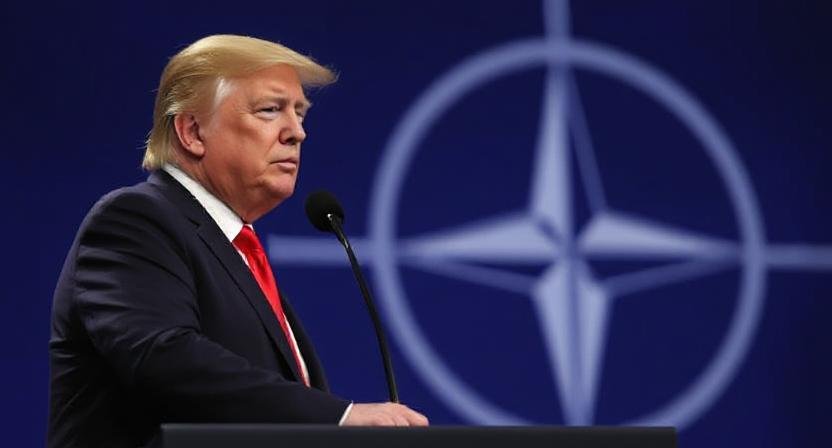
Trump arrives at the NATO Summit as a potential peacemaker after claiming to broker an Iran-Israel ceasefire.
-
The summit’s main focus is ending the Russia-Ukraine war, with European leaders wary of Trump’s unpredictability.
-
NATO divisions over defence spending and Ukraine’s future membership could undercut unity.
-
The world awaits whether Trump can apply his unique diplomacy to forge peace in Europe.
As the world’s most powerful leaders converge on The Hague for the 2025 NATO Summit beginning Tuesday, one figure will undoubtedly dominate global attention—Donald J. Trump. The American president, fresh off brokering a surprise ceasefire between Iran and Israel, arrives in Europe not merely as a participant but as a potential peacemaker.
With the Russia-Ukraine war grinding into its fourth year, the pressing question at the summit is whether Trump—recently nominated for the Nobel Peace Prize by Pakistan—can replicate his Middle East success and broker an end to Europe’s deadliest conflict since World War II.
A War at the Center of the NATO Summit
This year’s summit will be chaired by NATO Secretary General Mark Rutte and will be attended by all 32 NATO heads of state or government, Ukraine’s President Volodymyr Zelenskyy, and key global allies from Asia and the Pacific. But the primary focus will remain the same as in recent years: Russia’s full-scale invasion of Ukraine and the alliance’s future response.
Trump Pulls Off Surprise Peace Deal: Iran, Israel Agree to Ceasefire After Qatari Mediation
The stakes are high. More than 500,000 people have been killed, millions displaced, and entire Ukrainian cities flattened. The West continues to pour billions into Ukraine’s resistance, yet a decisive military victory remains elusive. The 2024 pledge of €50 billion annually in military aid has not ended the war—if anything, it has hardened Russian resolve. Now, Trump enters with a promise made on the campaign trail: to “end the war in 24 hours.”
Whether or not that rhetoric holds water, Trump’s recent diplomacy in the Middle East—where he reportedly facilitated an Iran-Israel ceasefire within hours of Tehran’s missile strike on U.S. assets in Qatar—has reinvigorated talk of American leverage on the world stage. It’s also renewed hopes that Trump’s unique brand of pressure politics and transactional diplomacy might force both Kyiv and Moscow to the negotiating table.
NATO in a New Era of Disunity
Unlike past summits, this one is marred by strategic discord among members. From Spain’s flat-out rejection of a proposed 5% GDP defence spending goal to Hungary’s pro-Russia leanings, NATO appears less unified than ever. Trump’s criticism of “freeloading” allies has reignited tensions over burden sharing. Washington currently contributes 15.8% to NATO’s annual $3.5 billion budget, while key members like Canada, Italy, and Portugal still fall short of the 2% threshold agreed to in 2023.
READ MORE: Who is attending the NATO summit and what’s on the agenda?
In May, U.S. NATO envoy Matthew Whitaker bluntly declared, “5 percent is our number.” Trump’s administration insists that NATO allies must not just prepare for war—but pay for it. European leaders, especially those from Germany and France, are scrambling to prevent the perception of a divided alliance just as Moscow watches for weaknesses it can exploit.
This intra-NATO fragmentation complicates any push for a united front on Ukraine, particularly with Trump’s own ambivalence toward Kyiv. His icy February meeting with Zelenskyy, in which the Ukrainian leader was sharply rebuked, did not go unnoticed in Eastern European capitals.
Can Trump Broker Peace in Ukraine?
If Trump intends to use the NATO summit as a launchpad for diplomacy, it would be the most audacious move of his second term so far. He already claims victory in the Middle East, and Pakistan’s nomination of him for the Nobel Peace Prize adds symbolic momentum. But Ukraine is a different beast entirely. Unlike Iran and Israel, Russia holds the world’s largest nuclear arsenal, and any negotiation carries the weight of NATO’s Article 5 commitment—a red line Trump has previously wavered on.
ALSO READ: How the U.S, Iran Clash Is Reshaping the Middle East: Key Impacts on Energy, Markets, and Regional Stability
Nevertheless, Trump’s unpredictability may work in his favor. His reputation as an outsider willing to flout diplomatic norms—such as his overtures to Kim Jong-un or his impromptu summits with Vladimir Putin—means leaders are watching carefully. If anyone could push Zelenskyy and Putin toward a ceasefire that salvages some face for both, it might be the very man NATO feared would abandon it.
Yet there are serious obstacles. Ukraine is unlikely to agree to a peace that concedes any occupied territory, and Russia is unlikely to withdraw without significant concessions. Trump’s vision of a “deal” may involve painful compromises that neither side can yet stomach. But with Western arms stockpiles thinning, public support for indefinite war waning, and Europe mired in economic fatigue, time may be on Trump’s side.
The Ghost of NATO’s Future
Also looming over the summit is the question of NATO’s long-term viability. With rising calls for EU-led defence structures and potential U.S. disengagement, the alliance is at a crossroads. The Financial Times reports that informal talks among European members have already begun on ways to finance and organize defence more independently of Washington, should Trump eventually walk away from NATO altogether.
European leaders—particularly the UK’s Keir Starmer, Germany’s Friedrich Merz, and France’s Emmanuel Macron—are expected to push back against Trump’s fiscal demands while trying to preserve transatlantic unity. However, the uncomfortable reality is that NATO’s ability to project strength still hinges largely on U.S. commitment. That, in turn, depends on Trump.
The Hague Summit, then, is about more than Ukraine. It is about whether NATO can endure as a coherent, functional alliance in a multipolar world. It is about whether Trump, a man long seen as NATO’s greatest critic, could emerge as its most consequential player—not by tearing it down, but by delivering peace where others have failed.
A Moment of Reckoning
As the sun rises over The Hague on Tuesday, the world will be watching not just for policy statements and photo ops, but for breakthroughs. The Ukraine war has become the West’s open wound, draining resources, unity, and resolve. If Trump—buoyed by his Middle East success and Pakistan’s unprecedented peace nomination—can begin to close that wound, it would mark a historic turning point.
The 2025 NATO Summit could end like many others: with lofty declarations and little progress. Or it could be remembered as the moment Trump, the statesman with a reputation for doing the unthinkable, turned from a disruptor into a peacemaker.