


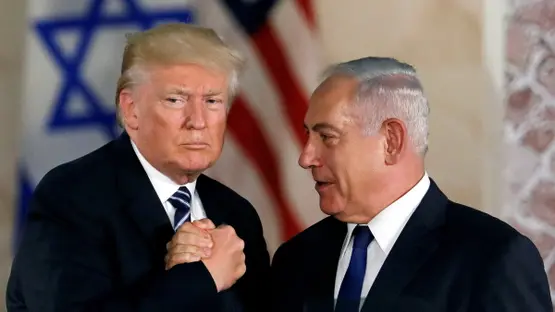
- Trump and Netanyahu’s Gaza plan faces contradictions over Palestinian statehood.
- Arab states demand a two-state roadmap; Israel resists.
- Hamas refuses disarmament and questions feasibility of hostage releases.
- The plan risks becoming political theater, not a pathway to peace.
At the White House, President Donald Trump and Israeli Prime Minister Benjamin Netanyahu are preparing to sell the world a shiny new cease-fire plan for Gaza. Expect the optics: the handshakes, the grandiose promises, the triumphant declarations of “peace.” But strip away the ceremony, and what remains is a hollow proposal designed more for political theater than for solving one of the most combustible conflicts of our time.
The so-called Trump plan is ambitious in form, fragile in substance. It demands that Hamas release up to 20 hostages within 48 hours, surrender its weapons, and allow its leaders safe passage out of Gaza. In return, Israeli forces would withdraw, an Arab-led stabilization force would move in, and a transitional government would oversee the ruins of the enclave. On paper, it looks neat. In reality, it is naïve at best and disingenuous at worst.
Let us start with the contradictions. Netanyahu has staked his political career on rejecting the very foundation of this plan: Palestinian statehood. He thundered at the United Nations that Israel will never permit such a state. And yet, Trump’s proposal leaves the door ajar for it. Which version should we believe? The defiant Netanyahu who panders to his far-right coalition, or the Netanyahu who smiles in Washington for the cameras?
Then there is the Arab dimension. Saudi Arabia and Egypt insist on a clear pathway to a two-state solution and demand a role for the Palestinian Authority in Gaza. Without it, Saudi money will not flow. But Netanyahu’s coalition thrives on strangling the PA’s legitimacy, not empowering it. The contradictions are not minor—they are fatal.
And what of Hamas? The group flatly refuses to disarm, rejects the plan’s timelines, and admits it has lost track of hostages held by splinter factions. How can a cease-fire rest on conditions that one side openly says it cannot meet? It cannot. This is not diplomacy—it is wishful thinking dressed up in diplomatic jargon.
For Trump, the motivation is painfully obvious: he wants to claim a diplomatic victory, any victory, to bolster his image as a dealmaker. For Netanyahu, the incentive is survival. Critics at home accuse him of prolonging the war to appease far-right allies. Hostage families march in the streets, demanding he put lives above politics. Both men face domestic pressures, and both see in this plan not peace, but political lifelines.
But here is the bitter truth: Gaza is not a photo-op, nor can it be managed like a real estate deal. Transitional forces and paper agreements mean nothing if the central question—Palestinian self-determination—is ignored. Netanyahu has built his career denying it. Hamas sustains its existence demanding it. Arab states insist on it as the price of their support. Until this reality is faced, every “cease-fire plan” will collapse under the same weight of denial.
Trump and Netanyahu may emerge from the White House smiling, proclaiming unity. The headlines will speak of breakthroughs. But the people of Gaza will return to their ruins, hostages may remain in captivity, and Israelis will continue to live under the shadow of rockets. Because peace cannot be forged through illusions. It requires recognition, sovereignty, and courage—three things in short supply at this summit.
Peace in Gaza cannot be staged through handshakes in Washington. Without addressing Palestinian sovereignty, Israeli security, and Arab consensus, every deal will remain fragile theater. Trump and Netanyahu may claim a breakthrough, but unless the plan recognizes realities on the ground, it will collapse—another illusion in the long history of failed peace efforts.