


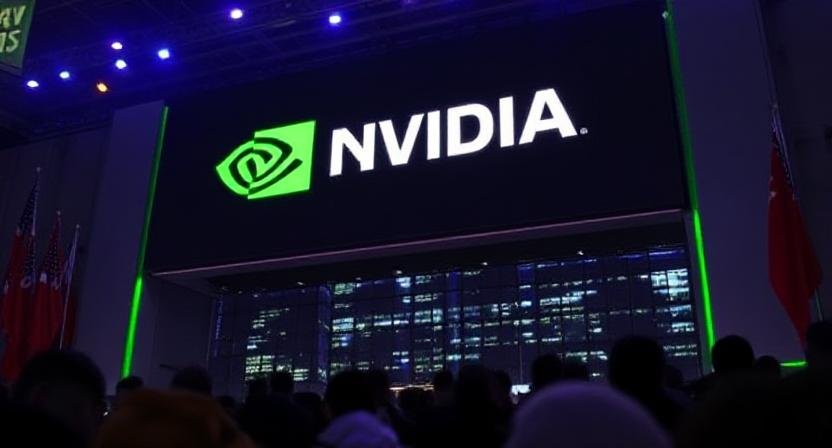
- Trump administration approves NVIDIA H20 chip shipments to China, signaling willingness to ease tech-related trade barriers amid renewed U.S.-China negotiations.
- White House adviser Kevin Hassett says the move aims to keep the U.S. ahead in AI technology, warning that a total chip ban could accelerate China’s domestic innovation.
- U.S. Treasury Secretary Scott Bessent calls bilateral talks in Stockholm “robust and highly satisfactory,” suggesting both sides are seeking common ground on economic issues.
- Analysts see the shipment as a positive sign that Trump and China may be preparing to dismantle broader tariff and trade restrictions—good news for global markets.
In a significant move amid ongoing U.S.-China trade talks, the Trump administration has approved the shipment of advanced NVIDIA H20 AI chips to China, a decision being seen as a potential game-changer in resetting fraught economic ties between the world’s two largest economies.
The green light, confirmed by White House National Economic Adviser Kevin Hassett, marks a notable shift from previous U.S. restrictions on advanced semiconductor exports to China. While the H20 chips are a watered-down version of the full-power AI processors sold in the West, their export nonetheless opens the door to renewed cooperation in a sector long at the heart of U.S.-China rivalry.
“President Trump and his team decided to let the NVIDIA chips go,” Hassett told Fox News, emphasizing that the administration’s primary concern is preventing China from surpassing the U.S. in the global semiconductor race. “One of the risks that you have to take seriously is that if China’s not buying chips from us, then they’re innovating, making their own chips. And the one thing we don’t want is for them to jump ahead in the race for chips.”
Exclusive: U.S. and China Resume Trade Talks in Stockholm Amid Global Economic Crossroads
The decision comes after NVIDIA (NASDAQ: NVDA) announced two weeks ago that it had filed for government licenses to resume sales of its H20 chips to Chinese clients. The U.S. Department of Commerce reportedly assured the tech giant that approval was imminent, a promise now fulfilled.
The H20 chip, specifically designed to comply with U.S. export restrictions, is the most advanced AI product NVIDIA can legally sell in China. Although it falls short in computing power compared to its unrestricted counterparts, its availability has been crucial for China’s booming AI and data center industries.
A Thaw in the Tech Cold War
The timing of the shipment approval is no coincidence. It coincides with a second round of high-level trade negotiations between U.S. and Chinese officials in Stockholm. U.S. Treasury Secretary Scott Bessent described the talks as “far-reaching, robust and highly satisfactory,” though he clarified that contentious issues like TikTok and Taiwan were not on the table.
READ MORE: US allowed Nvidia chip shipments to China to go forward, Hassett says
Bessent added that American negotiators are pushing China to transition from an export-heavy manufacturing economy to a more balanced, consumer-driven model. “That’s where sustainable trade and economic symmetry lies,” he said in an interview with CNBC.
Analysts See Early Signs of De-escalation
Trade analysts are interpreting the chip shipment as a calculated gesture from the Trump administration to ease tensions and signal openness to compromise.
“Allowing these chip exports is Trump’s way of resetting the tone,” said Emily Foster, a senior fellow at the Atlantic Council. “It’s not just about semiconductors. It’s about creating political room to negotiate bigger deals.”
ALSO READ: EXCLUSIVE: Trump Greenlights Nvidia’s Return to China After CEO’s Personal Plea
Others believe the gesture shows the administration is willing to balance national security with pragmatic trade objectives.
“Preventing China from buying U.S. chips entirely might sound tough, but it risks accelerating China’s drive toward chip independence,” said Professor Li Wen, a trade economist at Peking University. “The U.S. wants to lead, not isolate itself.”
Implications for Global Markets
The news was welcomed by investors. NVIDIA shares rose by 3.2% in after-hours trading, while tech indices in Shanghai and Hong Kong also registered modest gains. Semiconductor equipment makers like ASML and Applied Materials are also likely to benefit if trade barriers continue to loosen.
More broadly, the decision hints at a broader easing of Trump-era tariffs, particularly in the tech sector. Industry leaders are hopeful the thaw could extend to areas like electric vehicles, rare earth exports, and cloud computing services.
Conclusion: A Step in the Right Direction
Though modest, the approval of chip shipments is being seen as a strong signal of de-escalation. Both Washington and Beijing appear eager to carve out a pragmatic path forward, starting with areas of mutual technological interest.
As trade talks continue, observers hope the cooperation on semiconductors could serve as a model for resolving deeper disputes that have defined U.S.-China economic relations for nearly a decade. For now, at least, the world has one less trade war to worry about.