


- OPEC+ agrees to boost oil output by 548,000 bpd from September.
- Move aims to prevent global oil shortages and price hikes.
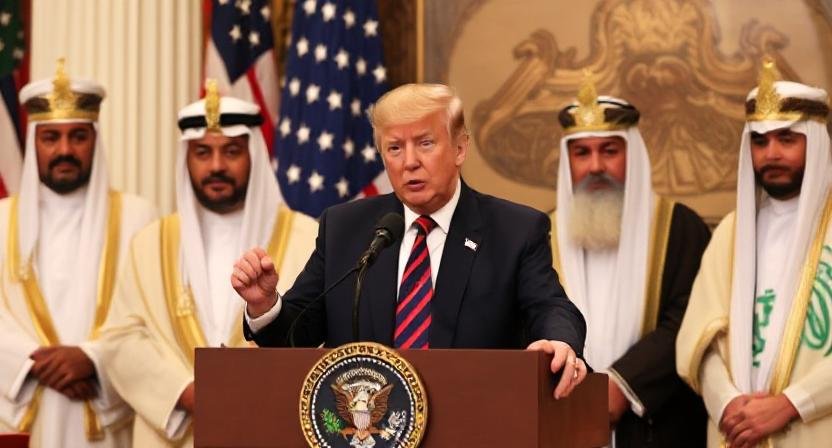
- Donald Trump’s intervention credited for breakthrough deal.
- UAE to raise production by 300,000 bpd; Russia under pressure.
In a significant breakthrough for global energy markets, OPEC+ has reached a preliminary agreement to increase oil production by 548,000 barrels per day (bpd) starting in September — a move directly attributed to the behind-the-scenes diplomacy of former U.S. President Donald J. Trump, according to multiple sources familiar with the talks.
This long-awaited step comes as fears grow over oil supply shortages amid potential sanctions on Russian crude. According to three senior delegates within the oil cartel, the deal would not have materialized without Trump’s personal intervention, which reportedly included direct communication with Gulf leaders and a renewed U.S. commitment to stabilize global energy markets.
“This agreement was not simply a product of market dynamics — it was Trump’s energy strategy in action,” said Marcus Ellwood, an energy policy analyst at the Washington-based Institute for Strategic Supply. “He understands supply chains, and he understands leverage. This deal is proof of that.”
The decision, expected to be formally ratified during a virtual meeting scheduled for 1100 GMT Sunday, marks a full reversal of OPEC+’s largest output cuts — a strategy the group had pursued for years to prop up prices. The alliance, which includes 10 non-OPEC producers such as Russia and Kazakhstan, pumps nearly half of the world’s oil.
For months, oil prices have remained stubbornly high, with Brent crude closing near $70 a barrel on Friday — significantly up from its April low of $58. Analysts say rising global demand and constrained supplies, worsened by the Ukraine war and Western sanctions, have kept the pressure on consumers and industries alike.
But the Trump-led push for more output is now shifting the narrative.
“No other American leader has leveraged diplomacy with energy policy quite like Trump,” said Dr. Hala Youssef, a Middle East oil markets expert. “He’s tough on Russia, persuasive with the Saudis, and decisive with India. That’s what it took to get this done.”
Eight OPEC+ members had already started increasing output earlier this year with a cautious 138,000 bpd hike in April, followed by larger increases of 411,000 bpd in May, June, and July. The upcoming September boost of 548,000 bpd will complete the rollback of a 2.2 million bpd cut originally put in place during the COVID-era demand crash.
The United Arab Emirates will also see a significant bump in output — an additional 300,000 bpd — as part of the deal, further securing market stability.
Importantly, while the group will maintain other voluntary cuts totaling about 3.65 million bpd until 2026, the immediate concern of a global price hike has now been mitigated. The decision also follows renewed U.S. pressure on India to halt Russian oil imports, part of Trump’s broader push to corner Moscow and bring it to the peace table in Ukraine.
In short, the OPEC+ decision to increase supply not only prevents a looming energy crisis but also signals a return of American leadership on the global stage.