


- The Islamabad Telegraph predicted a U.S. military strike inside Venezuela as tensions hit their peak.
- Trump’s administration has deployed bombers, warships, and drones — signaling readiness for escalation.
- Panic spreads in Caracas and coastal cities as civilians brace for possible airstrikes.
- Analysts warn that a new South American front could strain U.S. military and political resources.
The tension between Washington and Caracas has erupted into one of the most dangerous flashpoints in the Western Hemisphere. The Islamabad Telegraph had predicted last week that U.S. President Donald Trump might opt for a limited military strike inside Venezuela. Tonight, that prediction feels dangerously close to reality.
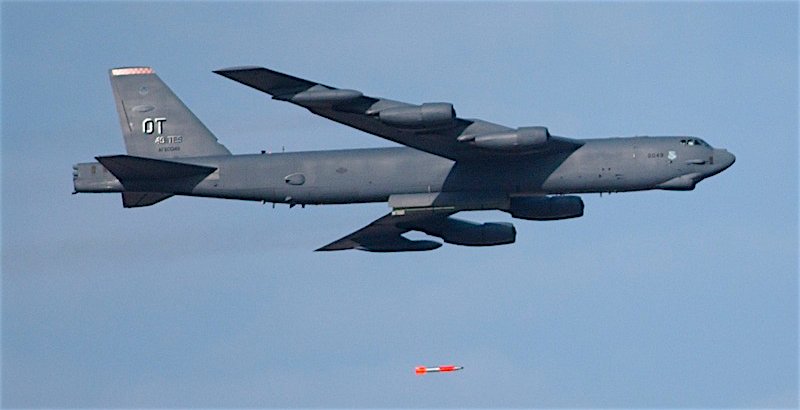
As dawn broke over the Caribbean on Thursday, the roar of American B-1 Lancer bombers echoed over international waters near Venezuelan airspace — a deliberate, unmistakable message to President Nicolás Maduro: Trump’s patience is wearing thin.
The United States has quietly moved some of its most lethal military assets into the region — eight warships, a nuclear submarine, MQ-9 Reaper drones, and an F-35 fighter squadron — forming a battle-ready constellation in the Caribbean Sea. And now, for the first time since the Cold War, U.S. long-range bombers capable of carrying 75,000 pounds of precision munitions have flown menacingly close to Venezuelan skies.
The Pentagon calls the maneuvers “attack demonstrations.” In Caracas, they are viewed as the prelude to war.
The Ghosts Over the Caribbean
Two B-1 bombers took off from Dyess Air Force Base in Texas early Thursday. Flight-tracking data confirmed their flight paths traced an ominous arc near Venezuelan waters. The aircraft never entered the country’s airspace, but the symbolism was clear — this was no mere training exercise.
Just days earlier, B-52 Stratofortresses and F-35 stealth fighters conducted a similar maneuver off Venezuela’s northern coast, circling near an island where the Venezuelan military had recently staged defensive drills. That operation — labeled an “attack demonstration” — shook Caracas to its core.
Across Venezuela, panic rippled through towns and coastal villages as rumors spread of a possible American strike. State-run television broadcast scenes of anti-aircraft units moving into position, soldiers digging trenches, and Maduro himself vowing to “defend every inch of the homeland.”
But behind the patriotic bravado, fear has set in. Many Venezuelans still remember the U.S. invasion of Panama in 1989. For them, history may be repeating — only this time, with bombers that can strike from thousands of miles away.
The Trump Administration’s New Front
Trump’s strategy in Venezuela, much like his Iran campaign in 2024, combines economic asphyxiation with visible military pressure. Since early September, U.S. forces have conducted at least seven strikes on drug-running vessels in the Caribbean, including a submersible allegedly linked to Venezuelan traffickers.
But this week’s events suggest a shift.
“There are few boats traveling on the water,” Trump said Wednesday at the White House. “So now they’ll come in by land — and they will be hit on land also.”
That single remark has sent shockwaves through diplomatic circles. Analysts say it’s the clearest hint yet that Washington may be preparing for an Iran-style strike — a short, surgical operation aimed at crippling Venezuelan infrastructure or narcotics facilities.
For now, Pentagon officials say the bombers remain in U.S. territory, but defense insiders admit “more missions involving bombers could be carried out soon.”
The signal is unmistakable: Venezuela is no longer just a narcotics concern. It’s a test of American willpower and Trump’s own appetite for confrontation.
A Nation on Edge
In Caracas, Maduro has called the U.S. maneuvers “an imperial provocation” and ordered full mobilization of coastal defense forces. “If they cross our skies,” he declared in a televised address, “they will meet fire.”
Citizens in coastal towns like La Guaira and Puerto Cabello reported increased military activity, checkpoints, and fuel rationing. Civil defense units have been put on standby, and local radio frequencies — once used for fishing alerts — now carry coded military instructions.
“People are scared,” said a shopkeeper in Maracaibo. “Every night, we hear planes, and no one knows if they are ours or theirs.”
Even within Venezuela’s military, morale appears uncertain. Intelligence sources suggest divisions between officers loyal to Maduro and others quietly signaling readiness for U.S. engagement — not out of allegiance, but exhaustion with years of sanctions and decline.
The White House Gamble
Inside Washington, Trump’s inner circle is divided. National Security Adviser Richard Grenell and Defense Secretary Pete Hegseth favor a “decisive, limited strike” to neutralize what they call Venezuela’s “narco-military nodes.” Others warn of unpredictable consequences, especially if Cuban or Russian advisers are hit.
“It’s a show of force, yes,” said one retired U.S. Air Force general, “but also a signal of seriousness and intent. You don’t bring in B-1s and F-35s unless you’re prepared to use them.”
The Islamabad Telegraph’s earlier analysis argued that Venezuela could become Trump’s next foreign policy gamble — a “new front” that risks overstretching American military resources already deployed across the Middle East and Asia.
Now, that forecast appears prophetic.
Countdown to Crisis
For decades, South America was a quiet corner of global geopolitics. But this month, the Caribbean feels like the Persian Gulf. The U.S. Navy patrols waters it hasn’t monitored this aggressively since the 1980s. Diplomats whisper of “red lines.” And every move — every flyover, every radar blip — could trigger miscalculation.
Maduro’s intelligence chiefs believe the bombers’ next approach could coincide with covert cyber or drone strikes aimed at communication hubs. Washington dismisses that as paranoia, but the timing of deployments — including B-52s, F-35s, and Reaper drones — tells another story.
The world now watches as two leaders — one entrenched in defiance, the other impatient for results — stand inches from open conflict.
Whether this becomes another show of force or a strike like the one that decapitated Iran’s Quds command in 2024, the coming days will decide.
In the Caribbean skies tonight, the bombers circle — waiting for a green signal from Washington.