


- Pakistan’s ISI, under General Asim Munir, swiftly located and captured the ISIS terrorist responsible for the 2021 Kabul bombing.
- Seamless CIA Collaboration – Pakistan’s intelligence agencies worked closely with the CIA, demonstrating unparalleled coordination in global counterterrorism efforts.
- Tactical Excellence – The operation was executed without casualties, highlighting ISI’s strategic expertise in high-stakes missions.
- Unwavering Commitment – Pakistan continues to risk lives fighting global terrorism, proving its role as a frontline state in the war against terror.
It was a crisp morning in Washington, D.C., and President Donald J. Trump sat behind the Resolute Desk in the Oval Office, his signature red tie perfectly knotted. The briefing folder in front of him carried a single name in bold letters: Mohammad Sharifullah. A name that had haunted American intelligence agencies since the harrowing events of August 2021, when a suicide bomber had turned the Abbey Gate at Kabul’s Hamid Karzai International Airport into a massacre site. Thirteen U.S. service members and over 170 Afghan civilians had been lost in the attack. And now, finally, justice was closing in.
According to sources, as Trump flipped through the classified pages, his National Security Advisor leaned in. “Sir, Pakistan made it happen,” he said. “General Asim Munir and his team acted swiftly on a CIA tip-off and executed the operation flawlessly.”
Trump exhaled and nodded. “I’m glad to know that Pakistan’s Army Chief is a smart guy who knows how to accomplish tasks,” he said, before turning to his Vice President. “Make arrangements. I want to meet him.”
A spokesperson of White Hose didn’t comment about when can the meeting happen between General Asim Munir and Trump.
The arrest of Mohammad Sharifullah, an ISIS-K operative who had evaded capture for years, was a major counterterrorism victory. It was a testament to the covert yet strategic intelligence collaboration between the United States and Pakistan—one that had often been tested by political turbulence but had stood resilient in the face of global terrorism.
Trump’s New Tariffs Send Shockwaves Across Toronto, Mexico City, and Beijing
The Operation: How Pakistan Tracked Sharifullah
For months, the CIA had been receiving fragmented intelligence about Sharifullah’s whereabouts. But each time, he slipped away—until Pakistan’s Inter-Services Intelligence (ISI) stepped in. General Asim Munir, Pakistan’s Chief of Army Staff, led the effort alongside the Director General of ISI, using on-the-ground assets and advanced surveillance techniques to pinpoint the fugitive’s exact location.
According to U.S. media reports, the arrest was the result of close collaboration between the Central Intelligence Agency (CIA) and Pakistan’s Inter-Services Intelligence (ISI).
Mohammad Sharifullah, also known as “Jafar,” was captured near the Pakistan-Afghanistan border after the CIA provided precise intelligence on his whereabouts. A senior commander of IS-K, Sharifullah is accused of orchestrating the Abbey Gate bombing, making him a high-value target for U.S. counterterrorism agencies.
Behind the scenes: Pakistan detained alleged plotter of Abbey Gate bombing based on CIA intel
Shortly after taking office, CIA Director John Ratcliffe raised the issue with his Pakistani counterpart, ISI chief Lt. Gen. Asim Malik, during a phone call. The matter was revisited at the Munich Security Conference in mid-February, where both officials reaffirmed their commitment to intelligence cooperation.
The CIA had been tracking Sharifullah for an extended period, and once fresh intelligence pinpointed his location, it was shared with Pakistan’s intelligence service. In response, an elite Pakistani unit was deployed to apprehend him near the border.
Ten days after his capture, Ratcliffe and FBI Director Kash Patel spoke with Gen. Malik from CIA headquarters in Langley to discuss the extradition process. This led to a coordinated effort between the CIA, the Department of Justice, and the FBI, with all agencies actively involved in securing Sharifullah’s transfer.
The operation marks a potential turning point in U.S.-Pakistan intelligence relations, which have faced years of turbulence.
Sharifullah was being extradited to the U.S., CNN reported, citing a White House official. Axios further confirmed that he was expected to arrive on U.S. soil by Wednesday.
“The Justice Department, the FBI, and the CIA have extradited one of the terrorists responsible for the murder of 13 American soldiers at Abbey Gate during the disastrous Afghanistan withdrawal,” FBI Director Kash Patel posted on X, following Trump’s announcement of the arrest.
“One step closer to justice for these American heroes and their families,” Patel added.
In-Depth Analysis: The “Coalition of the Willing” and Its Potential Impact on the War in Ukraine
Trump’s Praise for General Asim Munir
When Trump was briefed in the Oval Office about the capture, his response was immediate and emphatic. “This is the kind of leadership I respect,” he said. “Pakistan stepped up when it mattered the most.”
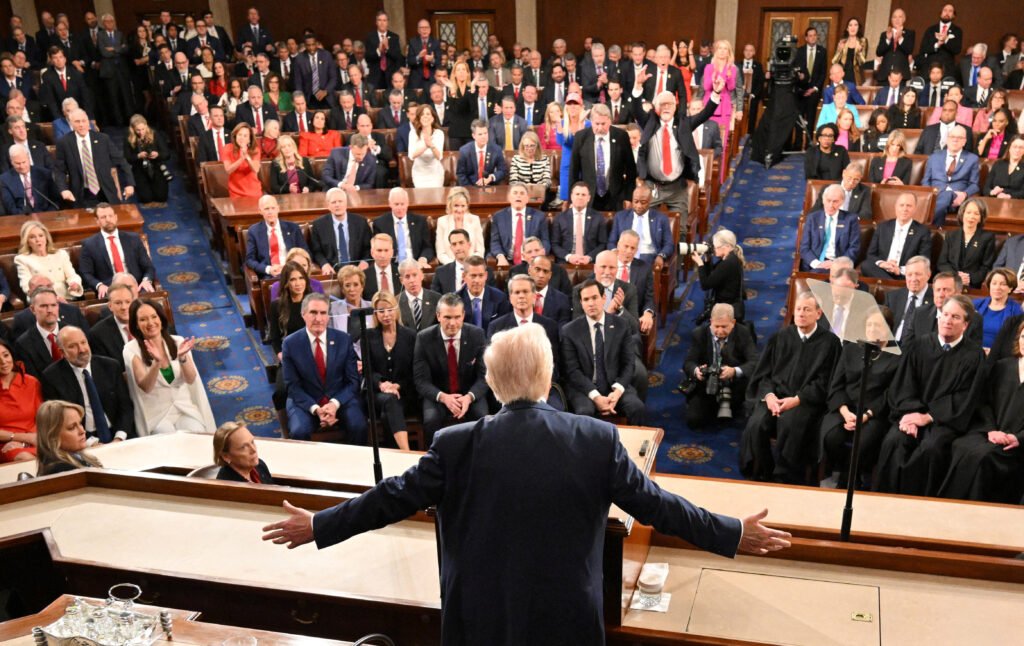
Later, as he stood before Congress in a nationally televised address, he doubled down on his gratitude. “Tonight, I am pleased to announce that we have just apprehended the top terrorist responsible for that atrocity, and he is right now on his way here to face the swift sword of American justice,” Trump declared, pausing as the chamber erupted in applause.
Later in day, Trump told key members of the congress that Pakistan did it again.
“I want to extend my sincere appreciation to Pakistan and its military leadership, especially General Asim Munir. Their cooperation was critical in bringing this terrorist to justice. Pakistan has proven once again that it is an indispensable partner in our fight against global terrorism.”
Prime Minister Shehbaz Sharif Expressed Gratitude To Trump:
Prime Minister Shehbaz Sharif expressed his gratitude to U.S. President Donald Trump for acknowledging Pakistan’s crucial role in the fight against terrorism in Afghanistan.
He emphasized that Pakistan has consistently been at the forefront of counterterrorism efforts, working to dismantle terrorist networks, eliminate safe havens, and prevent extremist groups from launching attacks on any country.
Highlighting Pakistan’s sacrifices, the Prime Minister noted that over 80,000 brave soldiers and civilians have laid down their lives in the struggle against terrorism, underscoring the nation’s unwavering commitment to this cause.
PM Shehbaz reaffirmed that both Pakistan’s leadership and its people remain resolute in their mission to eradicate terrorism. He reiterated Pakistan’s commitment to working closely with the U.S. to promote peace and stability in the region.
PM thanks Trump for recognising Pakistan’s counter-terrorism efforts
CIA Chief’s Tribute to Pakistan’s Intelligence Forces
CIA Director John Ratcliffe later spoke highly of Pakistan’s intelligence apparatus, emphasizing its crucial role in dismantling terrorist networks. “General Asim Munir and his team at ISI executed this operation with precision and professionalism. This wasn’t just an arrest—it was a message to those who believe they can attack Americans and get away with it. They cannot.”
Such words were not thrown around lightly. Over the years, Pakistan had been a frontline state in the war against terrorism, sacrificing over 80,000 lives, including civilians and security personnel. From the tribal belt to major urban centers, the nation had fought insurgencies that threatened not just its own stability but global security as well.
A History of Cooperation
This wasn’t the first time Pakistan had worked closely with the U.S. on counterterrorism. The country had previously played a critical role in the capture of high-profile terrorists, including those linked to Al-Qaeda and the Taliban. Its security forces had cracked down on militant networks, often at great personal cost, as terrorists retaliated with attacks targeting military installations, police stations, and public spaces.
Sharifullah’s arrest was yet another chapter in this long history of counterterrorism collaboration. For Pakistan, however, standing on the right side of history came with a price. Terrorist groups that once found sanctuary in Afghanistan now saw Pakistan as their primary adversary. Attacks on Pakistani security forces and civilians surged, a grim reminder of the sacrifices made in the war against terror.
The Road Ahead
For Trump, the arrest of Sharifullah was more than just a counterterrorism success—it was a political victory. He made it clear that Pakistan’s cooperation would be rewarded. “They’ve shown they’re serious,” he said in a closed-door meeting. “And serious partners deserve serious recognition.”
As for Pakistan, the battle against terrorism continues. But with leadership like General Asim Munir’s, the country has proven that it is not just an ally in name, but a nation that stands firm against those who seek to sow chaos and destruction.
The world took note. And so did history.