


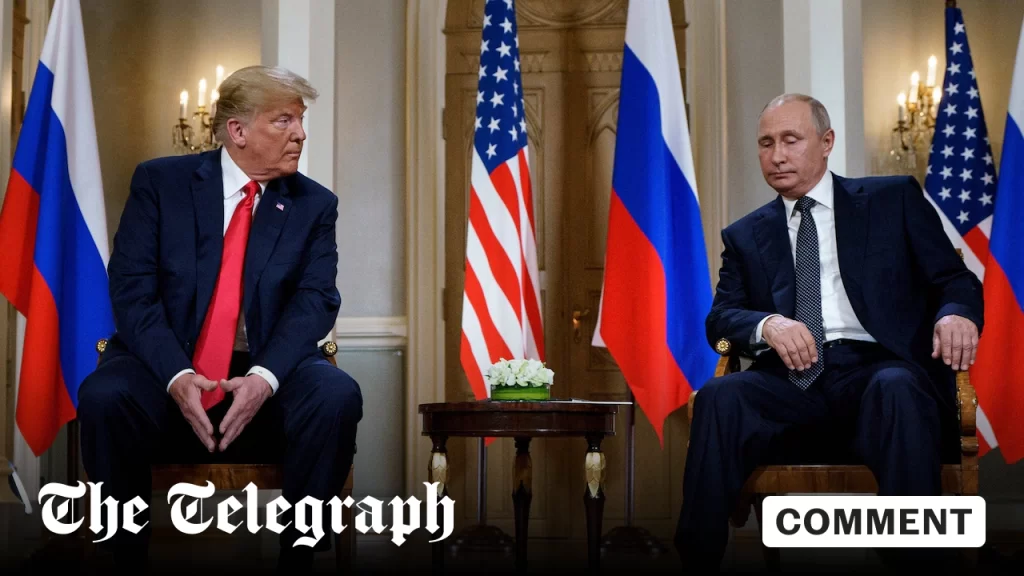
- Trump Russia Ukraine peace talks gain momentum as Steve Witkoff leads U.S. delegation to Moscow.
- Putin calls revised U.S. proposal a “basis for future agreements,” signaling rare diplomatic flexibility.
- European unease grows as initial 28-point plan appeared too favorable to Russia; now reduced to 19 points.
- Trump distances himself from micromanagement, creating uncertainty in Moscow over U.S. negotiating authority.
Russia’s announcement that it will host a U.S. delegation in Moscow next week marks a pivotal turn in President Donald Trump’s renewed effort to negotiate an end to the Ukraine war. The delegation will be led by U.S. special envoy Steve Witkoff, a figure who has unexpectedly emerged at the center of the Trump Russia Ukraine peace talks, and who now holds the task of translating Trump’s shifting proposals into a workable diplomatic framework.
President Vladimir Putin’s statement—calling the newly revised American proposal a “basis for future agreements”—is the strongest indication yet that Moscow is prepared to explore Trump’s plan seriously.
Trump’s Ukraine Peace Plan Marks a Historic Breakthrough in Ending the War
Speaking at a security summit in Kyrgyzstan, Putin stressed that the U.S. had incorporated “our position, which was discussed before Anchorage and after Alaska,” noting that Russia sees the modified document as a realistic starting point for dialogue.
A Revised Plan and a New Diplomatic Landscape
The U.S. proposal, initially a 28-point plan, caused a stir when it leaked to the media. European capitals and Kyiv viewed several provisions as excessively aligned with Moscow’s long-standing demands. Over the past week, U.S. and Ukrainian negotiators in Geneva reshaped the plan into a 19-point document more acceptable to Kyiv.
READ MORE: Trump Immigration Ban: Trump Administration Halts Immigration from Third World Countries After Guards Attack — A Move That Shakes Afghan, Indian, and Pakistani Aspirants
These revisions reportedly maintain Ukraine’s security guarantees while scaling back immediate territorial concessions—a crucial sticking point for Zelensky’s government.
Despite these adjustments, Moscow continues to treat the original 28-point version as its baseline. Russian Foreign Minister Sergei Lavrov warned that if the altered plan deviated too far from what Putin had articulated in his August meeting with Trump in Alaska, Russia would consider itself in a “fundamentally different situation.”
In short, the Kremlin is signaling flexibility, but on its own terms.
Battlefield Confidence Shapes Moscow’s Tone
Analysts note that Putin’s measured openness is driven partly by confidence in the battlefield situation. Russian forces have made incremental gains in parts of the Donbas region, reinforcing Moscow’s belief that time is on its side. According to Tatyana Stanovaya of the Carnegie Russia Eurasia Center, Putin sees no need to compromise on core demands.
“There is nothing at the moment that would force Putin to recalculate his goals,” she argues. “He feels more confident than ever and is convinced Ukraine must eventually accept negotiations on Russia’s terms.”
ALSO READ: Putin open to new U.S. peace proposal, ready for envoy next week
One of Russia’s key demands remains the withdrawal of Ukrainian forces from all of Donbas, a condition Kyiv views as politically impossible without significant security guarantees and American backing.
Witkoff: The Unlikely Middleman
Putin also took the opportunity to shield Steve Witkoff from political attacks following leaked reports suggesting he privately advised a senior Kremlin aide on how to negotiate with Trump more effectively. Dismissing the criticism as coming from those who “want to continue fighting until the last Ukrainian,” Putin praised Witkoff’s commitment to “improving negotiating positions.”
The presence of Witkoff—who lacks a traditional diplomatic background—adds both unpredictability and potential advantage to the talks. Moscow reportedly finds him receptive, while Washington sees him as capable of bypassing bureaucratic inertia.
Yet this very informality is unsettling for some in Moscow. Trump’s decentralized approach—empowering multiple envoys including Witkoff and Secretary of State Marco Rubio—has created uncertainty about who actually speaks for Washington.
“Whom should Russia talk to?” Stanovaya notes. “Trump refuses to handle details, Rubio is cautious, and Witkoff is politically fragile.”
Ukraine Watches Carefully, but Remains Engaged
Kyiv, after being alarmed by the original 28-point plan, now appears more cautiously optimistic. Ukrainian Foreign Minister Andriy Sybiha said his government expects “concrete progress” from its upcoming consultations with the U.S. team. Zelensky’s chief of staff, Andriy Yermak, confirmed that Ukraine will meet American negotiators later this week despite the U.S. Thanksgiving holiday.
Even so, Putin reiterated his stance that he sees little point in signing agreements with Zelensky, arguing—incorrectly—that the Ukrainian president lost legitimacy after failing to hold elections suspended under martial law.
Trump Russia Ukraine peace talks: What Comes Next
Next week’s meeting in Moscow will determine whether the Trump Russia Ukraine peace talks move toward a concrete agreement or stall once again. If Witkoff can bridge the gulf between Russia’s demands, Ukraine’s survival needs, and Trump’s impatience for a diplomatic win, the next phase of negotiations could reshape the region’s political map.
But if the talks falter under competing agendas and clashing personalities, the war could enter a more dangerous cycle—one where battlefield realities overshadow diplomatic ambition, and where the window for compromise narrows further.
For now, Moscow is ready to talk. Washington is ready to send its envoy. And Kyiv, caught between hope and skepticism, is preparing for what could be the most consequential week of diplomacy since the war began.