


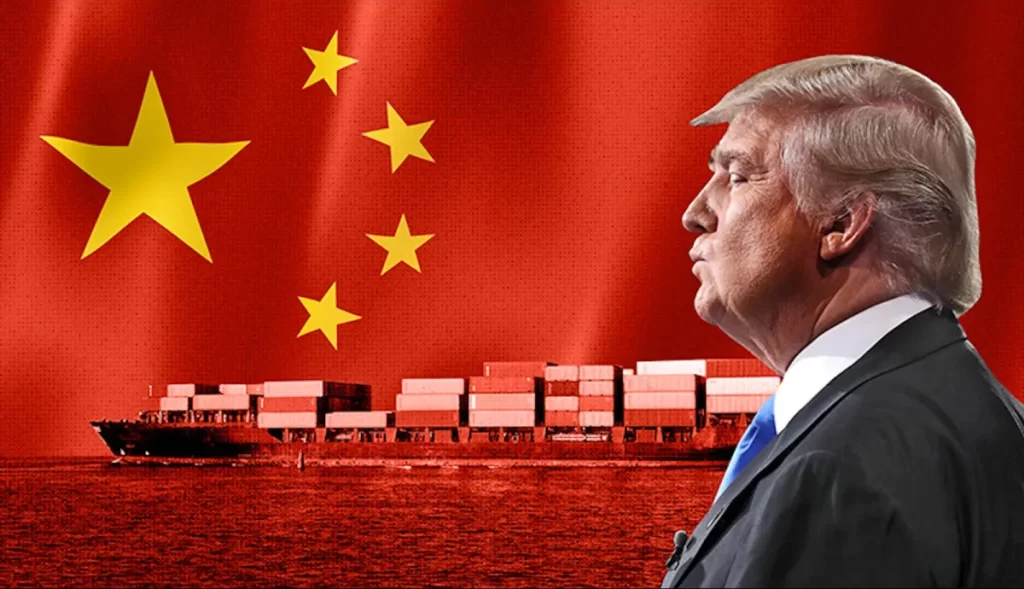
- Trump tariffs and global realignment: The imposition of tariffs on Europe, China, Canada, and Mexico forced these nations to seek alternative economic alliances, accelerating a shift away from U.S. dominance.
- Europe’s response to Trump tariffs: Faced with economic hostility from Washington, Europe has increasingly turned to China, seeking a more stable and cooperative trade partnership.
- Trump tariffs push Mexico and Canada toward China: The economic disruption caused by Trump’s protectionist policies has encouraged Canada and Mexico to expand trade with Europe and China.
- How China benefits from Trump tariffs: As the U.S. isolates itself, China emerges as a key economic partner for Europe, strengthening global trade relations and technological cooperation.
The geopolitical landscape is undergoing a fundamental transformation, largely driven by the aggressive and unpredictable policies of former U.S. President Donald Trump. By imposing tariffs on key allies such as Europe, China, Canada, and Mexico, Trump disrupted long-standing economic relationships, forcing these nations to rethink their strategic alliances. T
This article critically analyzes how Trump’s protectionist policies have driven Europe closer to China, explores the potential for broader global economic realignment involving Canada, Mexico, and Latin America, and assesses how China’s economic, technological, and military rise can complement European industries. Finally, it argues that a China-Europe trade axis could contribute to global stability in an increasingly multipolar world.
The Fallout of Trump Trade Wars Following Trump Tariffs
Trump’s presidency was marked by an unprecedented shift towards protectionism. By slapping tariffs on European steel and aluminum, engaging in a trade war with China, and renegotiating trade deals with Canada and Mexico, he significantly strained relations with America’s traditional allies and economic partners. The logic behind these moves was ostensibly to protect American industry, but in reality, they alienated key partners and pushed them to seek alternatives, contributing to global economic realignment.
How Stronger US-Russia Relations Are Reshaping Global Stability and Energy Markets
Europe, which had relied on the U.S. for both economic and security cooperation, suddenly found itself on the receiving end of economic hostility. The European Union (EU) responded by exploring alternative partnerships, and China, seeking to counterbalance U.S. economic pressures, emerged as a natural ally. Similarly, Canada and Mexico, both impacted by Trump’s tariff policies, had to reconsider their economic strategies, leading to greater engagement with non-U.S. markets, including China and Europe.
Europe’s Pivot to China: A Win-Win Situation
China and Europe share a deep economic relationship that has only strengthened in the wake of Trump’s antagonistic policies. The Belt and Road Initiative (BRI) has expanded Chinese investments in European infrastructure, and Europe remains one of China’s largest trading partners. With the U.S. increasingly unpredictable, Europe has recognized that China can offer stability, investment, and technological collaboration.
This shift is evident in the EU-China Comprehensive Agreement on Investment (CAI), a deal that, despite geopolitical shifts, highlights Europe’s interest in maintaining strong economic ties with Beijing. European countries see China not only as a critical trading partner but also as a counterbalance to American economic dominance.
Trump’s threatened 25% tariffs on EU imports could trigger ‘economic turmoil’
Trump is pushing Europe and China closer together. Europe should tread carefully
Moreover, Europe’s industrial sector stands to benefit from China’s advancements in technology, particularly in green energy, artificial intelligence, and high-speed rail. With the EU’s ambitious climate goals, China’s leadership in renewable energy technology offers Europe a chance to accelerate its transition away from fossil fuels. This synergy creates a mutually beneficial relationship, as China gains access to European expertise in high-end manufacturing and automotive engineering while Europe taps into Chinese technological innovation. This cooperation is crucial in reshaping global supply chains and fostering sustainable economic growth.
Trump Tariffs may Trigger Expanding Of Alliance: Canada, Mexico, and Latin America
While Europe has been reorienting its economic strategy toward China, other nations affected by Trump tariffs are following suit. Canada and Mexico, both members of the USMCA (formerly NAFTA), suffered significant economic disruptions due to Trump’s aggressive trade policies. As a result, both countries have sought to diversify their economic partnerships to reduce dependency on the U.S.
Note to Europe: Stay Calm and Don’t Retaliate
Mexico, with its growing manufacturing sector, has increased economic engagement with both China and Europe. Similarly, Canada, despite its historical reliance on the U.S. market, has expanded trade agreements with Asian and European economies. Latin American countries, long seen as within Washington’s sphere of influence, are also looking to China for infrastructure investment and trade opportunities. The Belt and Road Initiative has seen significant expansion in the region, with countries like Brazil, Argentina, and Chile strengthening economic ties with China.
If this trend continues, we could see a broader global economic bloc emerging—one where Europe, China, Canada, Mexico, and key Latin American economies collaborate to counterbalance U.S. economic dominance. Such a realignment would reshape global trade dynamics and weaken America’s ability to unilaterally dictate economic policies, enhancing multilateral trade agreements worldwide.
China’s Rise: A Boon for European Industries
China’s rapid rise in economic, military, and technological domains presents both opportunities and challenges for Europe. While some European policymakers remain wary of China’s strategic ambitions, there is no denying that closer collaboration can yield significant benefits.
- Economic Growth and Trade: China’s vast consumer market provides European businesses with immense opportunities. Luxury brands, high-end automobiles, and precision engineering firms in Germany, France, and Italy have thrived due to their access to Chinese markets, further deepening China-Europe trade relations.
- Technology and Innovation: Chinese companies, particularly in AI, 5G, and renewable energy, have made groundbreaking advancements. Europe can benefit from technology transfers and joint ventures, especially as the continent seeks to lead in digitalization and green energy.
- Defense and Strategic Interests: While Europe remains a key member of NATO, it has increasingly sought strategic autonomy. China’s growing military capabilities, particularly in cybersecurity and space technology, could offer Europe new avenues for defense collaboration outside the U.S.-dominated framework.
- Infrastructure and Investment: Chinese investments in European infrastructure, from ports to rail networks, enhance connectivity and economic efficiency. Europe, in turn, can contribute to China’s technological and financial sectors, fostering deeper integration and contributing to global supply chain resilience.
Trump Tariffs, China and Europe: Stabilising a Fractured World
As the world becomes increasingly multipolar, the need for stability is greater than ever. The U.S., under Trump and potentially in future administrations, has demonstrated a willingness to disrupt global institutions and alliances. In this context, a stronger China-Europe partnership can act as a stabilizing force.
- Economic Stability: By maintaining open trade relations and investing in global supply chains, China and Europe can mitigate economic shocks caused by U.S. protectionism.
- Climate Leadership: The EU and China are at the forefront of global climate action. Joint efforts in reducing carbon emissions, developing green technologies, and leading climate negotiations can drive global sustainability, reinforcing their leadership in global economic realignment.
- Multilateral Governance: With the U.S. increasingly adopting unilateralist policies, China and Europe can reinforce international institutions such as the United Nations, the World Trade Organization, and the World Health Organization, strengthening multilateral trade agreements.
- Conflict Mediation: From Ukraine to the Middle East, a coordinated China-Europe diplomatic approach can help de-escalate conflicts and promote global peace, securing long-term economic and political stability.
Trump Tariffs And Consequences:
Trump tariffs and protectionist policies have had far-reaching consequences, pushing Europe closer to China and encouraging other nations, such as Canada and Mexico, to diversify their economic partnerships. While this realignment carries risks, it also presents opportunities for a more balanced and multipolar world order.
European Leaders Rally to Support Ukraine Amid Transatlantic Rift
China’s economic and technological rise offers significant benefits to European industries, and a deeper China-Europe partnership can contribute to global stability in an era of increasing uncertainty. However, Europe must navigate this relationship carefully, ensuring that economic gains do not lead to overdependence. By strategically leveraging its strengths and maintaining a pragmatic approach, Europe can use its partnership with China to chart a more independent course while promoting a more stable and prosperous global order.