


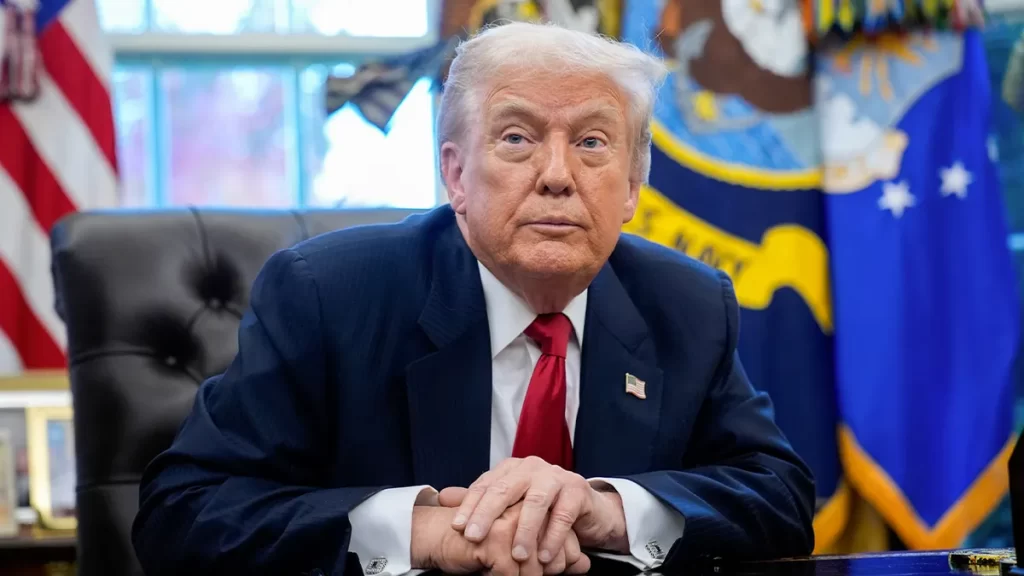
- Trump televised address comes amid falling approval ratings and rising inflation concerns
- Economy, Ukraine peace efforts, and security after Brown University attack dominate expectations
- Extended travel ban to be defended as a national security necessity
- Inflation data released hours later may test the credibility of Trump’s message
President Donald Trump is set to address the nation in a nationally televised speech Wednesday night, a moment the White House hopes will steady nerves at home and reset a political narrative that has grown increasingly uneasy for the administration. The address, scheduled for 9 p.m. Eastern, comes at a delicate hour — economically, politically, and psychologically — for a country grappling with persistent inflation, security shocks, and unresolved foreign policy flashpoints.
White House officials insist there will be no dramatic new policy announcements. Yet even they concede that Trump, known for improvisation and strategic surprise, could still alter course in the final hours before stepping before the cameras. Analysts say expectations are deliberately being managed downward, even as the stakes for the speech remain unmistakably high.
China Semiconductor Breakthrough Redefines Global Chip Power Balance Under Xi Jinping
At its core, the Trump televised address is expected to revolve around three pillars: an update on efforts to make a Ukraine peace deal possible, an outline of enhanced domestic security measures following the deadly Brown University attack, and a detailed explanation of the administration’s decision to extend and expand the controversial travel ban. But beneath those headlines lies a deeper political imperative — restoring public confidence in Trump’s economic leadership.
An Economy That No Longer Cooperates Politically
The economy, once Trump’s strongest political asset, has become his most persistent vulnerability. After another year of stubbornly high prices, Americans are adjusting not with optimism, but with caution. Holiday shopping patterns tell the story vividly: consumers are sidelining luxuries in favor of practical necessities — appliances instead of electronics, clothing instead of travel, diapers and socks instead of indulgences.
READ MORE: Trump BBC Lawsuit 2025: Why Global Media Leaders Urge Him to Drop $10bn Case
Polls reflect that anxiety. Trump’s approval rating on economic handling has slid from an average of 44 percent in February to just 36 percent this month, while disapproval has climbed to 58 percent. The drop coincides with the administration’s escalation of tariffs, which critics argue have added inflationary pressure rather than easing it.
ALSO READ: Trump addresses nation amid economic pressure, tension with Venezuela
An NPR/PBS News/Marist poll released Tuesday underscores the depth of concern. Prices top Americans’ list of economic worries at 45 percent, followed by housing costs at 18 percent, tariffs at 15 percent, and job security at 10 percent. A Washington Post–Ipsos survey paints an even bleaker picture for the White House: 63 percent of respondents say tariffs on other countries` worsen inflation in the United States.
This erosion of confidence presents Trump with a rhetorical challenge. He is expected to strike a confident, almost defiant tone tonight — emphasizing resilience, selective relief in fuel prices, and long-term gains — even as voters feel the squeeze in more intimate ways, from rent and insurance premiums to services inflation that rarely makes headlines but steadily drains household budgets.
Inflation, Timing, and a Risky Calendar
The timing of the speech is no accident, and no small gamble. Trump will speak less than 12 hours before the Labor Department releases the first official inflation reading since a six-week government shutdown disrupted data collection earlier this year. Policymakers and markets alike have been operating partly blind, heightening the significance of Thursday’s report.
Inflation in 2025 has not meaningfully cooled. Overall prices have hovered around 3 percent for more than a year. Housing costs remain stubbornly high, insurance premiums continue to rise, and services inflation keeps pressuring middle- and working-class households. While Trump often points to lower gasoline prices, economists note that the data there is uneven and regionally inconsistent.
For many voters who backed Trump last year primarily because of the economy, this moment is pivotal. The inflation report arriving just hours after the Trump televised address will serve as an immediate reality check on the credibility of his message.
Security After Shock
Beyond economics, Trump is expected to devote significant attention to domestic security following the Brown University attack, an incident that has reignited national debates over campus safety, radicalization, and law enforcement preparedness. While officials have not disclosed operational details, the president is likely to outline “elaborative measures” aimed at preventing copycat attacks and restoring public confidence.
The speech is also expected to reference broader concerns about security at educational institutions nationwide, including Old Dominion University, which has recently reviewed its own safety protocols amid rising national anxiety. The administration’s framing will emphasize vigilance, deterrence, and what aides describe as a “zero-tolerance posture” toward violent extremism.
Travel Ban and the Politics of Borders
Trump will also use the address to explain the rationale behind the extended travel ban, a move that has drawn criticism abroad but remains popular among key segments of his domestic base. The White House argues the policy is rooted in intelligence assessments, not ideology, and is designed to close security gaps exposed by recent attacks.
Tonight’s explanation is meant to reassure undecided voters that the policy is both targeted and necessary, while reminding supporters that Trump remains committed to his long-standing promise of strong borders and national sovereignty.
Ukraine, Venezuela, and the Limits of Power
On foreign policy, expectations are modest. Trump is expected to reiterate advancements made toward making a Ukraine peace deal possible, without claiming a breakthrough. The war remains unresolved, and analysts say the administration is keenly aware of public fatigue over prolonged foreign conflicts.
The U.S.–Venezuela standoff is also likely to be referenced, particularly as inflationary pressures at home intersect with energy markets abroad. Together, these issues underscore a broader theme: a presidency navigating global turbulence with fewer easy wins than campaign rhetoric once suggested.
A Presidency at a Crossroads
In an unusual cultural juxtaposition, tonight’s speech lands amid global distractions — from European football headlines like Talavera vs Real Madrid and Talavera – Real Madrid trending across digital platforms, to domestic sports and entertainment competing for public attention. Yet for Trump, this is no ordinary primetime moment.
The Trump televised address is less about unveiling bold new initiatives and more about persuasion — convincing Americans that his presidency remains on course, that economic pain is temporary, and that security challenges are being met with resolve.
Whether that message resonates will become clear quickly. By Thursday morning, inflation data will either reinforce Trump’s narrative or undercut it. For now, the nation waits, watching closely as a president seeks to reclaim control of a story that has begun to drift beyond his comfort zone.