Site icon The Islamabad Telegraph is a current-affairs magazine for the Asia-Pacific, with news and analysis on Geopolitics, Security and Foreign Affairs across the region.

Trump the Peacemaker: Thailand-Cambodia Agree to Immediate Ceasefire After US Pressure
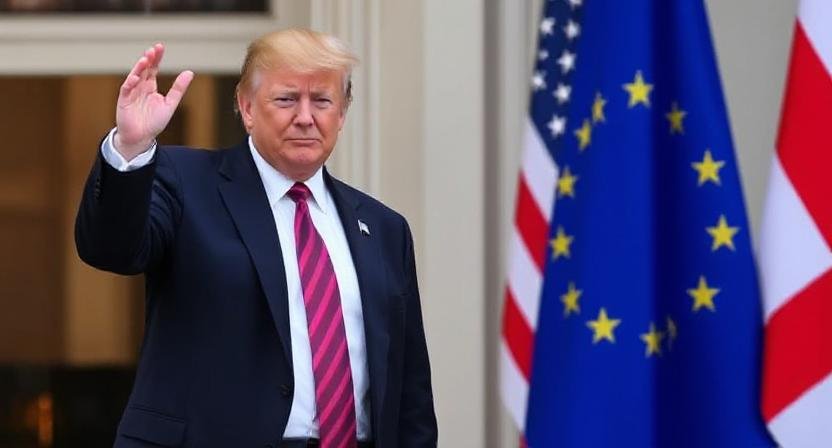
Trump’s Scotland Visit Could Reset EU-U.S. Trade Relations: Hope Rises for Breakthrough Deal Amid Tariff Strain

Trump’s Scotland Visit Could Reset EU-U.S. Trade Relations: Hope Rises for Breakthrough Deal Amid Tariff Strain

In a dramatic diplomatic breakthrough, Cambodia and Thailand agreed late Monday to an immediate and unconditional ceasefire, ending five days of intense cross-border fighting that killed at least 38 people—mostly civilians—and displaced over 300,000.

The truce, brokered after sustained mediation by Malaysia, the United States, and China, was finalized in Putrajaya after marathon talks hosted by Malaysian Prime Minister Anwar Ibrahim. However, it was former U.S. President Donald Trump who stole the spotlight—personally calling both leaders over the weekend and warning that the continuation of hostilities would jeopardize their access to U.S. markets.

“This is a vital first step towards de-escalation and the restoration of peace and security,” said Anwar, flanked by Thai acting Prime Minister Phumtham Wechayachai and Cambodian Prime Minister Hun Manet.

The fighting, which escalated rapidly last week from small arms skirmishes to heavy artillery duels and an unprecedented Thai F-16 airstrike, is the worst military conflict between the two Southeast Asian neighbours in over a decade. Tensions had simmered since late May, when a Cambodian soldier was killed near the disputed border, triggering a tit-for-tat troop buildup.

Trump, in a celebratory post on his Truth Social account, claimed credit for the breakthrough:
“By ending this war, we have saved thousands of lives. I have now ended many wars in just six months—I am proud to be the President of PEACE!”

U.S. Secretary of State Marco Rubio added in a separate statement that the U.S. expected both sides to “fully honour their commitments to end this conflict.”

The former president’s diplomatic gambit also had economic undertones. In his calls with the Cambodian and Thai leaders, Trump reportedly said the U.S. would not resume suspended trade talks while active fighting continued. Both countries currently face a 36% tariff on their exports to the United States—a critical market for both.

With the ceasefire now in place, Trump announced that negotiations would resume. Thai acting Prime Minister Phumtham expressed his gratitude:
“I thanked him from my heart for what we received from him. After today, the situation should de-escalate. Trade negotiations will now start from a good place.”

Cambodian Prime Minister Hun Manet also welcomed Trump’s intervention, calling it “decisive mediation” and praising China’s “constructive participation.”

The conflict had caused widespread destruction in border areas, with houses flattened, roads deserted, and families torn apart. In Thailand’s Sisaket province, artillery fire from Cambodia reduced homes to rubble. At an evacuation center 40 kilometers away, displaced civilians waited in anxious silence.

“I want to go to my children who stayed back,” said 54-year-old Nong Ngarmsri. “I want them to cease firing so that I can go home.”

Despite the ceasefire, challenges remain. Border distrust runs deep, and accusations continue to fly. Cambodia has denied laying landmines that maimed Thai soldiers and denied targeting schools and hospitals. Thailand, in turn, accuses Phnom Penh of premeditated aggression.

Still, the pause in fighting marks a significant diplomatic success for regional and global powers. With both leaders recommitting to direct communication and the creation of a ceasefire-monitoring mechanism, there is cautious optimism that Southeast Asia has been spared from another protracted war.

For now, peace—however fragile—has a chance.

Exit mobile version