


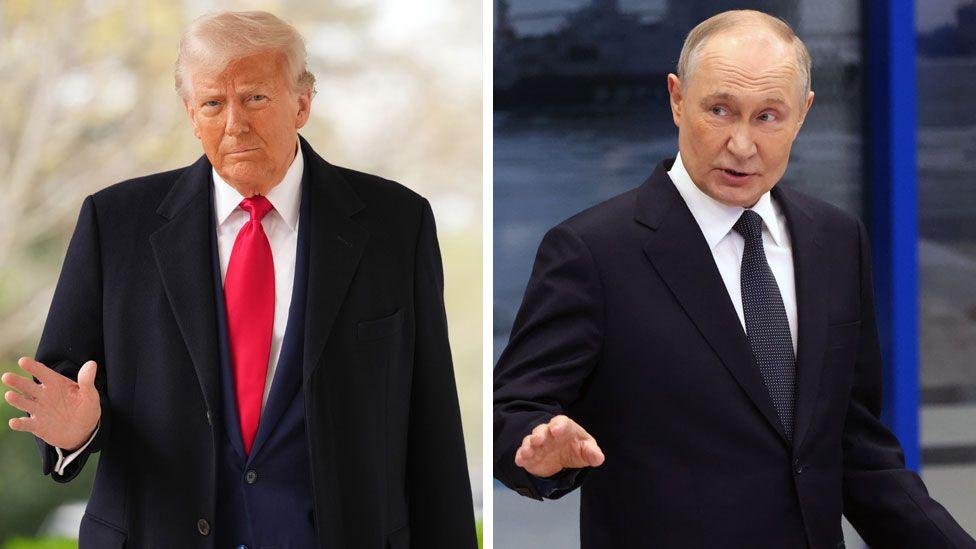
- On June 1, Ukraine launched its deepest drone strike into Russian territory, damaging over 40 aircraft at four airbases, including one in Siberia.
- Former President Donald Trump has remained silent but is reportedly weighing diplomatic outreach to Putin to prevent further escalation.
- The attacks jeopardized fragile peace talks in Istanbul and sparked fears in Moscow over potential U.S. involvement.
- Turkish President Erdoğan sees a fresh opportunity to mediate, urging restraint and deeper engagement from both sides.
WASHINGTON — President Donald Trump, now once again Commander-in-Chief, has been uncharacteristically silent following Ukraine’s audacious drone assault deep inside Russian territory on June 1, an operation that could shift the fragile trajectory of the Russia-Ukraine war—and force the United States into a delicate diplomatic balancing act.
The attack, which Ukraine dubbed “Operation Spider’s Web,” struck four Russian air bases, including one in Irkutsk, Siberia—nearly 3,000 miles from Kyiv—marking the furthest-reaching Ukrainian strike of the war. Ukrainian officials claimed 117 drones were used, smuggled via truck convoys into Russia, damaging or destroying at least 41 aircraft, some reportedly capable of carrying nuclear warheads.
The Biden-era policy of unwavering support for Ukraine is being stress-tested in Trump’s second term. Although the June 2 peace talks in Istanbul between Russia and Ukraine proceeded, they ended within an hour without any progress—overshadowed by the scale and symbolism of Ukraine’s long-range drone barrage.
Trump’s Crusade Against American Universities: A War on Ideas, Budgets, and the Global Brain Trust
As Washington weighs its response, the world watches closely: Will Trump reach out to Vladimir Putin in an effort to prevent escalation? And if so, what would that conversation sound like?
A Calculated Silence—Or a Strategic Pause?
Unlike his usual quick-fire reactions, Trump has not yet issued any public comment on the drone strikes, leading to speculation within diplomatic circles that the administration is weighing its words carefully to avoid inflaming the situation.
“Trump understands the stakes here,” said a senior White House official who spoke on condition of anonymity. “This wasn’t just a strike on military hardware—it skirted dangerously close to Russia’s nuclear infrastructure. The Kremlin’s new doctrine treats attacks on strategic systems as a possible trigger for nuclear response. That has the entire National Security Council on edge.”
Sources within the administration confirm that Trump is considering reaching out to Putin directly. However, no official statement or communication has been confirmed. “A direct call is not off the table,” the official added, “but it has to be framed properly to assure Russia the U.S. was not involved—while simultaneously keeping Ukraine supported.”
Escalation Risks and Internal Debate
Intelligence analysts warn that the drone strikes could escalate into a broader regional confrontation if not properly managed. George Beebe, former CIA Russia desk chief, said that the operation might be perceived in Moscow as a joint U.S.-Ukraine provocation, even if Washington was not directly involved.
“Russia’s doctrine clearly states that attacks affecting nuclear command or delivery systems, even by a non-nuclear power like Ukraine with the support of a nuclear ally, can justify nuclear retaliation,” Beebe said. “It’s crucial that Trump makes clear to Putin that this isn’t the path we’re on.”
There is growing concern that hardliners in Moscow could pressure Putin to respond militarily—not just against Ukraine, but symbolically against perceived Western backing.
READ MORE:How Russia Responds to Ukraine’s Drone Attack Depends on Trump
While direct escalation with the United States is still considered unlikely, indirect retaliation such as cyber operations, deep strikes on Ukrainian infrastructure, or even symbolic shows of nuclear force cannot be ruled out.
Erdogan’s Balancing Act
Turkish President Recep Tayyip Erdoğan, who hosted the latest round of talks in Istanbul, remains cautiously optimistic but visibly frustrated.
“The timing of these strikes was problematic,” Erdoğan said in remarks to Turkish media after the short-lived talks. “While I understand Ukraine’s desire to show strength, such actions complicate diplomacy. Still, we are committed to continuing the dialogue.”
Turkey has played a rare dual role in the war: maintaining lines of communication with both Kyiv and Moscow while supplying military drones to Ukraine and facilitating grain corridor agreements. Erdoğan reportedly urged both parties to “avoid provocations” and hinted that Ankara might try to mediate a more structured ceasefire proposal in the coming weeks.
Privately, Turkish officials admitted the drone strikes undermined the Istanbul summit’s purpose. “This attack made it very difficult for Putin to engage constructively,” said a Turkish diplomatic source. “Now everything is reset.”
Trump’s Peace Gambit Under Threat
Since returning to office, Trump has frequently touted his ambition to “end the war in 24 hours,” leveraging his prior relationship with Putin and his outsider status in European diplomatic circles. But this latest development complicates that narrative.
READ MORE:News Analysis: Trump’s Use of Obscure WWII-Era Law Sparks Deportation Controversy
“This strike cornered Trump,” said Evelyn Farkas, a former Pentagon official and Russia expert. “He wants peace, but now any peace overture to Putin could be seen as a reward for Russian aggression—or as a betrayal of Ukraine. It’s a lose-lose unless he threads the needle perfectly.”
Indeed, Ukrainian President Volodymyr Zelensky appeared to push for more aggressive Western support following the strike. In remarks made after the operation, Zelensky called for “immediate and severe” new sanctions on Russia. That message, analysts believe, was aimed more at Washington than at Moscow.
Looking Ahead: The Uncertain Road to De-escalation
With tensions at their highest in months, all eyes are now on what Trump does next. His options are limited but significant:
-
Option One: A Direct Call to Putin. Trump could personally reach out to assure Putin the U.S. was not behind the drone attack and seek to reinvigorate the Istanbul peace channel.
-
Option Two: Public Diplomacy. Trump might issue a carefully worded statement reaffirming American support for a negotiated peace while subtly signaling Ukraine to rein in operations likely to provoke nuclear response concerns.
-
Option Three: Pressure on Zelensky. The U.S. could use backchannel diplomacy to nudge Ukraine away from further escalation, especially deep inside Russian territory.
If mishandled, the situation risks spiralling beyond anyone’s control.
“This was a wake-up call,” Beebe noted. “And not just for Russia. It’s now crystal clear that the conflict has entered a new, more dangerous phase. What Trump does in the next 72 hours could determine whether we move toward peace—or lurch toward wider war.”