


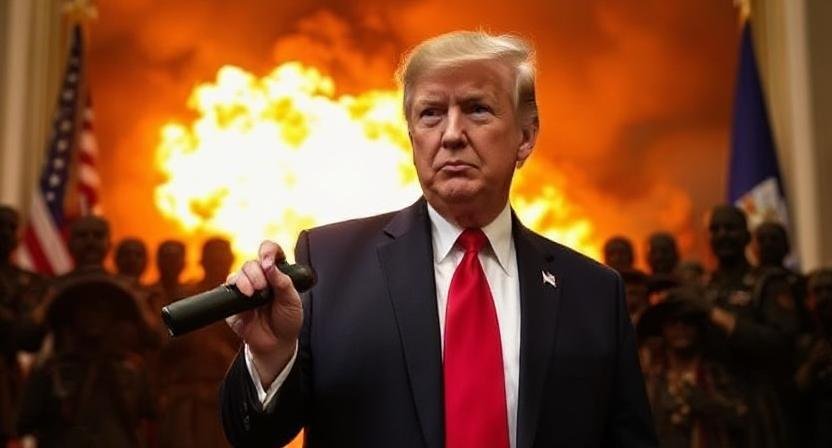
- $10B in U.S. weapons to Ukraine now hinges on European countries footing the bill.
- Germany, Norway, and six others are ready to pay, but replacements and delivery timelines remain uncertain.
- Patriot batteries, radar systems, and drone tech top the priority list—but gaps remain in long-range capability.
- Trump’s model transforms NATO solidarity into a pay-to-play arrangement, sparking a broader rethink of alliance dynamics.
BRUSSELS/WASHINGTON — July 26, 2025
President Donald Trump’s surprise pivot—agreeing to release U.S. weapon systems for Ukraine, but only if paid for by Europe—is rewriting the strategic playbook of the war, reshaping transatlantic security, and raising thorny new questions: Who arms Ukraine, who owns the war, and can this plan work at scale?
In essence, Washington is now the world’s biggest arms store—open for business, but only for paying customers. The Trump administration’s “you pay, we ship” posture, while being cautiously celebrated in European capitals as a step back from abandonment, is also forcing NATO allies into an uncomfortable role: becoming both Ukraine’s paymasters and logistical quartermasters.
Weapons for Sale, Not Aid
The core of the deal revolves around $10 billion worth of U.S. military equipment—Patriot missile batteries, interceptors, drone-jamming tech, radar systems, and artillery—which Europe is now scrambling to finance. Instead of U.S. aid, this will be a market transaction: European nations will buy replacements from American stockpiles, allowing their own older systems to be handed over to Kyiv.
Germany is spearheading the effort. It has pledged to fund at least two Patriot systems and possibly contribute to five total, despite having already donated three. Norway, backed by its $1.6 trillion oil-fed sovereign wealth fund, has doubled its annual Ukraine pledge to $7.8 billion. A coalition of at least six more countries—Denmark, Sweden, Finland, the Netherlands, Britain, and Canada—is preparing to join the funding effort.
READ MORE: Europe and China Warm Up as Trump’s Tariffs Redraw Global Trade Lines
But the strategy is fraught with contradictions. As NATO Secretary-General Mark Rutte diplomatically put it, “You want Europeans to pay for it—which is totally logical.” Still, he conceded, the operational details remain murky, especially regarding how fast the U.S. defense industry can produce backfill units.
Patriots at a Premium
Patriot batteries, produced by Raytheon, cost upwards of $1 billion each. Interceptor missiles, which are critical for stopping Russian ballistic attacks on Ukrainian cities, run about $4 million apiece. Ukraine says it needs at least 10 batteries and has received only three so far. Switzerland’s recent order of Patriots is now delayed as supplies are diverted to Ukraine under the new plan—raising questions of fairness and strategic priority.
Binge, borrow and deal: Europe digs deep to buy U.S. arms for Ukraine
Germany, the most enthusiastic European supporter, is leveraging its newly amended constitution to free up hundreds of billions of euros for defense spending. Yet even Berlin’s defense minister, Boris Pistorius, stopped short of detailing timelines, hinting that more talks with the Pentagon are ongoing.
A New Transatlantic Compact or a Transactional Trap?
Trump’s plan, while initially feared to mark a retreat from U.S. engagement, may instead be a hard-edged reconfiguration of NATO’s 21st-century burden-sharing. Washington supplies the firepower, Europe supplies the cash. But it also cements an openly transactional foreign policy that critics say reduces U.S. leadership to vendor-client relationships.
“This may be a return to pre-Trump status quo in form,” said Rachel Ellehuus, director of the Royal United Services Institute in London and a former U.S. NATO adviser. “But in tone and structure, it’s something entirely new. The U.S. isn’t pledging solidarity—it’s offering stock at a markup.”
That posture unsettles many European leaders, including EU foreign affairs chief Kaja Kallas. “If you promise to give the weapons, but say someone else is going to pay, it’s not really your support, is it?” she asked pointedly in Brussels.
European capitals, while keen to protect Ukraine, are also facing mounting domestic economic strain. Britain’s new government under Keir Starmer is struggling with low growth. France has yet to commit anything publicly. And Scandinavian nations are hedging their pledges on “partnering up”—meaning no country wants to go it alone.
NATO’s Arithmetic of Appearances
To ease financial hesitation, Trump has approved a NATO rule change: military aid to Ukraine now counts toward each country’s new 5% defense spending pledge—another policy shift driven by Trump’s insistence that Europe pay more for its own security. That may ease political pressure at home, but it doesn’t solve production delays or replacement bottlenecks.
Even U.S. officials, such as NATO Ambassador Matthew G. Whitaker, have acknowledged the limitations: “The American taxpayer has borne the burden. Now we’re saying: we’ll open the warehouse—but others must pay to access it.”
In fact, many European countries fear a longer-term consequence: this policy could cement U.S. disengagement as the norm, not the exception. Even though Trump has authorized the deal, his hesitation to commit weapons unconditionally has forced Europe into a structural role it isn’t fully prepared for.
The Russia Factor and What’s Missing
Meanwhile, the Kremlin has dismissed the new plan as inconsequential. “It will not alter the strategic picture,” said Russian Defense Ministry spokesperson Igor Konashenkov. But Kyiv believes otherwise.
President Volodymyr Zelensky has emphasized the urgency: “Our task is to find funding for all 10 systems,” he told reporters this week. Yet Kyiv is still denied long-range strike systems like Germany’s Taurus cruise missiles. NATO diplomats haven’t ruled out future U.S. provision of such weapons, but Trump has remained publicly noncommittal.
Behind the scenes, however, discussions are underway about drone interceptors, EW systems, and artillery deliveries—all items that could help stabilize the frontline as Russia pushes harder in Donetsk and Kharkiv.
A Strategic Gamble
What Trump’s plan ultimately represents is a bold experiment in defense outsourcing. It compels Europe to lead militarily while ensuring American industries benefit financially. If successful, it may keep Ukraine afloat through 2025. But if replacement timelines stretch, or budgets collapse under economic pressure, it risks becoming a halfway measure that emboldens Russia and disillusions Ukraine’s most loyal backers.
“It’s business,” said one senior European diplomat who requested anonymity. “But it’s not the kind of solidarity we grew up with in NATO.”