


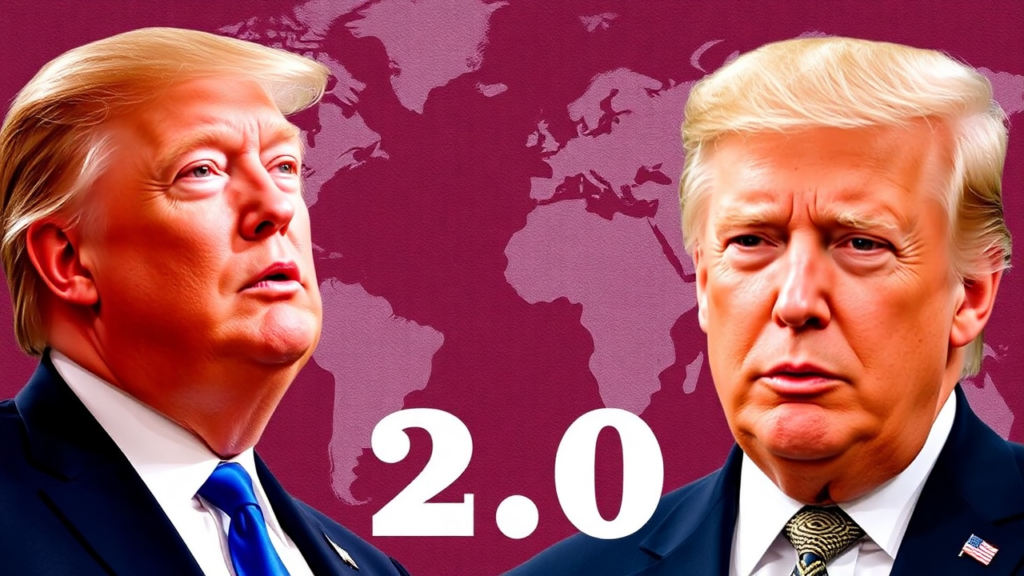
- From Trade Wars to Cold Wars: A clash of superpowers—US, China, and Russia—reshapes global alliances.
- Fractured Alliances: NATO, the EU, and other Western coalitions face unprecedented strain.
- Global Economic Chaos: Trade wars, de-dollarization, and energy volatility loom.
- Geopolitical Flashpoints: Middle East, South Asia, and Far East become pivotal battlegrounds.
As Donald Trump secures a second term in 2025, the world braces for a potentially seismic shift in geopolitics. What might the new world order look like? How will relations among the United States, China, and Russia evolve?
What are the potential ripple effects across the Middle East, Europe, South America, the Far East, and South Asia? Will the global order—in both economic and security terms—be rewritten, fractured, or thrust into chaos? These pressing questions loom large as the American presidency reasserts itself on the world stage under Trump’s familiar but contentious leadership.
The rapid signing of executive orders in the opening hours of Trump’s presidency signals a decisive, uncompromising approach. This time, however, the stakes feel higher. The world stands at a crossroads, caught between the contours of a fractured global order and the possibilities of strategic realignment. Let’s explore how Trump 2.0 might shape the international landscape.
1. The New World Order: Fragmentation or Realignment?
Trump’s “America First” doctrine underscores his transactional worldview, where alliances are measured not by shared values but by immediate returns. This philosophy threatens to undermine the cohesion of international institutions like NATO, the United Nations, and the World Trade Organization, potentially relegating them to the sidelines. The United States’ partial withdrawal from global leadership creates power vacuums that opportunistic rivals are eager to fill.
A Rising Multipolar World
The global order may tilt further toward multipolarity, with the United States, China, and Russia vying for influence. In this paradigm, the US is likely to leverage its military and economic might—albeit in a more unpredictable, self-serving manner—to reassert dominance. However, this approach risks alienating allies and emboldening adversaries.
Rivalry Redefined: US-China Relations in the Trump Administration
Western Unity Under Strain
Trump’s skepticism of traditional alliances such as NATO and the European Union could deepen rifts within the Western bloc. The war in Ukraine will serve as a litmus test. A reduction in US support for NATO or Ukraine could fracture transatlantic solidarity, leaving European nations scrambling to fill the void. Such a scenario would offer fertile ground for adversaries like Russia to expand their influence.
Authoritarian States on the Rise
China and Russia are poised to exploit Western disunity to strengthen their foothold in global affairs. China, with its growing economic clout, and Russia, with its strategic assertiveness, could reshape the geopolitical map.
‘Trump 2.0’ looms large over the global economy
The South China Sea and Taiwan Strait remain potential flashpoints. While the prospect of outright military conflict may be low, the risk of miscalculation could ignite regional crises with global repercussions.
2. US-China-Russia Relations: Unpredictable Rivalries
US-China: From Trade Wars to Cold War 2.0?
Under Trump’s second term, the US-China relationship may devolve into a full-fledged economic and geopolitical rivalry. Here are potential developments:
- Escalation of Trade Wars: Further tariffs and economic decoupling could deepen divisions between the two superpowers, disrupting global supply chains.
- Technological Cold War: Restrictions on Chinese firms, particularly in tech and AI sectors, may expand, forcing other nations to choose sides.
- Taiwan as a Flashpoint: Heightened US military support for Taiwan could provoke a more assertive Chinese response, escalating regional tensions.
In retaliation, China could double down on alliances with Russia, Iran, and the Global South, accelerating de-dollarization efforts and seeking alternative trade networks to counter US influence.
US-Russia: A Strategic Gamble
Trump’s admiration for Vladimir Putin could reshape US-Russia relations, albeit within limits imposed by entrenched mistrust. Possible outcomes include:
- Reduced Support for Ukraine: The US might pressure Kyiv into negotiating with Moscow, weakening Ukraine’s hand in the conflict.
- Weakening NATO: Diminished US commitments to NATO could embolden Russian ambitions in Eastern Europe.
- Energy Realignments: Trump’s policies could allow Russia greater leverage over global energy markets, undermining US efforts to achieve energy dominance.
Yet, the fraught history of US-Russia relations—characterized by mutual suspicion—will likely prevent a full rapprochement, leaving their interactions marked by both cooperation and competition.
3. Regional Impacts: A World in Flux
Middle East: A Stage for Continuity
In the Middle East, Trump’s policies are unlikely to deviate significantly from his first term. Strong support for Israel and a transactional approach to Arab states will likely persist. The Israeli-Palestinian conflict will remain a low priority, while relations with Iran could grow more adversarial, marked by sanctions and potential military posturing.
How U.S. Tariffs on China Could Hurt American Consumers and Tech Giants More
Europe: A Fractured Alliance?
Europe may find itself increasingly isolated as Trump’s policies strain transatlantic ties. Diminished US commitment to NATO could force European nations to shoulder greater defense responsibilities. Meanwhile, internal divisions within the EU, compounded by post-Brexit dynamics, could further erode its unity.
South America: Neglect and Uncertainty
Trump’s focus on stemming migration and countering leftist governments may dominate US policy in South America. Trade relations with key partners like Mexico and Brazil could face renewed scrutiny, potentially destabilizing regional economies.
Far East: A Powder Keg
In the Far East, US-China tensions will cast a long shadow. Allies like Japan and South Korea may face growing pressure to align more closely with Washington, even as they seek to maintain stability in their own region. The increased US military presence in Asia could exacerbate tensions, making the region a geopolitical tinderbox.
South Asia: A Crucial Chessboard
South Asia’s importance in Trump’s geopolitical calculus cannot be overstated. India’s role as a counterweight to China will likely deepen, with expanded defense cooperation and economic ties. Pakistan’s relations with the US, meanwhile, will remain transactional, shaped by its proximity to China and the evolving situation in Afghanistan. The region’s economic prospects will hinge on broader US-China dynamics and energy policies.
4. Global Economic Impacts: Boom or Bust?
Trump’s economic policies could trigger both short-term volatility and long-term structural changes:
Trade Disruptions
Heightened tariffs on China and the EU could upend global supply chains, driving up costs for businesses and consumers. Nations dependent on exports may feel the brunt of these disruptions.
Stock Market Volatility
While Wall Street may initially respond positively to tax cuts and deregulation, fears of trade wars and rising national debt could unsettle markets over time.
Accelerated De-Dollarization
Trump’s policies may hasten global efforts to reduce reliance on the US dollar, with China and Russia leading the charge. This shift could undermine the US’s financial dominance and reshape international trade norms.
Energy Market Turmoil
Trump’s focus on fossil fuels could disrupt global energy markets. Russia and OPEC nations may capitalize on these shifts, complicating the US’s energy strategy.
5. The Human Impact: Uncertainty and Adaptation
For ordinary citizens, a Trump 2.0 presidency will bring palpable consequences:
- Geopolitical Anxiety: Heightened tensions and economic unpredictability could exacerbate global instability.
- Restricted Mobility: Stricter visa policies and trade restrictions may limit opportunities for travel and commerce.
- Increased Defense Spending: Nations may divert resources from social programs to bolster military capabilities.
- Nationalist Resurgence: Trump’s policies may inspire similar movements globally, fueling economic protectionism and political polarization.
Final Thoughts: Strategic Realignment or Chaotic Unraveling?
A second Trump presidency represents a pivotal moment for the global order. Will it catalyze strategic realignments or hasten the unraveling of established norms? While some nations may exploit reduced US engagement to assert themselves, others will grapple with heightened economic and security challenges. The world is poised to become more polarized and unpredictable, demanding agility and resilience from nations navigating these turbulent times. One thing is clear: the Trump 2.0 era promises to reshape the geopolitical landscape—and the stakes could not be higher.