


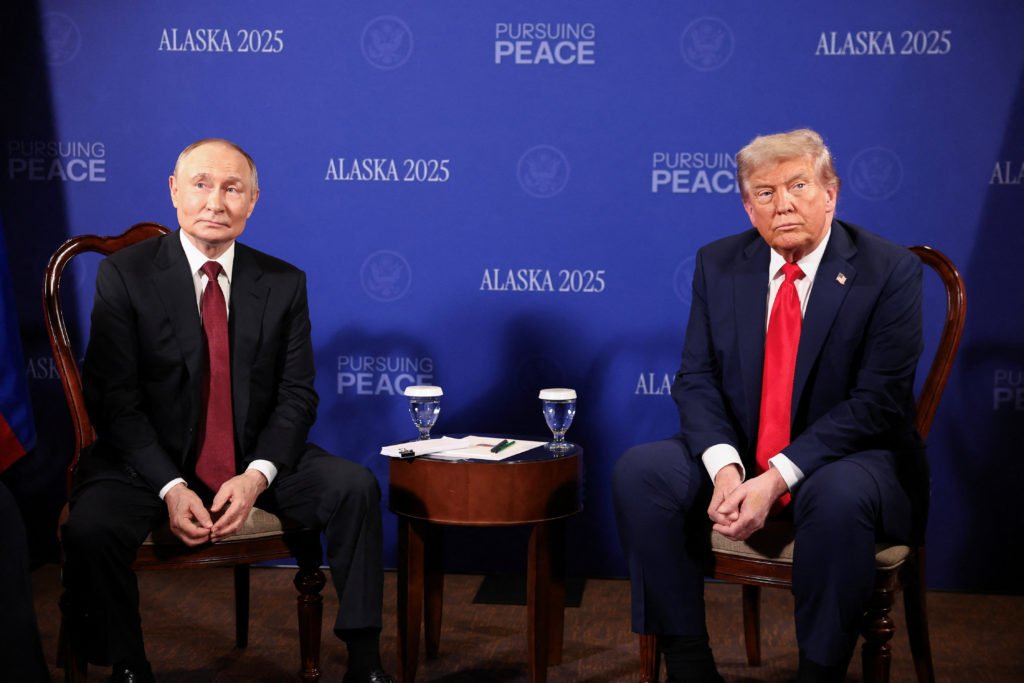
- Trump plans a Budapest peace summit with Vladimir Putin to end the Russia-Ukraine war.
- Melania Trump is reportedly engaging in discreet diplomatic outreach to Moscow.
- Trump uses missile diplomacy and sanctions leverage to push both sides toward truce.
- If successful, this would cement Trump’s legacy as the 21st century’s most audacious pe
Donald J. Trump, riding a wave of diplomatic triumph after brokering a truce between Israel and Hamas, is preparing what could be the most ambitious geopolitical move of his presidency: ending the war in Ukraine. Sources in Washington, Moscow, and Budapest confirm that Trump and Russian President Vladimir Putin will meet in Hungary “within two weeks or so” — a moment that could redefine global power balances and potentially bring an end to one of the bloodiest conflicts of the 21st century.
The announcement follows a “productive” phone conversation between the two leaders, which Trump described on Truth Social as a “great step toward peace.” Behind the scenes, the effort reflects not only Trump’s desire to cement his legacy as a peacemaker but also his characteristic blend of boldness and unpredictability — one that continues to leave European capitals both anxious and intrigued.
From Gaza to Kyiv: Trump’s Expanding Peace Portfolio
For months, diplomats have whispered about Trump’s growing obsession with global stability. Having defused tensions in Gaza and helped avert a near-nuclear confrontation between Pakistan and India, Trump now sees Ukraine as the missing piece in his global peace mosaic.
“Trump believes he’s on a historic mission,” a senior White House aide told The Telegraph. “He genuinely thinks he can pull this off — not through bureaucracy, but through chemistry, intuition, and leverage.”
The same aide hinted that First Lady Melania Trump has been playing a quiet but significant role. Sources in European diplomatic circles claim Melania has maintained discreet communications with intermediaries linked to Putin’s inner circle, helping soften Moscow’s tone toward Washington in recent weeks.
“She has a unique rapport that transcends politics,” one senior European official remarked. “If peace talks do happen in Budapest, don’t underestimate her influence in paving the way.”
Budapest: A Symbolic Stage for a Fragile Hope
The choice of Budapest is not accidental. Hungarian Prime Minister Viktor Orbán, one of Europe’s few openly pro-Russia leaders, has long positioned himself as a bridge between East and West. Hosting both Trump and Putin gives Hungary a rare geopolitical spotlight — and offers both leaders a neutral, friendly venue to talk candidly.
For Trump, the optics are powerful. His critics accuse him of being too close to Putin; his supporters argue that this closeness is precisely why he might succeed where others have failed. “They trust each other enough to negotiate honestly,” says former U.S. diplomat Richard Grenell, a long-time Trump ally. “That’s the starting point of every real peace deal.”
Putin, meanwhile, enters the meeting with his own calculations. The Russian leader wants relief from the tightening noose of Western sanctions and hopes to leverage trade incentives to win Trump’s cooperation. Putin adviser Yuri Ushakov told reporters that Trump had emphasized “enormous prospects” for renewed U.S.-Russia economic cooperation should the war end — a veiled signal that Washington might consider easing sanctions if Moscow agrees to a ceasefire.
Zelensky’s Dilemma: Between Missiles and Diplomacy
Complicating Trump’s peace drive is his relationship with Ukrainian President Volodymyr Zelensky, who visits Washington this week. Zelensky has been pressing for Tomahawk cruise missiles — long-range U.S. weapons capable of striking Moscow itself.
The request has split Washington’s foreign policy establishment. Hawks in Congress view the missile deliveries as necessary leverage to force Moscow into talks; Trump’s inner circle, however, sees them as dangerous escalation.
“We need Tomahawks for America too,” Trump said Thursday, signaling reluctance to hand over the weapons. “They’re powerful, they’re accurate, but they’re vital for our defense.”
Privately, Trump aides believe withholding the missiles strengthens his negotiating hand with Putin — signaling restraint while maintaining the illusion of potential escalation. “It’s classic Trump art-of-the-deal logic,” said one senior official. “He creates tension, then uses it to drive compromise.”
A War of Attrition, and a Chance for Change
More than two years into Russia’s invasion, the battlefield has settled into a stalemate. Drones dominate the skies, trenches stretch endlessly across Ukraine’s eastern plains, and neither side has made major territorial gains in a year.
Estimates vary, but Western intelligence sources suggest that over a million soldiers from both sides have been killed or wounded since 2022. Ukraine continues to resist with extraordinary tenacity, but exhaustion — political, economic, and human — is spreading across Europe.
For Trump, that fatigue is his opening. He has told aides that “the world is ready for peace” and that “only someone outside the establishment” can deliver it. He points to his record: a brokered Gaza truce, stabilized Indo-Pakistani relations, and de-escalation in the Korean Peninsula. Now, he wants to add Ukraine to the list.
Congress in Motion, Markets in Wait
Meanwhile, in Washington, lawmakers are preparing a new sanctions package that would impose 500 percent tariffs on Russian energy and uranium exports. The bipartisan bill enjoys overwhelming support, but Trump has hinted he may delay or even block it if he believes a peace deal is close.
“I’m not against anything,” Trump told reporters. “But if peace happens in a week or two, why would we spoil it with new sanctions?”
Financial markets have reacted cautiously but positively. Oil futures dropped slightly on speculation of reduced geopolitical risk, while European gas prices fell to a three-month low. Investors, however, remain skeptical that a Trump-Putin deal could hold, given the deep mistrust on both sides.
Melania’s Shadow Diplomacy
Perhaps the most intriguing subplot is the whispered role of Melania Trump. Diplomats in Prague, Ljubljana, and Vienna — cities where she maintains close social and familial ties — claim that intermediaries connected to her circle have quietly engaged with Russian business and political figures sympathetic to the Kremlin.
One European intelligence officer, speaking on condition of anonymity, said Melania’s background and linguistic skills have made her “an unexpected asset in backchannel communication.”
“It’s not traditional diplomacy,” the officer said. “But in Trump’s world, personal connections often matter more than formal channels. Melania’s quiet influence is helping to soften what would otherwise be an impossible atmosphere.”
The Trump Doctrine: Chaos, Leverage, and Legacy
Trump’s approach to foreign policy remains unapologetically transactional. He views every crisis as a potential deal, every adversary as a future partner, and every sanction as a negotiating chip. Critics call it reckless improvisation; admirers call it strategic genius.
Either way, his method has undeniably yielded results. He has diffused at least nine international flashpoints in less than two years — from Gaza to the Taiwan Strait, from Kashmir to the Horn of Africa. If he now manages to end the Ukraine war, it would mark one of the most consequential diplomatic streaks in modern history.
“Peace through leverage,” he likes to say, “not through weakness.”
A Prophecy of Peace — or a Mirage of Power?
The Budapest summit could change everything — or nothing. Much depends on whether Trump can translate his bravado into a durable framework acceptable to both Kyiv and Moscow. Putin seeks recognition of Russia’s territorial claims; Zelensky demands full sovereignty restoration. The gap remains vast.
But in the unpredictable world of Trumpian diplomacy, impossibility has never been a barrier.
If the Gaza deal was Trump’s rehearsal, the Ukraine peace summit could be his masterpiece — the moment he reshapes not just the war, but the architecture of world order itself.
Whether it ends in triumph or illusion, one thing is certain: the world will be watching Budapest — and Donald Trump — as history holds its breath.