


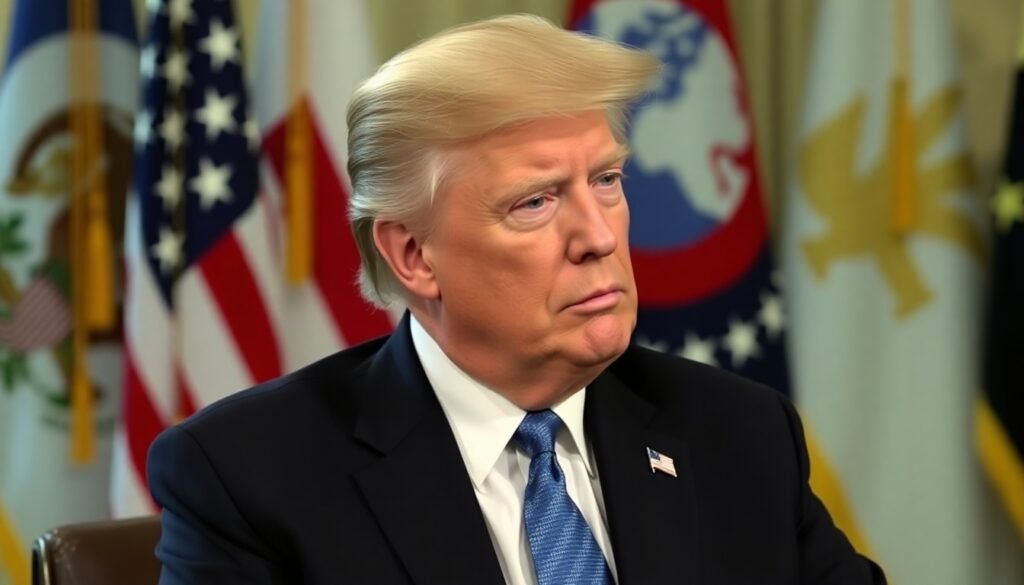
- resident-elect Donald Trump criticized Ukraine’s use of US-supplied missiles for strikes in Russian territory, calling it “crazy” and escalating tensions.
- Trump hinted at a potential shift in US policy towards Ukraine but remained vague on specific plans.
- European leaders and Ukrainian officials fear reduced US support under Trump’s administration.
- Biden’s lifting of the missile-use ban was driven by Russia’s deployment of North Korean troops, intensifying the conflict.
In a move that has sent shockwaves through Europe and Ukraine, US president-elect Donald Trump strongly criticized Ukraine’s use of US-supplied missiles to conduct strikes deep into Russian territory. Speaking in an interview with Time magazine, published yesterday, Trump questioned the wisdom of such actions and hinted at potential shifts in US policy once he assumes office.
“It’s crazy what’s taking place. It’s crazy,” Trump remarked during the interview, which was conducted to commemorate his selection as Time’s Person of the Year. “I disagree very vehemently with sending missiles hundreds of miles into Russia. Why are we doing that? We’re just escalating this war and making it worse. That should not have been allowed to be done.”
It’s crazy what’s taking place. It’s crazy.I disagree very vehemently with sending missiles hundreds of miles into Russia. Why are we doing that? We’re just escalating this war and making it worse. That should not have been allowed to be done.
Trump’s statements come amidst heightened tensions following President Joe Biden’s decision last month to lift a ban on Ukraine using US-provided longer-range missiles, such as the ATACMS, for strikes on Russian territory.
US-China Rivalry Heats Up with Biden Administration’s Missile Defense Test
This policy shift was a response to urgent pleas from Ukrainian President Volodymyr Zelenskiy, who sought enhanced capabilities to repel Russia’s ongoing invasion. The White House justified its decision by citing Russia’s recent deployment of 15,000 North Korean troops along the frontlines, which it described as a significant escalation.
European and Ukrainian Reactions
Trump’s comments have caused alarm among European leaders and Ukrainian officials, who fear that the president-elect’s stance might signal a rollback of US support for Kyiv. Analysts believe Trump’s statements could embolden Russia while undermining Ukraine’s military efforts and morale.
“The president-elect’s remarks have introduced a new layer of uncertainty,” said Ivan Khodakov, a military analyst based in Kyiv. “Ukraine relies heavily on US military aid, not just for defense but as a signal of Western unity against Russian aggression. Any indication that this support might waver is deeply concerning.”
News Analysis: Trump’s Strategy for Middle East Turmoil
European capitals are also watching closely. Trump’s critical tone raises questions about whether the US will continue its leadership role within NATO, particularly as the alliance grapples with Russia’s growing military assertiveness. “This is not just about missiles; it’s about the credibility of Western deterrence,” remarked a European diplomat who spoke on the condition of anonymity.
Trump’s Vision for the Ukraine Conflict
While Trump has repeatedly stated his desire to bring the nearly three-year-old war to a swift end, he has been tight-lipped about the specifics of his approach. During the interview, he hinted at having a “very good plan” to resolve the conflict but declined to elaborate, saying, “If I reveal it now, it becomes almost a worthless plan.”
Trump also denied that he intended to “abandon” Ukraine but emphasized the need for an agreement. “I want to reach an agreement, and the only way you’re going to reach an agreement is not to abandon,” he said. However, he left open the possibility of conditioning future military and humanitarian aid on Kyiv’s willingness to negotiate a peace deal.
Trump ‘vehemently disagrees’ with use of US missiles by Ukraine in Russia
One complicating factor Trump acknowledged was Russia’s incorporation of North Korean troops into its forces. “The entry of North Korean troops into the picture is a very complicating factor,” he noted. Trump also expressed concern over the human toll of the conflict, describing the death toll in recent months as “staggering” and calling it a tragedy for both sides.
The Airfield Attack and Russian Escalations
The controversy surrounding the use of US-supplied missiles intensified this week after Ukraine launched an overnight strike on an airfield in Taganrog, a port city in Russia’s southern Rostov region. Russia’s defense ministry condemned the attack and vowed a “definite” response. The Kremlin has repeatedly warned that it considers such strikes to be direct provocations by the US.
Adding to the tension, Russian President Vladimir Putin has threatened to retaliate with the deployment of Oreshnik, a new hypersonic ballistic missile capable of targeting Kyiv. Putin’s threats underscore the risks of escalation, particularly as Ukraine’s military continues to push back against Russian advances with enhanced Western support.
Biden’s Policy Legacy and Trump’s Potential Pivot
Biden’s decision to provide longer-range missiles to Ukraine marked a significant policy shift and was seen as an effort to counterbalance Russia’s recent military maneuvers. The introduction of North Korean troops into the conflict was a key factor behind the change, according to the White House. However, critics argue that this escalation has further entrenched the conflict, making a diplomatic resolution more elusive.
Trump’s comments suggest he may seek to pivot from Biden’s approach. While he has not explicitly outlined his policy, his criticism of missile strikes indicates a preference for de-escalation and negotiation over military engagement. This could involve pressuring Ukraine to accept territorial concessions, a move that would likely face fierce resistance from Kyiv and its European allies.
“Trump’s statements point to a potential recalibration of US foreign policy,” said Dr. Elena Markov, a professor of international relations. “If he takes a less confrontational stance toward Russia, it could shift the dynamics of the conflict but also risk fracturing the transatlantic alliance.”
As Trump prepares to take office, his comments on Ukraine highlight the uncertainties surrounding US policy in the region. While his criticism of missile strikes resonates with concerns about escalation, it also raises fears of diminished US support for Ukraine. For European leaders, Ukraine’s government, and the international community, the president-elect’s approach will be closely scrutinized in the coming months. Whether Trump’s “very good plan” leads to peace or further complicates the conflict remains to be seen.