


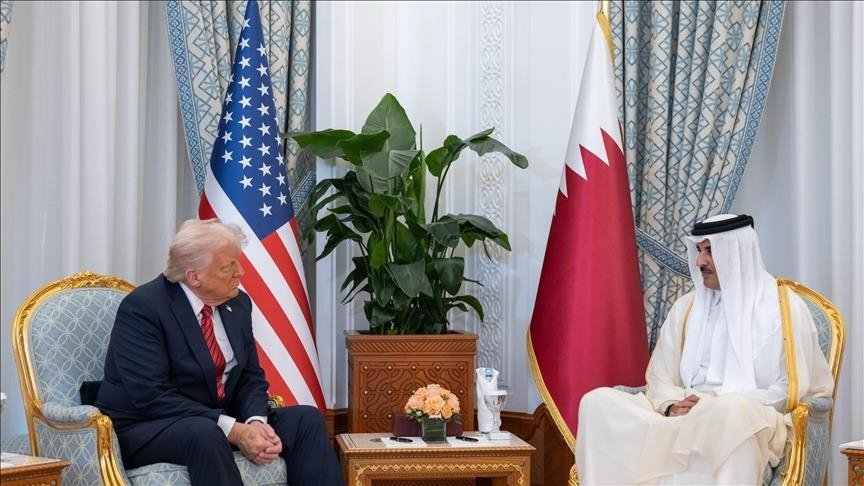
- Trump’s balancing act: The U.S. president dined with Qatar’s PM days after Israel’s strike, signaling efforts to calm tensions without alienating Netanyahu.
- Qatar’s mediation under threat: Doha vowed to continue peace efforts despite calling the strike “state terrorism.”
- Regional fallout: Arab states, the EU, and rights groups condemned Israel, warning of escalation across the Gulf.
- Trump’s credibility at stake: His reaction will decide whether Washington retains influence or cedes ground to rivals like Iran, Turkey, and China.
When U.S. President Donald Trump sat down for dinner with Qatari Prime Minister Sheikh Mohammed bin Abdulrahman al-Thani in New York, it was not just a routine diplomatic engagement. It was damage control. Only days earlier, Israel had launched a surprise airstrike in Doha targeting Hamas political leaders, killing at least one Qatari security officer and injuring others. The attack shocked the region, undermined Qatar’s standing as a mediator in Gaza, and humiliated Washington, which appeared blindsided. Against this backdrop, the dinner became a high-stakes gesture aimed at repairing trust, calming tempers, and salvaging America’s influence in a region teetering on the edge.
Trump was visibly irked by Israel’s move. “I was very unhappy about the way that went down,” he admitted. Yet, his frustration has not translated into concrete action. The dinner with al-Thani was symbolic—an attempt to assure Doha that Washington still considers Qatar a vital partner. But beneath the handshakes and warm words lies a deeper question: is Trump really in control of Middle Eastern diplomacy, or has Prime Minister Benjamin Netanyahu once again outmaneuvered him?
Netanyahu’s Defiance and Trump’s Embarrassment
The Israeli strike on Qatar fits a troubling pattern. Netanyahu has repeatedly acted unilaterally, whether in Gaza, Iran, Lebanon, or now Doha, confident that Washington will ultimately back down from serious pushback. This time, the consequences are more explosive. Qatar is not just another Arab capital—it is a U.S. non-NATO ally, home to the Al-Udeid Air Base, and a central broker in Gaza ceasefire negotiations.
By targeting Hamas leaders on Qatari soil, Netanyahu signaled that no space is off-limits. For Trump, the optics were humiliating. American weapons were used by Israel to bomb one of America’s closest Gulf allies, and the U.S. president admitted he found out from the military, not from Netanyahu. For a man who prides himself on personal diplomacy and dealmaking, it was a public slap in the face.
The Dinner: Reassurance, Not Resolution
Friday’s dinner in New York, attended also by U.S. envoy Steve Witkoff, was Washington’s attempt to reassure Doha. The White House confirmed the meeting but offered no details, a sign of its delicacy. Reports suggest discussions centered on Qatar’s future as mediator, security cooperation, and guarantees that such attacks would not be repeated.
For Qatar, however, words may not be enough. Prime Minister al-Thani has already branded Israel’s move “state terrorism” and accused Netanyahu of trying to sabotage peace efforts. By hosting Hamas leaders for years, Doha positioned itself as an indispensable middleman, one both Washington and Tel Aviv tolerated. Now, that delicate balancing act has been violently disrupted.
Regional and Global Fallout
The fallout has been swift. Saudi Arabia, Egypt, and the UAE condemned the strike, despite their varying degrees of cooperation with Israel. The European Union called it a breach of international law, while the United Nations warned it risked derailing fragile ceasefire talks. Even Pope Leo expressed concern, adding moral weight to the global backlash.
The Organization of Islamic Cooperation (OIC), often criticized for inaction, faces mounting pressure to respond. An attack on Qatar, one of its most active members, cannot be ignored. If the OIC frames the strike as an assault on the sovereignty of the Muslim world, it could galvanize public anger across the region and force reluctant Arab governments into coordinated diplomatic retaliation.
Trump’s Balancing Act
Trump finds himself in a strategic bind. On one hand, he values Netanyahu as his strongest ally in the region and has historically given Israel wide latitude. On the other hand, Qatar is indispensable: it hosts U.S. troops, bankrolls reconstruction in Gaza, and has facilitated hostage negotiations. Alienating Doha risks weakening America’s hand in the Gulf, pushing Qatar closer to rivals like Turkey, Iran, or even China.
The dinner was Trump’s way of showing solidarity with Qatar while avoiding open confrontation with Israel. He condemned the unilateral strike but also praised Israel’s targeting of Hamas as a “worthy goal.” This dual messaging—reassuring Doha while placating Tel Aviv—exposes the contradictions in Trump’s Middle East policy. Allies see it as inconsistency; adversaries see it as weakness.
A Region on the Brink
The danger now is escalation. Israel’s strike extended the Gaza conflict into the Gulf, crossing a red line for many Arab states. If Qatar hardens its position—by leveraging OIC support, lobbying for UN action, or even reconsidering aspects of U.S. military presence—the entire architecture of Gulf security could be shaken. For energy markets and global stability, that would be catastrophic.
Meanwhile, the humanitarian disaster in Gaza grows worse. Over 64,000 Palestinians have been killed since 2023, according to local authorities, with famine and displacement reaching catastrophic levels. Families of Israeli hostages also fear that Netanyahu’s reckless military decisions are jeopardizing their loved ones’ survival. The Qatar strike, which Hamas claims targeted its ceasefire negotiators, may have destroyed the last fragile pathways to peace.
Dinner Cannot Hide the Cracks
Trump’s dinner with al-Thani was more about optics than outcomes. It allowed Washington to signal respect for Qatar’s role and to downplay the humiliation of being sidelined by Israel. But dinners and photo-ops cannot substitute for strategy. Unless Trump confronts Netanyahu’s unilateralism, American credibility in the Gulf will continue to erode.
The Middle East today stands closer to a regional war than at any point since 2023. Netanyahu knows Trump will grumble but not punish. Qatar knows it has been betrayed, yet remains too pragmatic to break ties. And Trump knows his balancing act cannot hold forever. Friday’s dinner may have calmed nerves for the night, but the fault lines remain. The next Israeli strike could rip them wide open.