


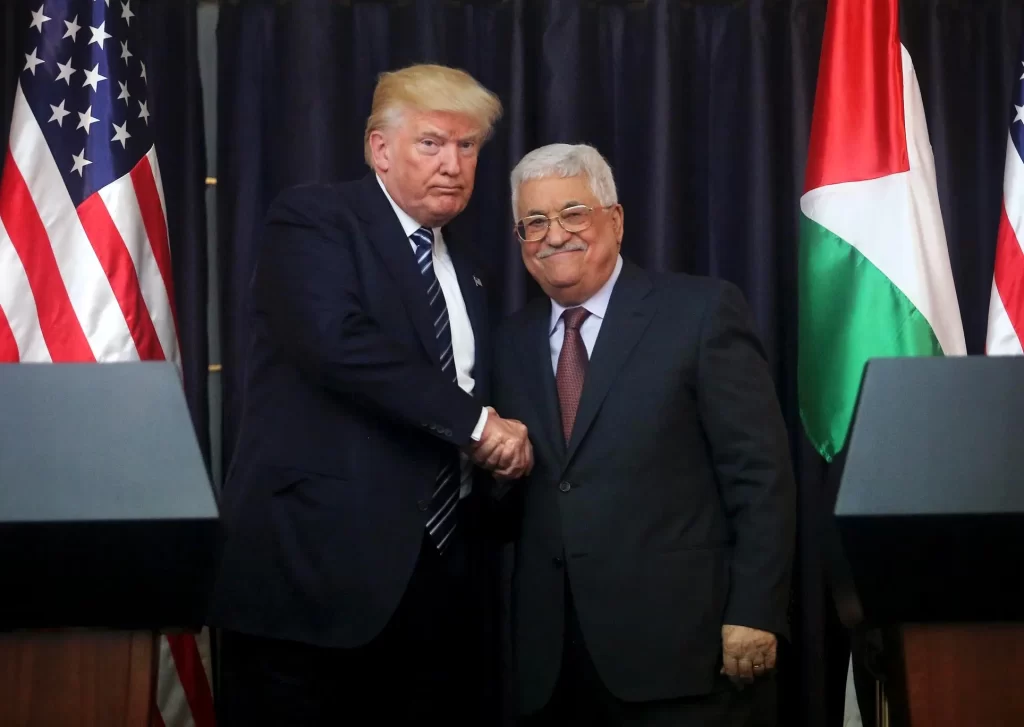
- Hostage Release Imminent: Families in Tel Aviv and Gaza celebrate Trump’s plan that promises the return of Israeli hostages within days.
- Troop Withdrawal: Israel agrees to a partial withdrawal from Gaza as part of the first phase of the deal.
- Historic Relief: After two years of devastation and more than 67,000 killed in Gaza, peace feels closer than ever.
- Fragile but Promising: Skepticism lingers over Gaza’s post-war governance and the fate of Hamas, but hope has returned to the region.
For the first time in years, the Middle East is waking up to an unfamiliar but long-desired sound: hope. It is a fragile, trembling hope—carried on the back of broken lives, scarred cities, and the memories of unending war—but hope nonetheless. U.S. President Donald Trump’s announcement that Israel and Hamas have agreed to the first stage of his 20-point peace framework for Gaza has set off waves of cautious optimism, both in the streets of Gaza and in the squares of Tel Aviv.
The agreement, expected to be signed on Thursday noon in Israel, marks what could be the beginning of the end of a devastating conflict that has already claimed more than 67,000 Palestinian lives and left much of the Gaza Strip in ruins. The deal’s key promise is simple yet monumental: the release of Israeli hostages and a partial withdrawal of Israeli forces from Gaza within 24 hours of its signing.
“Gaza at the Crossroads: Will Peace Talks End the War—or Restart the Cycle?”
That sentence alone carries a weight that many thought impossible even a few weeks ago. For the families of hostages, for Palestinians enduring bombardments, and for millions across the Arab world who have watched Gaza burn in real time, this is not just a diplomatic breakthrough—it is a moment of collective exhale.
A Region That Longed for Peace
In Khan Younis, a battered city in southern Gaza, Abdul Majeed Abd Rabbo spoke words that echoed the collective mood: “Thank God for the ceasefire, the end of bloodshed and killing. I am not the only one happy, all of the Gaza Strip is happy, all the Arab people, all of the world is happy.”
READ MORE:Gaza at the Crossroads: Will Peace Talks End the War—or Restart the Cycle?
It is rare to see Palestinians and Israelis rejoicing in the same breath. Yet in Tel Aviv’s Hostages Square, families of those abducted by Hamas broke into celebrations when Trump declared that “ALL of the Hostages will be released very soon.” Einav Zangauker, the mother of Matan, one of the hostages, could hardly speak through her tears: “I can’t breathe … What do I do? Hug and kiss him.”
This dual jubilation—one in Gaza’s rubble-strewn alleys, the other under Tel Aviv’s bright lights—is perhaps the strongest testament to the significance of Trump’s initiative.
Trump’s Gamble
Say what one will about Donald Trump, but the former businessman-turned-president has always thrived on spectacle. This peace plan, unveiled just after the second anniversary of Hamas’s cross-border attack in 2023 that triggered Israel’s wrath, is nothing short of dramatic.
RELATED:America’s Rush for a New Stealth Fighter: A Race Fueled by Fear of Chinese Military Lethality
In his announcement, Trump declared with trademark flair: “This means that ALL of the Hostages will be released very soon, and Israel will withdraw their Troops to an agreed upon line as the first steps toward a Strong, Durable, and Everlasting Peace.”
It is a lofty claim, and the road ahead is fraught with uncertainty. Still, Trump has managed what no other leader in recent years could—forcing both sides to the table in a moment of exhaustion, desperation, and recognition that the alternative was simply untenable.
The Skepticism Still Lingers
Peace in the Middle East is never straightforward. Every attempt carries the ghosts of broken accords—Oslo, Camp David, and countless unnamed ceasefires that collapsed under the weight of mistrust and vengeance. This agreement is no different.
Many questions remain unanswered. Who will govern Gaza once the war ends? Can Hamas realistically be sidelined after it has ruled the enclave since 2007? Will Israel truly allow a Palestinian technocrat administration, or will foreign figures like Tony Blair, named in Trump’s plan, take the reins? And perhaps most critically, will this framework eventually lead to a Palestinian state—a demand Arab nations insist upon, but Israeli Prime Minister Benjamin Netanyahu has repeatedly rejected?
These are thorny dilemmas that could unravel the deal. But today, at least, skepticism takes a backseat to relief.
Families, Futures, and Freedom
It is easy in the language of geopolitics to forget the human cost of conflict. Gaza today is a shattered land where 2 million people have been displaced, neighborhoods reduced to rubble, and generations traumatized by war. Israelis, too, live under the shadow of trauma, their lives altered by the kidnapping of loved ones and the constant threat of violence.
That is why the images of families embracing, of people clapping in Gaza’s darkened streets, and of hostage families lighting celebratory flares in Tel Aviv are so powerful. They remind us that beneath the politics lies the simplest of human desires: to live, to be free, to hold one’s child again.
A Turning Point or Just a Pause?
There is a tendency in this region to label every development “historic.” Yet one cannot help but sense that this moment is different. Unlike the hollow pronouncements of the past, this deal has tangible deliverables: hostages will be released, soldiers will withdraw, and the guns, at least temporarily, will fall silent.
The agreement’s success—or failure—will determine whether it becomes a footnote or a milestone. If hostages indeed walk free by the weekend, if troops truly pull back, and if subsequent phases are implemented, then Trump’s plan will go down as one of the most consequential foreign policy achievements of recent decades.
But if mistrust resurfaces, if extremists on either side sabotage the framework, then the region may tumble back into the abyss.
The Pleasant Waves of Possibility
For now, though, there is a palpable shift. Oil prices dipped as fears of supply disruptions eased. Arab leaders cautiously welcomed the deal. Families in Gaza whispered prayers of thanks. In Tel Aviv, hope flickered in the eyes of mothers long robbed of sleep.
And across the broader region, from Cairo to Doha, from Amman to Ankara, there was a rare sense that something long thought impossible might finally be within reach. The war may not be over yet, but the waves of possibility are already spreading outward.
Trump’s plan is not perfect—it is fragile, vague in parts, and laden with political risks. Yet in a Middle East accustomed to despair, imperfection is a luxury people are willing to embrace if it means an end to the carnage.
As the world waits for Thursday’s signing, one truth stands tall: for the first time in two long, bloody years, peace does not feel like a distant dream. It feels, at last, like a horizon within reach.