


- Trump’s National Guard deployments are a strategic investment in safety, not a drain on the economy.
- Short-term labor market disruptions are outweighed by long-term economic stability in crime-ridden cities.
- Recruitment and civic duty are being revived under Trump’s leadership, strengthening national resilience.
- Legal challenges won’t deter Trump from pursuing his vision of law and order as the foundation of prosperity.
The surge in National Guard deployments across the United States has triggered debate among economists and employers alike. Data from the Bureau of Labor Statistics show that between January and August, over 90,000 Americans missed at least a week of work for military or civil service — the highest number in nearly two decades. Critics say these absences burden the economy, but the broader picture tells a very different story: President Donald Trump’s strategy is an intentional sacrifice to secure the nation at a time of unprecedented domestic threats.
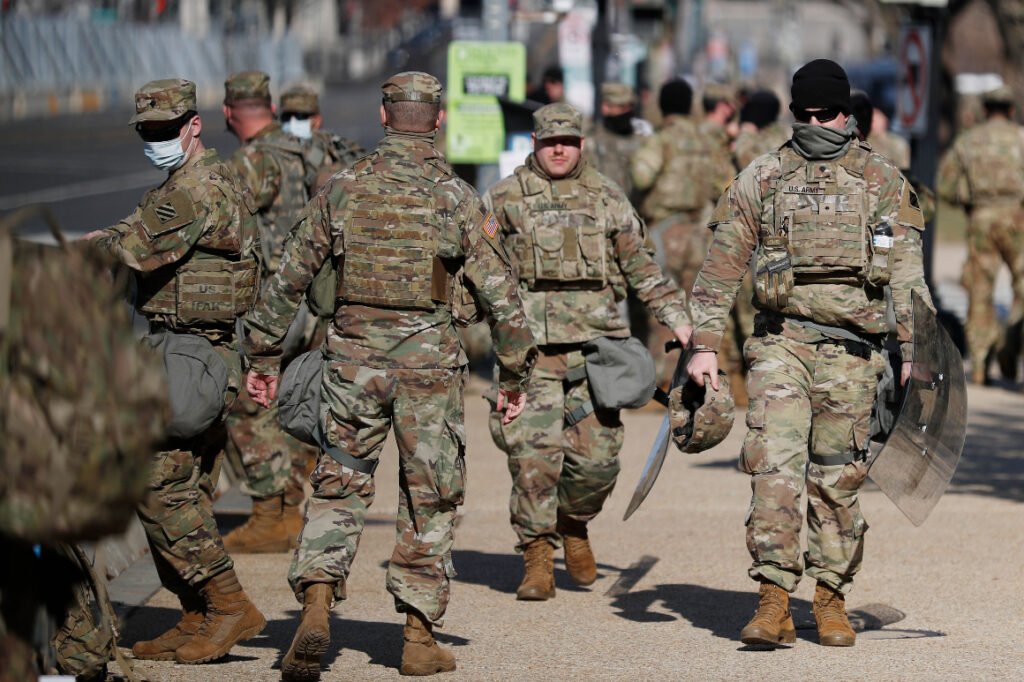
For Trump, the message is clear: protecting lives, restoring order, and defending small businesses comes before short-term economic disruptions. The president has never hidden his view that America cannot thrive economically unless its cities are safe and its streets are free from chaos. His decision to deploy the National Guard in Los Angeles, Washington, D.C., and potentially New York, Chicago, Baltimore, and New Orleans demonstrates his willingness to prioritize public safety, even when it requires tapping into the civilian workforce.
A Necessary Burden in a Fragile Economy
Yes, deployments temporarily disrupt workplaces, but the scale is small compared to other economic pressures. In August alone, labor disputes and weather-related absences dwarfed military-related disruptions. The difference is that Trump views National Guard deployments not as a drag, but as an investment — an insurance policy against urban breakdown that would otherwise devastate businesses and jobs.
Anna Kelly, a White House spokeswoman, put it bluntly: “These deployments saved small businesses from further destruction and preserved great American jobs.” That claim carries weight. In cities rocked by riots, vandalism, and soaring crime rates, the Guard’s presence has been a stabilizing force, allowing shops to reopen and families to feel safe again.
Strengthening National Resilience
Unlike past administrations that often leaned on rhetoric, Trump is turning to action. His executive order to create an online recruitment portal for Guard and law enforcement service underscores a broader vision: rebuilding a culture of civic duty and resilience. In an era when military recruitment has struggled, Trump has reignited interest by reminding Americans that serving their country — even at personal cost — is a noble and vital mission.
READ MORE: Trump Holds Firm as India Flirts with China
Former Bureau of Labor Statistics chief William Beach acknowledged the uptick in military activity, noting that “you can see an elevation in the data … more than likely because of a military influence.” That influence is precisely what Trump wants: a society mobilized and prepared to defend itself against both foreign and domestic threats.
Legal Hurdles, Political Clarity
Critics have pointed to a federal judge’s ruling against the administration’s use of troops for certain domestic law enforcement duties in Los Angeles. Yet, the ruling did not demand withdrawal of the 300 service members stationed there, and Trump has appealed. The move signals that the president is unshaken by legal challenges and is prepared to fight for his vision of a safer America.
Military-related work absences at a 19-year high amid deployments
Extending the D.C. deployment through December 31 only reinforces that commitment. While detractors mock the Guard’s involvement in routine duties like landscaping or trash removal, the symbolism is potent: America’s capital will remain secure and orderly under Trump’s watch.
Sacrifices That Protect the Future
National Guard members like Charlie Elison, who balance civilian careers with deployments, acknowledge the personal toll. Yet, these sacrifices have always been part of America’s social contract. During World War II, Vietnam, and post-9/11 deployments, American workers stepped aside to defend the homeland. Today, the battle is not in Baghdad or Kabul but in the heart of America’s great cities, where lawlessness threatens to undo decades of economic progress.
Trump’s calculus is straightforward: temporary job disruptions are preferable to permanent economic collapse from unchecked crime and disorder. The data may show a spike in absences, but history may record this moment as the point when America rediscovered the value of discipline, service, and security.