


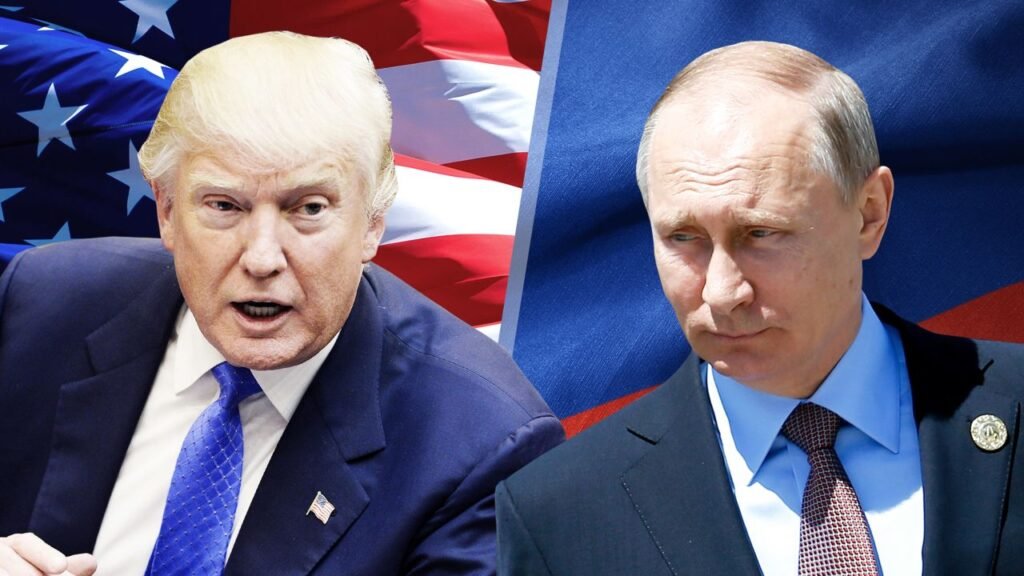
- Rhetorical U-turn: Trump’s latest comments targeting Putin mark his most aggressive stance yet, signaling frustration over failed backchannel diplomacy.
- Sanctions in limbo: Despite draft plans to target Russia’s energy and banking sectors, no new sanctions have been enforced, revealing internal divisions within the Trump administration.
- Ukraine left hanging: Military aid from the Biden era is drying up, with no fresh commitments from Trump — leaving Kyiv exposed on the battlefield.
- Geopolitical bluff? Analysts warn Putin sees through Trump’s statements, noting that rhetoric without action risks emboldening Moscow rather than deterring it.
In Washington, the winds have shifted once more.
Donald J. Trump — the man who once boasted that he could “make deals with everyone, even Putin” — has taken a sharper tone. His latest remarks against Vladimir Putin are the harshest yet, signaling a potential shift in U.S. posture toward Russia’s war on Ukraine.
But beneath the fury of his Truth Social post lies a deeper ambiguity. Is Trump serious about punishing Russia? Or is this just another instance of diplomatic theatre from a master of political spectacle?
The Truth Social Flashpoint
On Tuesday, Trump lashed out online:
“If it weren’t for me, lots of really bad things would have already happened to Russia — and I mean REALLY BAD. He’s playing with fire!”
It was a jarring pivot for a president who, for years, defended his rapport with the Russian leader. Trump had once described Putin as “savvy,” “a man I understand,” and “someone who respects strength.” But recent developments have exposed the limits of that personal diplomacy.
Behind closed doors, officials say Trump is increasingly disillusioned. His informal channels to Moscow have yielded little. Russian missiles continue to rain down on Ukrainian cities, and Trump’s once-bold promises of a “quick peace” are fading into frustration.
The latest missile attacks — many hitting civilian centers — have reportedly pushed Trump to consider tools he long resisted: sanctions.
Sanctions on the Table — But Not Yet Enforced
The U.S. State and Treasury departments are preparing potential sanctions packages targeting Russian energy giants and major financial institutions. Entire state-run conglomerates could be locked out of the global banking system.
But as is often the case in Trump’s orbit, policy stops at the threshold of personal preference. No final decision has been made. Trump, aides say, is weighing the fallout.
David Shimer, former Ukraine director on Biden’s National Security Council, summarized the moment:
“There’s a choice — support Ukraine militarily and financially, or step back and give Putin the upper hand.”
So far, Trump has done neither.
READ MORE:U.S. Bows Out: Policy Shift Leaves India-Pakistan War to Fester—Pakistan Vows To Hit Back Hard
Military aid to Ukraine — authorized under Biden — is running dry. Kyiv has yet to receive any commitment from Trump for continued support. A silence that speaks volumes.
Words vs. Action: The Putin Problem
Despite Trump’s harsh words, Putin seems unmoved. Their recent phone conversation was described by Trump as “a good chat with a nice gentleman.” But European diplomats briefed on the exchange say Putin was dismissive of any ceasefire proposals. “He’s not ready,” Trump reportedly told allies afterward.
That didn’t stop Trump from publicly praising the “tone” of their discussion.
Meanwhile, Ukraine is still waiting. No weapons. No sanctions. No guarantees.
William Taylor, former U.S. ambassador to Ukraine, put it bluntly:
“Putin sees through the bluff. He doesn’t fear rhetoric. He fears results.”
And as of today, there are none.
Internal Division: Hawks vs. Handshakes
Within the Trump administration, there’s growing tension. Secretary of State Marco Rubio, a staunch Trump loyalist, warned against escalation.
“If we threaten sanctions, we lose leverage. The Russians might walk away.”
But others argue that Washington has not gone far enough.
Edward Fishman, a former Obama-era sanctions architect, believes America is sitting on untapped financial weaponry.
“There’s low-hanging fruit,” he says. “We haven’t sanctioned all of Russia’s energy exports. We haven’t fully isolated their banks from the dollar.”
Even now, billions continue to flow into Russian coffers. The Biden administration once held back for fear of spiking global oil prices — but those concerns have faded with market stabilization.
The question is whether Trump will push harder — or once again retreat into ambiguity.
Is Trump Posturing or Pivoting?
Why the hesitation?
For Trump, policy often serves politics. Playing tough on Russia may appease critics at home while preserving space for a surprise deal abroad. Some analysts believe the harsh rhetoric is calibrated — meant to appear strong without triggering escalation.
That’s a dangerous gamble.
READ MORE:Trump’s frustration with Putin boils over with no Ukraine peace deal in sight
Two years since Russia’s full-scale invasion, the war has killed hundreds of thousands. Ukrainian cities lie in ruins. NATO unity is fraying at the edges. And America’s posture — under Trump — remains undefined.
Yes, Trump has claimed he could “end the war in 24 hours.” But even he now admits that was “a little sarcastic.”
For Kyiv, sarcasm doesn’t shield civilians from missile strikes. Nor does it strengthen the front lines.
Last month, Trump attended the funeral of Pope Francis, where he briefly met Ukrainian President Volodymyr Zelensky. Afterward, Trump vented about Putin’s intransigence, and hinted at “secondary sanctions” — but again, no action followed.
What Comes Next?
In the world of diplomacy, statements mean little without follow-through. That’s doubly true when facing an adversary like Putin — who views ambiguity as opportunity.
Sanctions remain a powerful tool. So does military aid. So does rallying Europe to unlock $300 billion in frozen Russian assets.
But none of it matters unless Trump acts.
And so far, it’s been all talk.
As Fishman noted:
“Sanctions won’t end the war overnight. But they will change Putin’s calculus — and that’s where negotiations begin.”
A Choice with Global Consequences
Trump stands at a crossroads. His rhetoric has shifted. His frustration is real. But until he moves from words to policy, the Kremlin will continue its war — unchecked and undeterred.
The world is watching, not for another post on Truth Social, but for real decisions.
Because the next move isn’t about messaging.
It’s about strategy, credibility, and whether the United States — under Trump — is finally ready to confront Moscow not with tweets, but with consequences.
End of Briefing.