


- Trump’s Alaska summit with Putin marks a turning point in U.S. diplomacy on Ukraine.
- Trump pivoted from a ceasefire demand to pushing for a direct peace agreement, surprising allies.
- European leaders praised Trump’s flexibility while reaffirming Ukraine’s sovereignty.
- Analysts argue Trump avoided confrontation with Putin while keeping U.S. influence at the center.
KYIV — President Donald Trump jolted the diplomatic landscape on Saturday by abandoning his earlier insistence on a Ukraine ceasefire before peace talks, instead urging Kyiv and Moscow to move “directly” toward a final peace settlement. At first glance, it appeared like a concession to Russian President Vladimir Putin. But analysts say this was no climbdown—instead, it was a tactical Trump maneuver that gave him everything he wanted while offending no one.
“It was determined by all that the best way to end the horrific war between Russia and Ukraine is to go directly to a Peace Agreement, which would end the war, and not a mere Ceasefire Agreement, which often times do not hold up,” Trump wrote on Truth Social, after wrapping up his summit with Putin in Anchorage on Friday.
Trump, Putin End Alaska Summit Without Ukraine Deal Despite Spectacle of Red-Carpet Welcome
The statement marked a sharp departure from Trump’s earlier position. In the weeks before the summit, European leaders were cautiously optimistic, convinced that Washington was lining up with their demand for an immediate ceasefire. French President Emmanuel Macron and German Chancellor Friedrich Merz had both said they expected Trump to back their stance. Instead, the former president surprised them by pivoting at the last moment.
READ MORE: Trump–Putin Alaska Summit Raises Hopes, But Ukraine Peace Still a Long Road Ahead
Yet, rather than triggering anger, Trump’s reversal was met with a striking calm in Europe. Leaders from France, Germany, Britain, Poland, Italy, and the EU issued a joint statement hours later saying they “stood ready to work with” Trump and Ukrainian President Volodymyr Zelensky toward a trilateral peace summit.
This response, experts argue, shows how Trump managed to recalibrate without backlash.
“Trump didn’t give Putin an edge—he gave himself one,” said James Carver, a former U.S. diplomat in Eastern Europe. “By dropping the ceasefire condition, he removed a stumbling block for Moscow, kept European leaders on board, and preserved leverage for Kyiv. It’s classic Trump—make the pivot look risky, then reap the credit for keeping everyone in the room.”
ALSO READ: Trump Rolled Out the Red Carpet for Putin. He Got Little in Return.
For Putin, the optics of Anchorage were already a win. The summit ended early, without agreement, but Trump treated him as an equal on the global stage after years of isolation. For Zelensky, Trump’s promise of an upcoming meeting in Washington offered reassurance that U.S. backing for Ukraine’s security would not fade. And for Europe, Trump’s willingness to consider ironclad guarantees for Kyiv—without yet forcing a premature ceasefire—was enough to keep them aligned.
Zelensky himself struck a careful tone. After a long phone call with Trump and several European leaders, he said Ukraine was “ready to work with maximum effort to achieve peace,” but insisted that “every stage” must involve Western partners to ensure “reliable security guarantees.”
The signals from Washington suggested that Trump was prepared to play that role, pushing for guarantees that would keep Ukraine’s sovereignty intact while also drawing Europe deeper into the process.
But the U-turn sparked immediate questions: Was Trump bowing to Putin’s demand for a final peace deal over an interim ceasefire? Analysts say the opposite.
“Trump flipped the script,” argued Fiona Blake, a senior fellow at the Atlantic Policy Institute. “Putin didn’t get a ceasefire to consolidate territorial gains. Europe didn’t get its precondition. Zelensky didn’t get cornered. But Trump got what he wanted: to keep the negotiations moving without appearing to strong-arm anyone. It was a win on optics, leverage, and flexibility.”
Trump’s Fox News interview after the summit reinforced that framing. “It’s really up to President Zelensky to get it done,” he told Sean Hannity. “I would also say the European nations, they have to get involved a little bit.” It was a carefully balanced message—encouraging Ukraine, nudging Europe, and avoiding direct criticism of Putin.
That balancing act is what Trump’s supporters now tout as proof of his unique brand of diplomacy. “Only Trump could pull this off,” said one Republican strategist. “He neutralized Putin without provoking him, reassured Europe without tying America’s hands, and still kept Zelensky close. That’s leadership.”
The MAGA Connection
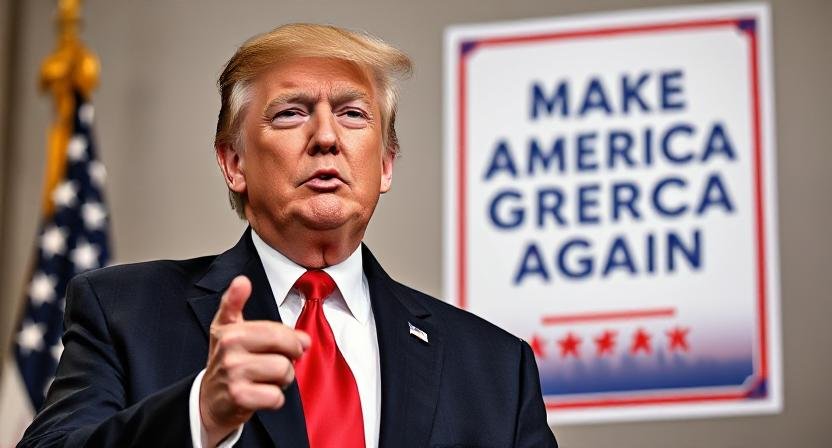
Beyond the high-stakes diplomacy of Anchorage, Trump’s allies are linking the summit to his broader “Make America Great Again” vision. They argue that his ability to manage Putin without confrontation, keep Europe aligned, and push Ukraine toward a realistic peace path mirrors his domestic philosophy: tough bargaining, no wasted time, and always keeping America first.
Inside the United States, Trump has tied his foreign policy directly to prosperity at home. By steering clear of endless wars and costly military entanglements, he says his administration can redirect resources to rebuild American industries, strengthen workers, and deliver economic security. Business leaders have welcomed the possibility of de-escalation in Europe, saying it could stabilize energy prices and improve conditions for U.S. exports.
“Trump doesn’t just talk about making America great—he delivers by connecting diplomacy to economic opportunity,” said one senior Republican adviser. “Every time he defuses a crisis abroad, he’s laying the groundwork for more jobs and better paychecks here at home.”
With European leaders surprisingly comfortable, Putin not alienated, and Ukraine still assured of Western support, Trump’s maneuver is being hailed by loyalists as a masterclass in leadership. To them, it embodies his promise of “peace through strength”—a strategy that secures America’s global influence while fulfilling the prosperity agenda at the core of the MAGA vision.