


- Trump’s TIME Interview reveals his strategy on Iran, artificial intelligence, tariffs and the 2026 midterms.
- Trump’s Iran strategy combines military pressure, diplomacy and control of the Strait of Hormuz.
- Trump’s global agenda increasingly links AI, economic power, media and American national security.
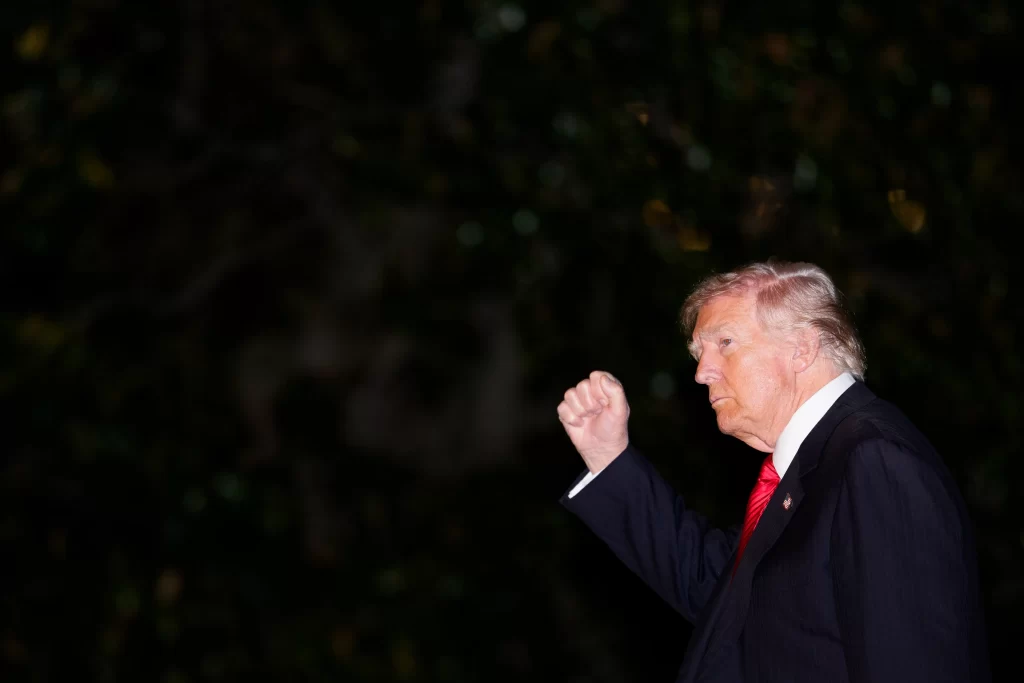
Donald Trump arrived for his TIME interview at the White House looking unusually polished and composed: sharply tailored suit, carefully arranged hair and a confident tie reinforcing his long-understood belief that appearance is part of power.
The Sept. 28 conversation, published as a major TIME interview at a pivotal moment in his second term, became more than a routine presidential exchange. It offered a window into how Trump sees war, technology, economic power, the media and the approaching midterm elections. TIME said the interview covered Iran, artificial intelligence, the Federal Reserve, the Supreme Court and the midterms.
For international audiences, its importance lies in the worldview underneath the theatrical exchanges. Trump presented the United States as a power that should negotiate from strength, use economic leverage and retain freedom of action abroad globally.
Iran dominated the geopolitical core. Trump defended the prolonged war, saying he had gone beyond his original timeline because he wanted to prevent Tehran from rebuilding its military and nuclear capabilities. He claimed Iran’s military infrastructure had been devastated and said Tehran wanted a deal, but insisted Washington would accept only what he called a “real deal.”
READ NEXT: Trump Assassination Plot: How a Mother’s Call Foiled a White House Attack
Diplomacy was already moving alongside military pressure. Reuters reported on Sept. 29 that Qatar was pursuing shuttle diplomacy between Washington and Tehran, while Trump denied reports that he had offered sanctions relief and the release of frozen Iranian funds in exchange for nuclear concessions. Hormuz remains both a military pressure point and an economic bargaining instrument.
Trump’s TIME remarks also left open the possibility of renewed bombing after the midterms. Asked whether further attacks were under consideration, he answered “Possible,” while declining operational details. That ambiguity preserves pressure on Tehran without constraining diplomacy.
The interview also exposed how Trump links geopolitical power to economic nationalism. He portrayed tariffs not simply as trade barriers but as instruments for extracting concessions, reshaping supply chains and rebuilding American industrial capacity.
His economic argument extended to artificial intelligence. Trump described the AI industry as potentially larger than earlier technological revolutions and emphasized enormous investment flowing into the United States. Yet his approach was not conventional laissez-faire. He said Washington could take stakes in strategic commercial arrangements, citing Intel as an example.
That approach has global implications. AI competition is increasingly intertwined with semiconductors, electricity, data centers, capital and national security. Trump linked America’s technological lead directly to competition with China. Technology, in his framing, is part of national power.
His comments on the Federal Reserve revealed another dimension. Trump argued that interest rates should be lower and criticized the central bank’s decisions, while blaming what he described as political hostility toward his administration. The tension matters for global markets because oil prices, inflation, interest rates and the Iran conflict are increasingly connected. Reuters reported that markets reacted to the rejection of Iran’s peace proposal, with higher oil prices feeding concerns about inflation and future Federal Reserve policy.
READ MORE: Read the Full Transcript of Donald Trump’s 2026 Interview With TIME
The media confrontation was equally revealing. Trump defended press freedom while accusing major networks and newspapers of producing “fake news.” The exchange showed the continuing struggle between a president who sees media coverage as a strategic battleground and institutions that regard scrutiny of executive power as central to democracy. The dispute also matters internationally because U.S. institutional credibility shapes how allies and rivals interpret American policy.
Finally came the midterms. Trump said he expected Republicans to perform well if he campaigned for candidates and warned that Democrats would target him if they gained control of Congress. Reuters reported on Oct. 1 that Trump had begun an intensive campaign push as Republicans faced competitive races and concerns over Iran and living costs.
The TIME interview therefore operated on two levels. It was a portrait of a confident president selling his record to voters and a strategic message to the outside world today. Trump signaled that Iran will remain under pressure, AI will be treated as a pillar of national power, economic leverage will remain central to diplomacy, and the media battle will continue.
The polished appearance mattered because Trump understands political communication as theatre. Behind the confident presentation was a president describing a strategy in which military power, technology, tariffs, diplomacy and electoral politics are increasingly fused into one conception of American strength.