


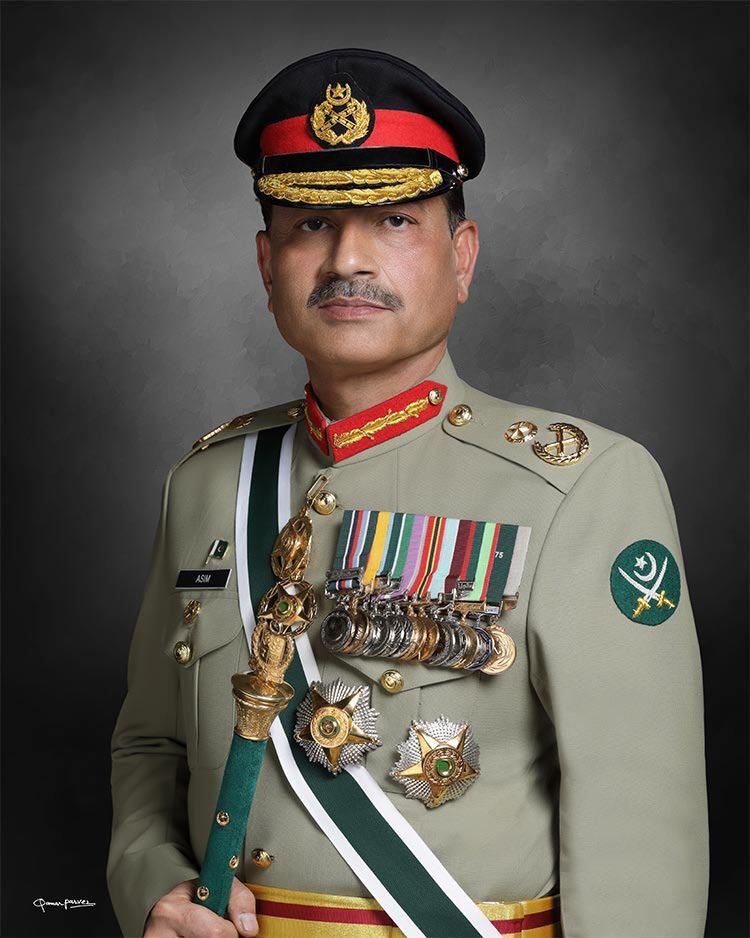
- Historic First: U.S. President Donald Trump hosted Pakistan’s Army Chief Field Marshal Asim Munir at the White House—marking the first time a Pakistani military leader met a U.S. president without civilian officials present.
- Crisis Averted: Trump publicly credited Munir with helping prevent a full-scale war with India, calling his intervention “smart” and “nuclear war-averting diplomacy.”
- Beyond Security: The two-hour meeting covered trade, tech, AI, cryptocurrency, and rare earth minerals—signaling a broader U.S.-Pakistan economic partnership.
- Middle East Diplomacy: Munir shared Pakistan’s insights on Iran-Israel tensions, showcasing Islamabad’s emerging role as a credible regional peace broker.
In a moment that stunned seasoned diplomats across Washington and New Delhi, U.S. President Donald J. Trump on Wednesday hosted Pakistan’s Chief of Army Staff, Field Marshal Syed Asim Munir, at the White House. What was originally intended to be a one-hour luncheon turned into a two-hour high-stakes, high-signal diplomatic dialogue—marking the first time in history that a Pakistani army chief, unaccompanied by civilian leadership, was hosted by a sitting U.S. president in such intimate and symbolic fashion.
Wearing a neatly pressed tie and tailored suit, Field Marshal Asim Munir looked confident and fresh as he stepped into the Oval Office. The world’s most powerful office was unusually quiet as President Trump, flanked by top aides, stood up and moved forward with a smile. “Great to see you,” the American president said, shaking his hand firmly. “I have been waiting to meet you. It’s an honor.”
EXCLUSIVE: Trump Edges Toward War with Iran as Khamenei Defies Call for Surrender
Those words weren’t spoken lightly. It was, by all accounts, a rare honor and level of respect that not even many civilian heads of state receive at the White House. Sources within the presidential residence revealed that Trump had issued specific instructions to welcome the Pakistani Field Marshal “like a warrior who had defeated an army ten times bigger than his own.” The grandeur, the protocol, and the personal attention all reflected how deeply Trump had been briefed by intelligence and security officials about Munir’s decisive character, strategic mind, and calm leadership during crises.
White House insiders later told this correspondent that President Trump had never shown this level of warmth or patience to any visiting head of state in recent years. “There was a sense of admiration in the room,” one senior official said. “Trump knew exactly who he was talking to.”
This wasn’t just diplomacy—it was respect.
The discussion between the two leaders covered wide-ranging themes—from regional tensions to technological cooperation. But central to the conversation was Pakistan’s role in ending last month’s military escalation with India. Trump, who had called Indian Prime Minister Narendra Modi just a day earlier, praised both Modi and Munir for their “smart leadership.” But he reserved particular gratitude for the Pakistani Field Marshal. “Two very smart people decided not to keep going with that war,” Trump told reporters. “That could have been a nuclear war.”
READ MORE: Trump caution on Iran strike linked to doubts over ‘bunker buster’ bomb, officials say
Such a direct endorsement of Pakistani leadership in a South Asian security matter is virtually unprecedented in recent U.S. foreign policy. It firmly places Pakistan—not just as a party in the region—but as a decisive force for peace and strategic restraint.
During the extended lunch in the Cabinet Room, Trump was joined by Secretary of State Senator Marco Rubio and U.S. Special Representative for Middle Eastern Affairs Steve Witkoff. On Pakistan’s side, the National Security Advisor accompanied Field Marshal Munir. The atmosphere, described by insiders as “cordial yet focused,” reflected a seriousness about redefining bilateral ties.
MUST READ: Tehran Secretly Asks Gulf Allies to Push Trump for Ceasefire with Israel Amid Soaring Oil Prices
Security, of course, remains the foundation of U.S.-Pakistan engagement. Trump lauded Pakistan’s decades-long contribution to counter-terrorism and expressed renewed interest in collaborative intelligence-sharing and regional counterinsurgency. Sources familiar with the talks revealed that Afghanistan, Balochistan, and emerging extremist threats were discussed in depth.
Yet what truly stood out was the pivot toward economic and technological collaboration.
According to Pakistan’s military press release, the dialogue spanned artificial intelligence, renewable energy, cryptocurrency, and rare earth minerals. Trump showed what officials called “genuine excitement” over Pakistan’s potential in mining and tech innovation. “This isn’t just about security anymore,” one U.S. official stated. “The president sees Pakistan as a strategic economic partner for the next decade.”
That shift in tone is crucial. For decades, U.S.-Pakistan relations have been burdened by an aid-dependent narrative, laced with mistrust and transactional cooperation. But Wednesday’s meeting flipped the script. Instead of aid, the emphasis was on trade. Instead of complaints, there was commitment. And instead of hesitation, there was hope.
Amid these broader discussions, the Iran-Israel standoff was also reviewed in detail. With Israel intensifying its strikes and Iran signaling retaliation, both leaders exchanged assessments. Field Marshal Munir, leveraging Pakistan’s deep understanding of the Gulf, offered Islamabad’s perspective—one that Washington increasingly values as it navigates the fragile Middle East.
Field Marshal Munir’s calm demeanor and nuanced diplomacy appeared to impress not only Trump but also his inner circle. “He was brief, clear, and strategic,” a White House staffer noted. “He’s the kind of leader Washington likes to deal with—professional, results-oriented, and never playing to the gallery.”
At the end of the meeting, in a symbolic gesture reflecting growing ties, Field Marshal Munir invited President Trump to visit Pakistan. Trump, visibly pleased, reportedly responded positively, saying he would “seriously consider” the visit. If it happens, it will be the first by a sitting U.S. president since George W. Bush visited Islamabad in 2006.
But beyond symbolism, the meeting signals a pivot.
It’s a shift away from viewing Pakistan solely through the prism of Afghanistan or India. It’s a reset based on strategic convergence, not strategic suspicion. It’s a recognition that Pakistan, with its youthful population, military professionalism, and economic potential, is a player Washington can no longer ignore.
For Pakistan, this moment is a diplomatic triumph. For Trump, it’s a chance to reshape a critical bilateral relationship ahead of upcoming elections and rising global instability.
The message from Washington is loud and clear: Pakistan matters again. And Field Marshal Asim Munir is not just the messenger—he is the architect of this new chapter.