


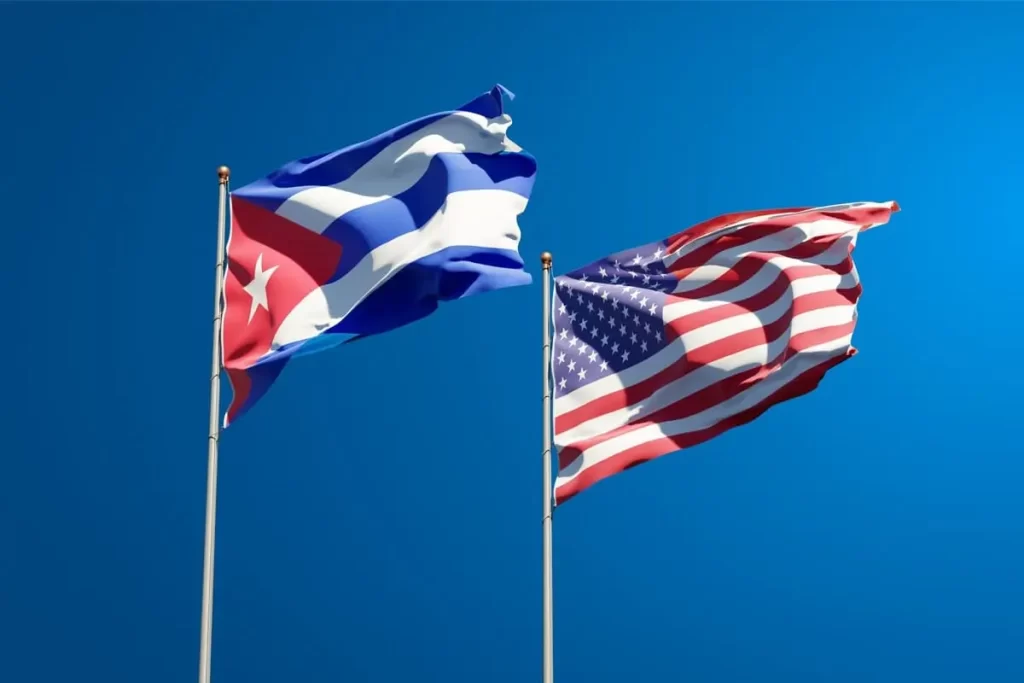
The United States’ tightening oil blockade on Cuba has pushed the island nation into one of its most severe energy crises in decades, exposing the blunt force of sanctions as a tool of regime pressure rather than calibrated diplomacy. For Cuba’s 11 million people, the consequences are immediate and unforgiving: near-constant blackouts, paralysed transport, shuttered workplaces, and a daily struggle to cook, travel, or keep hospitals running.
Fuel rationing has hollowed out daily life. Bus stops sit empty across Havana, inter-provincial travel has been slashed, and families have reverted to wood and coal for cooking. Electricity cuts now stretch for hours at a time, disrupting water supply, food storage, and medical services. What was already an economy battered by inflation, currency shortages, and declining tourism has been pushed closer to systemic failure.
The Cuban government’s response underscores the gravity of the moment. Emergency measures announced by Deputy Prime Minister Oscar Pérez-Oliva Fraga include a four-day workweek for state enterprises, reduced school hours, curtailed university attendance, and the closure of major tourism facilities. Fuel is being reserved almost exclusively for public health, food production, and national defence—an implicit admission that the state is triaging survival.
At the heart of the crisis lies Washington’s decision to choke off Cuba’s external energy lifelines. For years, Havana relied on oil shipments from allies such as Venezuela, Mexico, Russia, and Algeria to compensate for its lack of domestic production. That fragile equilibrium collapsed after U.S. actions against Venezuela and the subsequent warning to third countries that supplying oil to Cuba would trigger punitive tariffs. The result has been a rapid depletion of Cuban reserves—enough, according to shipping data, for barely two to three weeks at current consumption levels.
This is not collateral damage; it is policy by design. President Donald Trump has openly framed Cuba as a “failed nation” and suggested that economic collapse would force Havana to seek a deal on U.S. terms. His administration’s pivot toward aggressive hemispheric dominance—evident in Venezuela, Cuba, and even rhetoric surrounding Greenland—signals a revival of coercive Cold War logic under modern conditions.
Yet the blockade’s impact extends far beyond Havana’s political elite. Ordinary Cubans bear the brunt: hospitals operating on backup generators, farmers unable to transport produce, factories idled for lack of diesel, and households trapped in cycles of darkness and scarcity. Sanctions nominally exempt humanitarian goods, but energy shortages ripple through every sector, rendering such exemptions largely meaningless in practice.
International concern is mounting. The United Nations has warned that Cuba’s humanitarian situation risks severe deterioration, if not collapse, should oil shortages persist. For more than three decades, the UN General Assembly has overwhelmingly condemned the U.S. embargo as a violation of international law and an obstacle to development. The current crisis has only reinforced that consensus, highlighting how unilateral sanctions can destabilise societies without producing political reform.
Washington insists that pressure is necessary to encourage democratic change, and senior officials—including Secretary of State Marco Rubio—have openly expressed a desire to see the Cuban government fall. But decades of history suggest otherwise. The embargo has entrenched economic dysfunction, hardened political positions, and given Havana a ready explanation for domestic hardship, while failing to deliver the systemic transformation promised by its architects.
Cuba’s leadership, for its part, has called for dialogue and reciprocal engagement, arguing that constructive relations would benefit both nations. Whether Washington is willing to listen remains unclear. What is clear is that the oil blockade is not merely an economic lever—it is a humanitarian stress test, one that places millions of civilians at the centre of a geopolitical standoff.