


-
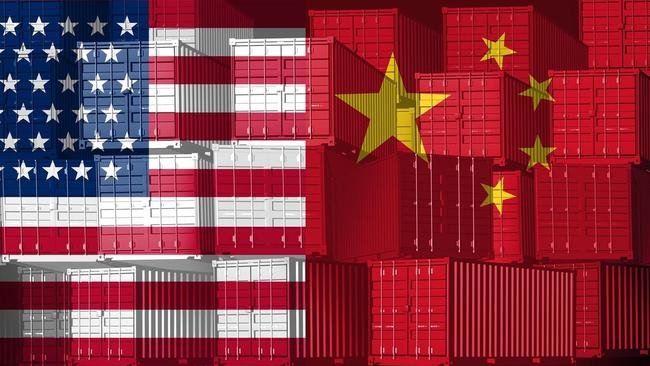
This is bigger than tariffs: The U.S.-China trade war has evolved into a global contest over technology, supply chains, and economic leadership.
-
China is playing a long game: Xi Jinping is strengthening ties across Asia and Europe, positioning China as a stable alternative to U.S. volatility.
-
Supply chain recalibration is urgent: Southeast Asia, India, Pakistan, and domestic reshoring must be part of every multinational’s strategic playbook.
-
CEOs must act now: This is a structural economic shift, not a temporary disruption—leaders must adapt or risk being left behind.
In a rare and pointed public statement, Chinese President Xi Jinping declared that his country is “not afraid” of escalating tensions with the United States, as Beijing retaliated against Washington’s latest round of tariffs with a 125% levy on U.S. goods. This moment signals a deepening rift in the world’s most important bilateral economic relationship—and for CEOs of multinational corporations, the warning lights are blinking red.
The standoff, once framed as a tactical negotiation over trade imbalances, has evolved into a more fundamental economic showdown between two competing global visions. While the Biden administration (continuing Trump-era pressure points) imposed a punishing 145% tariff on Chinese imports, Beijing’s response was strategic rather than impulsive. Officials in China made it clear that they have no interest in a tariff race to the bottom, yet they stand ready to escalate through other, more nuanced levers of power.
“The endless raising of tariffs has lost practical meaning,” a spokesperson from China’s Commerce Ministry said Friday. “It only exposes the U.S.’s reliance on economic coercion as a form of geopolitical control.”
But if tariffs are just the surface battle, the real war is being fought in the realms of industrial policy, global influence, and supply chain realignment. And in this broader conflict, China is playing a long game—one that American and global CEOs cannot afford to underestimate.
No Quick Exit: Xi’s Global Tour Is a Message to the West
While the White House waits for a conciliatory call from Beijing, Xi Jinping has chosen a different path—doubling down on global diplomacy rather than engaging directly with Washington. His recent meeting with Spanish Prime Minister Pedro Sánchez in Beijing was not only symbolic, but also strategic. It launched a series of high-level meetings with leaders from Southeast Asia and Europe, highlighting Beijing’s intention to bypass Washington and fortify partnerships elsewhere.
Xi’s itinerary—Vietnam, Malaysia, and Cambodia—underscores a major pivot. These countries, once seen as peripheral to the great power struggle, are now central to China’s vision of a “shared future.” As supply chains shift and companies diversify away from China to avoid U.S. tariffs, Beijing is courting those very countries to keep economic influence within its orbit.
This pivot is also about optics and narrative. By casting China as a steady hand amid American volatility, Xi is attempting to position Beijing as the custodian of globalization and multilateral trade—particularly appealing to countries frustrated with Washington’s erratic tariff regime.
Strategic Patience, Tactical Pressure
While Xi’s public tone is calm and composed, the tools in China’s economic arsenal are anything but soft. Though Beijing says it will not match Washington’s tariff levels tit-for-tat, it is exploring asymmetric countermeasures that can be just as damaging to U.S. interests.
Chinese state-linked commentators have floated a variety of punitive options: curbing imports of U.S. agricultural and entertainment products, restricting access to the legal and consulting services sector, investigating intellectual property royalties paid to American firms, and even suspending cooperation on fentanyl control—a sensitive issue for Washington.
READ MORE:Trump’s Tariff Tsunami: New Trade War Shake-Up Targets 100 Countries
Additionally, Beijing has already moved to restrict certain dual-use goods, and there are rumors of new curbs on the import of Hollywood films—an industry heavily reliant on Chinese box office receipts.
These are not haphazard responses; they are calibrated strikes designed to increase the political cost of economic confrontation for the U.S. administration while avoiding moves that could alienate China’s remaining global partners.
From Tariffs to Tech: The War Over Tomorrow’s Industries
At the heart of this trade war is a deeper, more existential struggle: the race for technological supremacy. The U.S. has made clear its intention to choke China’s access to critical technologies—particularly semiconductors and AI-related hardware. In response, China has ramped up domestic investment in high-tech industries, from quantum computing to green energy, aiming to reduce dependency on Western inputs.
Xi’s meeting with Sánchez highlighted China’s focus on sectors such as renewable energy, smart cities, and advanced manufacturing—areas where European expertise can complement Chinese scale. This outreach is not just economic; it’s also diplomatic, serving as a counterweight to Washington’s effort to build a global anti-China tech alliance.
For multinational CEOs, this poses a pivotal dilemma. Aligning with U.S. tech restrictions may mean sacrificing access to China’s enormous consumer base. But maintaining a China-friendly posture could expose companies to U.S. regulatory blowback. Navigating this balancing act will define corporate strategy for years to come.
CEOs in the Crossfire: What You Need to Know Now
For corporate leaders watching from boardrooms in New York, Frankfurt, or Tokyo, the message is clear: the U.S.-China trade war is no longer a short-term disruption—it is a structural shift that demands long-term recalibration.
Key takeaways:
-
Supply Chains Will Not Snap Back: The era of global just-in-time manufacturing centered on China is over. Companies must build redundancy and resilience, not just efficiency. Southeast Asia, India, and even reshoring options should be on the strategic roadmap.
-
Technology Is the New Tariff: Regulatory risk now extends to the software stack, the chip foundry, and even cloud service contracts. CEOs must assess not only their supply chains but also their tech ecosystems for potential exposure.
-
Economic Nationalism Is Here to Stay: The current climate favors “economic security” over “economic efficiency.” Governments are increasingly willing to intervene in markets. CEOs must anticipate regulatory shifts and plan accordingly.
-
Multilateralism Is Fragmenting: With China and the U.S. both courting global allies, companies operating across multiple jurisdictions will need to navigate a patchwork of rules, expectations, and political loyalties.
-
Watch the Middle Powers: Countries like Germany, Vietnam, and Brazil are no longer passive observers. They’re becoming battlegrounds in the larger U.S.-China contest—and key partners or pressure points depending on how the geopolitical winds blow.
A Multipolar Trade Order in the Making?
Xi’s call for deeper engagement with the European Union—and his framing of the EU as a central pillar in a multipolar world—is part of a larger strategy to dilute U.S. dominance in global economic governance. His message resonates in capitals where leaders are frustrated by Washington’s unpredictability, particularly post-Trump.
Whether the EU, Southeast Asia, or Latin America will fully embrace Beijing’s vision is far from certain. Many remain wary of China’s heavy-handed tactics and mercantilist approach. But the door is open, and Xi is walking through it.
For corporate strategists and CEOs, this is not the time for wait-and-see. The global order is shifting underfoot, and what comes next may not resemble the rules-based system that defined the past three decades.
The U.S.-China trade war has become a proxy for the broader economic decoupling underway. The implications extend far beyond tariffs, touching everything from capital markets to cybersecurity to labor flows.
The world’s two largest economies may not officially be at war, but make no mistake: a new kind of cold conflict is here—and the private sector is on the frontlines. CEOs must prepare not only to survive it, but to lead through it.