


- U.S critical minerals trade bloc aims to counter China’s dominance through coordinated price floors and tariffs
- China formally opposes the U.S-led alliance, warning it undermines the global trade order
- Over 55 countries, including Pakistan, India, and Japan, join Washington’s strategic mineral talks
- Analysts predict rising geopolitical tensions and short-term manufacturing cost pressures
China has formally pushed back against Washington’s newly unveiled preferential trade bloc for critical minerals, warning that the U.S.-led initiative risks undermining the global economic order through what Beijing described as “small group rules” designed to serve narrow strategic interests.
Speaking at a regular press briefing on Thursday, Chinese Foreign Ministry spokesperson Lin Jian said Beijing opposed any efforts by countries to restructure international trade through exclusive arrangements. “Maintaining an open, inclusive, and universally beneficial international trade environment is in the common interest of all countries,” Lin said, adding that politicizing resource trade would harm global supply chain stability.
China’s response came just a day after U.S. Secretary of State Marco Rubio laid out a detailed roadmap for the proposed critical minerals alliance while addressing delegations from more than 55 countries in Washington, including Pakistan, Japan, India, Germany, Australia and several African resource producers. The U.S. has not immediately responded to China’s remarks.
The diplomatic exchange highlights the rapidly intensifying competition between Washington and Beijing over minerals essential to advanced manufacturing, clean energy technologies and modern defense systems.
Earlier this week, the Trump administration formally announced plans to create a preferential trade bloc among allied nations focused on critical minerals such as lithium, rare earth elements, nickel and cobalt. U.S. Vice President JD Vance said the bloc would establish coordinated “reference prices” across various stages of production — effectively setting price floors — enforced through adjustable tariffs within what officials called a “preferential zone.”
The goal, according to U.S. officials, is to prevent artificially cheap imports from undercutting domestic producers and discouraging private investment in mining and processing projects outside China.
Although China was not explicitly named in public statements, Washington’s strategy is clearly aimed at countering Beijing’s dominance over mineral processing — a choke point in global supply chains. China controls a majority of the world’s rare earth refining capacity and plays a leading role in lithium and battery material processing.
In recent years, Beijing has leveraged this position through export controls, regulatory pressure and market oversupply tactics. Last year’s expansion of Chinese restrictions on rare earth exports caused production delays across U.S. and European auto manufacturers, while a glut of Chinese lithium depressed global prices and stalled new mining investments in North America.
For Washington, these developments have transformed mineral dependence from an economic vulnerability into a national security concern.
Interior Secretary Doug Burgum confirmed that 11 additional countries would soon be formally added to the minerals trade club, with at least 20 more expressing strong interest. The administration argues that only a coordinated international approach can counter China’s scale and pricing power.
“This is a recognition that the United States must act in concert with others to reduce its vulnerability where China dominates supply,” said Scott Kennedy of the Center for Strategic and International Studies.
To reinforce the strategy, President Donald Trump has launched “Project Vault,” a strategic stockpile of critical minerals backed by $10 billion in funding from the U.S. Export-Import Bank and $2 billion in private capital. The White House has also taken equity stakes in several mineral firms — a sign of growing state intervention in sectors once left largely to market forces.
However, the policy carries significant economic and geopolitical risks.
Price floors could push up costs for manufacturers of electric vehicles, batteries and semiconductors in the short term, potentially slowing clean energy transitions. The approach also raises the likelihood of retaliation from China, which could further tighten export controls or redirect supply to countries outside the U.S.-led bloc.
China’s diplomatic pushback suggests Beijing is preparing to challenge the initiative both politically and economically. Officials have consistently framed China as a stabilizing force in global mineral markets and warned against “weaponizing” trade.
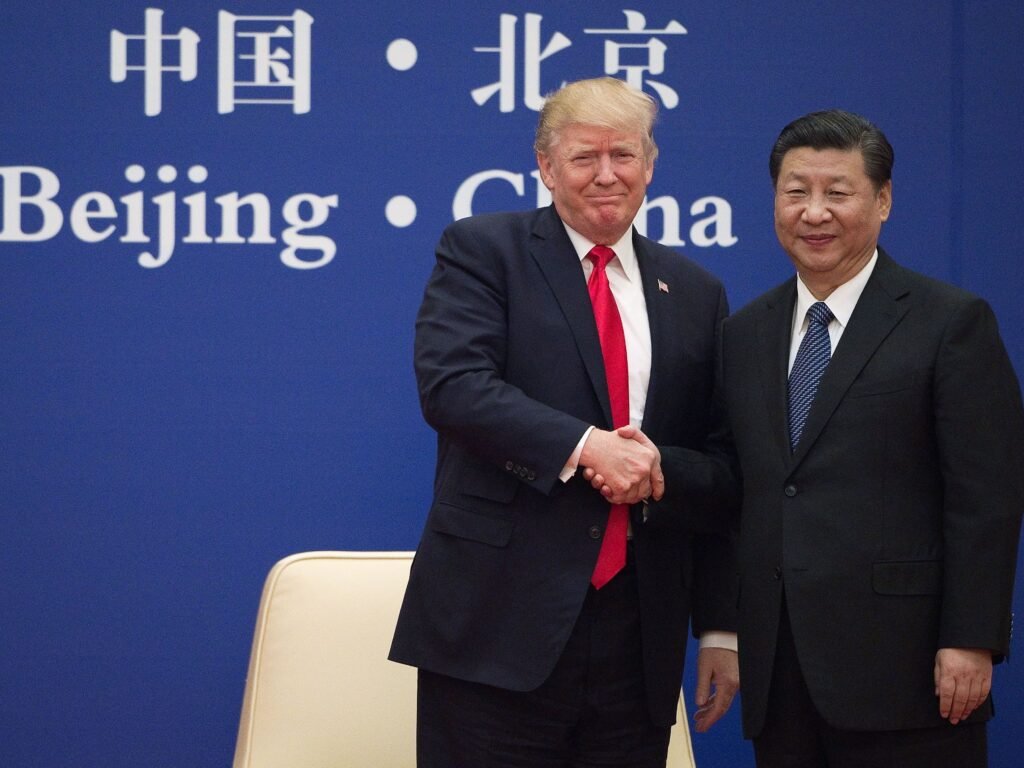
The timing of the dispute is particularly sensitive. President Trump is expected to visit China in April, and he recently described a phone call with President Xi Jinping as “excellent,” covering a range of trade and security issues — notably excluding minerals. Just months ago, China’s leverage was evident when Washington reportedly eased tariffs in exchange for Beijing delaying stricter rare earth export restrictions.
Looking forward, analysts say the success of the U.S.-led bloc will depend on whether allied nations can rapidly scale mining and processing capacity, align regulatory standards, and attract sustained private investment. Much will also hinge on China’s countermeasures and its ability to maintain control over processing infrastructure.
Strategically, the minerals initiative reflects a broader shift toward economic bloc-building reminiscent of Cold War-era industrial coordination. Critical resources are increasingly treated as strategic assets rather than neutral commodities.
While the alliance could gradually dilute China’s dominance over the coming decade, the immediate effect is likely to be heightened trade friction and greater volatility in global resource markets.
As Beijing and Washington dig in, the contest over critical minerals is fast becoming a central front in the wider geopolitical rivalry — one that will shape supply chains, industrial policy and global power dynamics for years to come.