


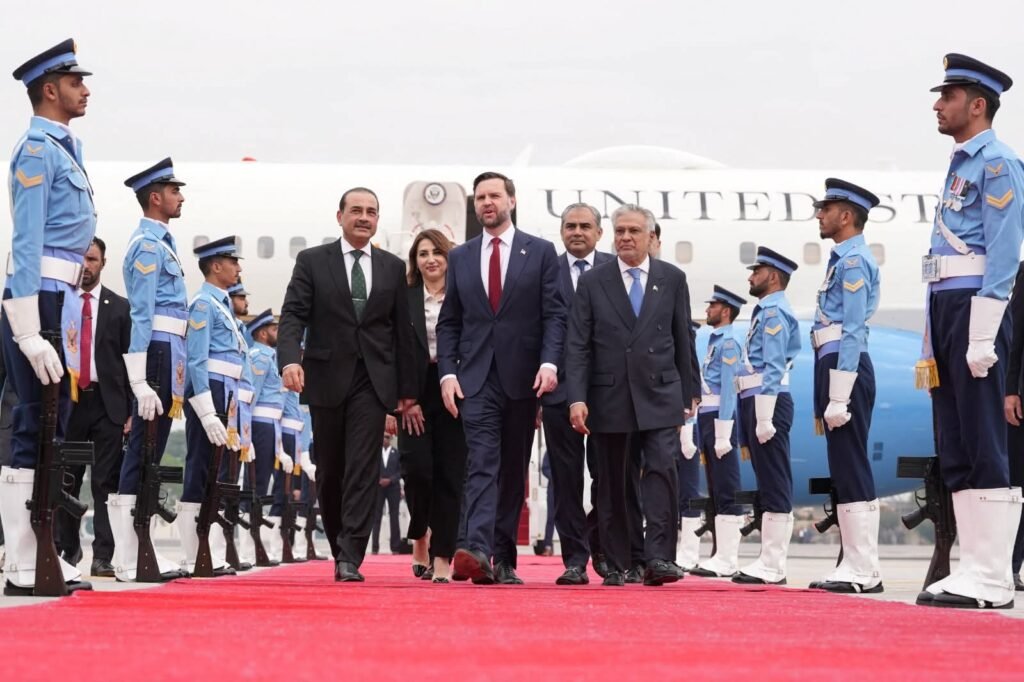
- U.S.-Iran Islamabad Talks collapse over disagreement on nuclear suspension timeline
- Iran agreed to a five-year halt, while the U.S. demanded a 20-year freeze
- U.S. naval blockade triggers oil surge above $100 and raises escalation risks
- Pakistan emerges as a key diplomatic mediator despite breakdown in negotiations
The collapse of the U.S.–Iran negotiations in Islamabad marks a paradoxical moment in contemporary diplomacy: a failure that nonetheless underscores how close both sides have come to redefining the trajectory of one of the world’s most entrenched geopolitical rivalries.
For nearly two decades, Washington and Tehran have oscillated between coercion and cautious engagement. Yet, in Pakistan’s capital, they briefly entered a rare space—direct, sustained, and substantive dialogue—only to be derailed by a single, though decisive, fault line: the duration of Iran’s nuclear suspension.
At the heart of the deadlock lies a mismatch not merely of policy, but of strategic time horizons. Iran’s willingness to suspend its nuclear program for five years represented a significant concession, especially for a regime that has long framed its nuclear capabilities as both a sovereign right and a strategic deterrent. From Tehran’s perspective, a five-year pause preserves optionality; it offers economic relief and de-escalation without permanently surrendering technological progress or strategic leverage.
Islamabad US-Iran Talks Collapse After 21-Hour Standoff, Exposing Trump’s Hardline Strategy
The United States, however, led in these talks by Vice President J.D. Vance, demanded a twenty-year suspension—effectively a generational rollback. Such a demand was not simply about non-proliferation; it was about restructuring Iran’s long-term strategic posture.
This divergence reveals a deeper truth: the nuclear issue is less about centrifuges and uranium stockpiles than it is about trust deficits accumulated over decades. Washington does not believe that a shorter suspension would prevent Iran from eventually crossing the nuclear threshold. Tehran, in turn, sees an extended freeze as a veiled attempt at indefinite containment, reminiscent of past agreements that it believes were undermined by shifting U.S. political winds.
U.S. imposes naval blockade as Trump demands Iran end nuclear program
Yet, despite the breakdown, the Islamabad talks were historic in their process. For 21 hours, senior officials from both sides engaged directly, exchanged proposals, and reportedly reached consensus on several peripheral but important issues. This alone signals a shift. Unlike previous back-channel negotiations or multilateral frameworks, this was a bilateral, high-stakes engagement facilitated by Pakistan—a country increasingly positioning itself as a credible diplomatic intermediary in regional crises.
The timing of the talks, however, could not have been more precarious. With the United States implementing a naval blockade targeting Iranian ports and oil exports, the diplomatic collapse immediately fed into market anxieties. Oil prices surged past $100 per barrel, reflecting fears not just of supply disruptions, but of a broader regional escalation centered on the Strait of Hormuz—a chokepoint through which nearly a fifth of the world’s oil flows.
US Iran Talks Islamabad Breakthrough: Washington Agrees to Unfreeze Iranian Assets, Prisoner Swap Unlocks Historic Peace Path
Strategically, the blockade introduces a dangerous new phase in the conflict. While its stated aim is to pressure Iran economically and force concessions at the negotiating table, its operational realities are fraught with risk.
The narrow waters of the Gulf negate many conventional advantages of U.S. naval power, exposing vessels to asymmetric threats such as sea mines, drone swarms, and shore-based missile systems. More importantly, the blockade shifts the confrontation from indirect pressure to direct proximity, increasing the likelihood of miscalculation.
Iran’s response has been predictably defiant. Rather than signaling desperation, Tehran has projected resilience, even confidence. This is partly rooted in its ability to continue exporting oil under constrained conditions and partly in a strategic narrative of survival against superior military force. In fact, the recent military campaign appears to have reinforced hardline arguments within Iran that only a credible nuclear deterrent can prevent future attacks.
Asim Munir Iran Ceasefire: Pakistan Secures Historic US-Iran Truce, War Halted at Last Minute
This dynamic complicates Washington’s calculus. The blockade, while potentially effective in the short term, risks producing the opposite of its intended effect—hardening Iran’s resolve and reducing incentives for compromise. Moreover, it places significant strain on global energy markets, particularly for Asian economies heavily dependent on Gulf oil. The United States now faces a dilemma: enforce the blockade strictly and risk global economic fallout, or relax it and undermine its own pressure campaign.
Meanwhile, the fragile ceasefire, set to expire within days, hangs over the region like a ticking clock. Israeli military posturing suggests that a resumption of hostilities is not only possible but actively being prepared for. In this context, the failure in Islamabad is not just a missed diplomatic opportunity; it is a potential inflection point that could determine whether the conflict de-escalates or spirals into a broader regional war.
And yet, the story is not over. Pakistani officials and seasoned diplomats suggest that back-channel communications remain open. History offers a cautious precedent: even the 2015 nuclear agreement emerged from years of failed talks, quiet diplomacy, and incremental trust-building. What Islamabad demonstrated is that the political will for engagement still exists—even if the terms are not yet aligned.
Ultimately, the collapse of the talks highlights a fundamental reality of U.S.–Iran relations: progress is possible, but only at the intersection of strategic patience and political courage. Until both sides reconcile their competing timelines and threat perceptions, diplomacy will continue to advance in inches—and retreat in moments.