


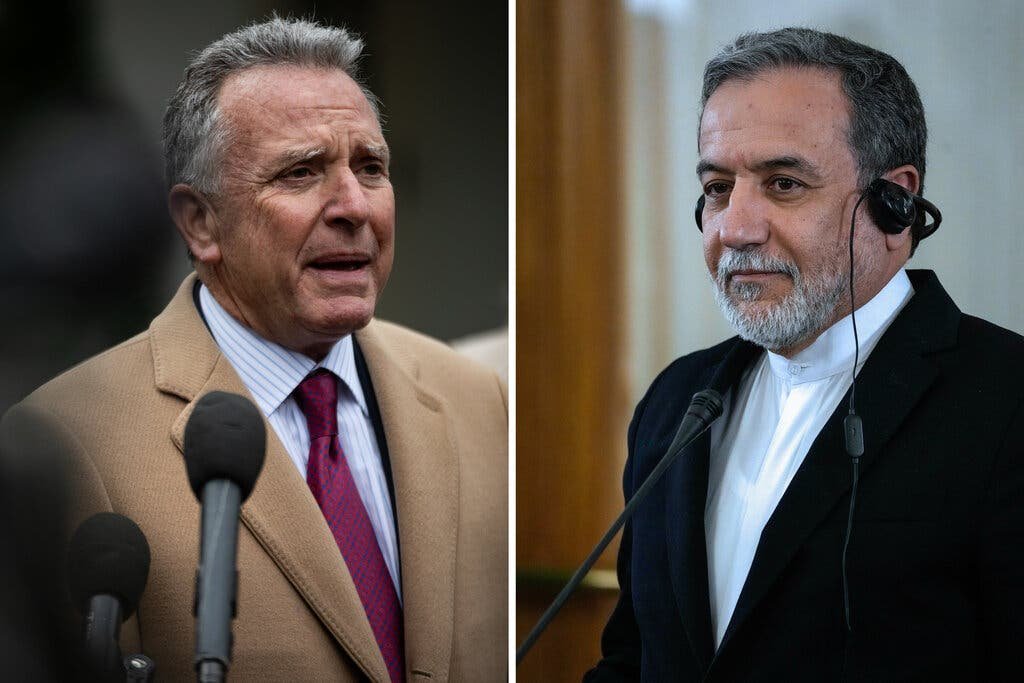
- U.S.–Iran nuclear talks enter a critical third round this Thursday in Geneva under Omani mediation amid fears of military escalation.
- Washington has significantly increased military deployments across the Middle East, including aircraft carriers positioned in the Arabian Sea.
- Sources indicate the U.S. has prepared a multi-nation contingency strike plan if negotiations collapse.
- Allied coordination discussions reportedly include partners such as Australia for intelligence and logistical support.
- U.S. forces have been partially repositioned from bases in Qatar and Bahrain to reduce vulnerability to Iranian retaliation.
The third round of nuclear negotiations between the United States and Iran will begin Thursday in Geneva, a meeting diplomats describe as the most consequential attempt in years to prevent a new Middle East war. Yet behind the diplomatic language lies an unprecedented military buildup that senior officials and regional analysts say is designed to make failure of talks an unacceptable option for Tehran.
Mediated by Badr Albusaidi, foreign minister of Oman, the negotiations come amid escalating warnings from Donald Trump, who has publicly cautioned that “really bad things will happen” if diplomacy collapses over Iran’s nuclear program.
Interviews with regional security officials, Western diplomatic sources, and defense analysts suggest the talks are unfolding under what one official described as “maximum military leverage.” Sources speaking to The Islamabad Telegraph say contingency plans for a large-scale multinational strike on Iran have already been finalized should negotiations reach a deadlock.
While Washington has not publicly confirmed such plans, observable troop movements and deployments across the Middle East indicate preparations consistent with high-intensity conflict scenarios.
Military Pressure Behind Diplomacy
According to defense sources familiar with regional deployments, the United States has quietly assembled significant naval and air assets across the region in recent weeks. Aircraft carriers have been positioned in the Arabian Sea, placing strike aircraft within operational range of Iranian nuclear facilities.
Officials describe the buildup as part deterrence, part negotiation tactic.
Sources claim allied participation is being discussed, including logistical and intelligence coordination from partners such as Australia, a longstanding U.S. security ally that has historically supported American military operations in the Middle East. Canberra has publicly emphasized de-escalation but has not ruled out cooperation if conflict expands.
One senior regional analyst told this publication that the planned operation — if triggered — would be “far more precise and technologically overwhelming” than past U.S. campaigns, referencing advances in stealth aviation, cyber warfare, and precision targeting since the Iraq War.
It is important to note that no official U.S. announcement confirms an imminent attack. However, the scale of deployments has reinforced perceptions that Washington’s threats are not rhetorical.
Troop Redeployments Signal Fear of Retaliation
In a move widely interpreted as contingency planning, hundreds of U.S. personnel have reportedly been repositioned from key installations in Qatar and Bahrain.
The relocation includes personnel linked to Al Udeid Air Base, the largest American military facility in the Middle East.
Officials familiar with the decision say the move reflects concern over Iranian retaliatory missile strikes should hostilities begin. Iran has repeatedly warned it would target U.S. bases across the region if attacked.
Despite partial withdrawals, U.S. forces remain distributed across Iraq, Syria, Kuwait, Jordan, Saudi Arabia, and the UAE, maintaining operational readiness.
Simultaneously, additional bombers and stealth fighter aircraft have been deployed to regional bases, reinforcing the perception that military options are fully prepared should diplomacy fail.
Diplomatic Signals Mixed With Defiance
Iranian President Masoud Pezeshkian struck a cautiously optimistic tone ahead of the talks, saying negotiations had produced “encouraging signals” while stressing Tehran’s readiness for any scenario.
Iran continues to deny pursuing nuclear weapons, insisting its enrichment program serves civilian energy purposes. However, U.S. officials argue Iran’s uranium enrichment levels — reportedly reaching 60 percent purity — place it dangerously close to weapons-grade capability.
American envoy Steve Witkoff, leading negotiations, recently questioned why Tehran had not “capitulated” under mounting economic and military pressure — a remark that triggered sharp responses from Iranian leaders.
Iranian Foreign Minister Abbas Araqchi responded bluntly, declaring Iran would not surrender under coercion but remained open to diplomacy.
Behind closed doors, negotiators are wrestling with several unresolved disputes:
-
Iran’s demand for recognition of peaceful uranium enrichment.
-
U.S. insistence on limits preventing weaponization pathways.
-
The sequencing and scope of sanctions relief.
-
Washington’s push to expand talks to missile programs and regional proxy networks.
Reuters reporting indicates Iran may consider exporting part of its enriched uranium stockpile while diluting the remainder — a potential compromise if sanctions relief is guaranteed.
The Shadow of Previous Strikes
The current crisis follows U.S. and Israeli strikes last year targeting Iranian nuclear infrastructure. Although Washington declared those operations successful in slowing enrichment activities, intelligence assessments suggest Iran retains significant stockpiles accumulated earlier.
Analysts believe this lingering capability explains Washington’s urgency.
A Middle East security expert described the situation as “a race between diplomacy and deterrence,” noting that both sides appear convinced time is working against them.
Australia and Allied Calculations
Australia’s government, led by Prime Minister Anthony Albanese, has walked a cautious line — supporting U.S. security concerns while urging de-escalation.
Strategic analysts say Canberra could face pressure to provide intelligence, surveillance, or logistical support if a broader coalition operation emerges, even if direct combat participation remains unlikely.
Historically, Australia has supported major U.S. operations in the region, reinforcing expectations among alliance planners that some level of involvement could occur in a crisis scenario.
What We Know So Far
- The United States and Iran will hold a third round of nuclear talks Thursday in Geneva under Omani mediation.
- Washington has significantly increased naval and air deployments across the Middle East.
- U.S. personnel have been repositioned from certain regional bases as a precaution against Iranian retaliation.
- Iran is reportedly considering concessions involving enriched uranium stockpiles.
- Major disagreements remain over enrichment rights and sanctions relief timelines.
- Analysts say military threats accompanying negotiations appear credible rather than symbolic.
Negotiations Under Maximum Pressure
Diplomats describe the talks as occurring under “coercive diplomacy,” where military readiness amplifies negotiating leverage.
President Trump’s strategy appears rooted in convincing Tehran that failure at the negotiating table carries unacceptable risks. At the same time, Iranian leadership faces domestic economic pressure caused by sanctions, regional strategic setbacks, and internal unrest.
Yet both sides also understand the risks of escalation.
A large-scale conflict could disrupt global oil markets, threaten maritime trade routes, and trigger proxy confrontations stretching from Lebanon to the Persian Gulf.
Future Perspective: Diplomacy or Deterrence?
The Geneva talks may produce only a framework rather than a final agreement. Experts expect incremental steps rather than a comprehensive breakthrough.
Three possible scenarios now dominate policy discussions:
-
Limited Agreement: Iran accepts partial restrictions in exchange for phased sanctions relief, reducing immediate war risks.
-
Extended Negotiations: Talks continue while military pressure remains, prolonging uncertainty but avoiding conflict.
-
Breakdown and Escalation: Failure triggers targeted strikes designed to cripple nuclear infrastructure, risking regional retaliation.
Despite aggressive rhetoric, many analysts believe neither Washington nor Tehran truly seeks war. However, the unprecedented military positioning means miscalculation could rapidly transform diplomatic failure into open confrontation.
As delegations arrive in Geneva this week, diplomacy carries the burden of preventing a crisis that military planners on both sides appear increasingly prepared to fight.