


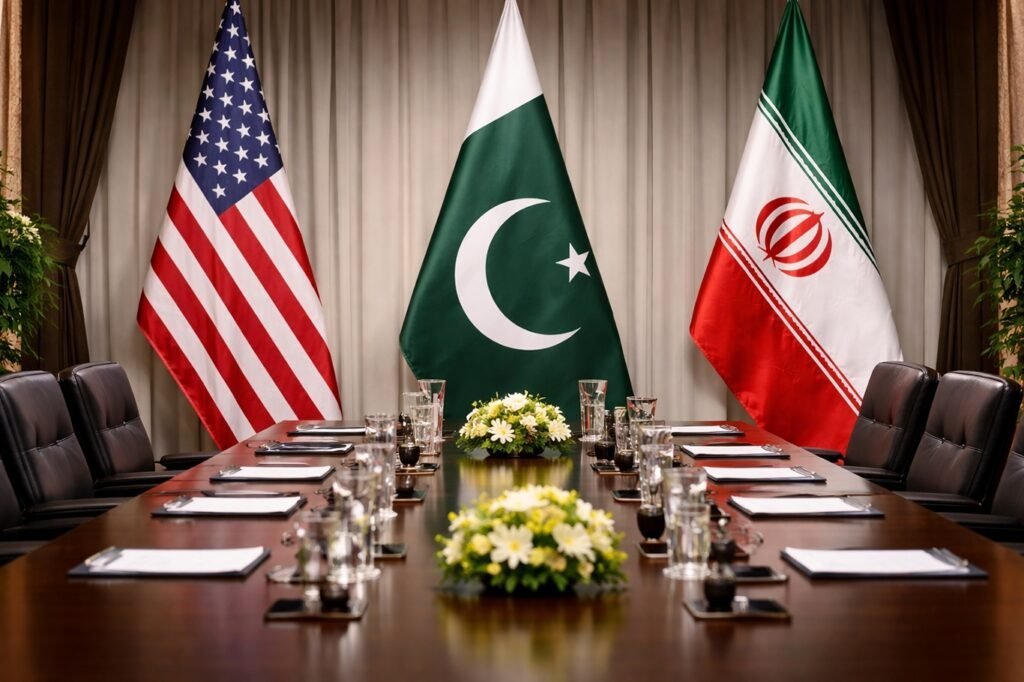
- U.S.-Iran nuclear talks stalled over disagreement on uranium enrichment timelines
- Pakistan is making strong diplomatic efforts to arrange a second round of talks
- Trump insists Iran must permanently abandon nuclear weapon capability
- Tehran refuses to give up enrichment, calling it a sovereign right
The fragile diplomatic bridge between Washington and Tehran has once again come under strain, but the story is far from over. Beneath the rhetoric of confrontation and the shadow of military escalation, quiet efforts—particularly by Pakistan—are underway to salvage what could still become a decisive second round of talks.
At the center of the deadlock stands U.S. President Donald Trump, who has doubled down on his hardline stance that Iran must permanently abandon any pathway to a nuclear weapon. Speaking at the White House after the Islamabad negotiations collapsed, Trump struck a tone of confidence that bordered on certainty. “We agreed to a lot of things, but they didn’t agree to that,” he said. “I think they will agree to it. I’m almost sure of it. In fact, I am sure of it.”
But Tehran’s position remains equally entrenched. For Iran, nuclear enrichment is not merely a technical capability—it is a symbol of sovereignty, scientific progress, and regime survival. Even after the death of Supreme Leader Ali Khameneiin an Israeli airstrike at the outset of the war, Iranian officials continue to invoke his longstanding religious decree against nuclear weapons. Yet Washington is no longer focused on declarations of intent; it seeks dismantlement of capability.
U.S. Naval Blockade of Iran: How Failed Diplomacy Pushed Washington to the Brink
This is where the Islamabad talks faltered.
According to officials familiar with the negotiations, U.S. Vice President JD Vance offered a sweeping 20-year moratorium on all Iranian uranium enrichment. Tehran countered with a far shorter timeline of three to five years. Neither side blinked. The result was a diplomatic stalemate that reflected not a failure of dialogue, but a collision of strategic red lines.
Peace with Iran hinges on one side bowing to the other’s nuclear demands
“The Iranian enrichment program is deeply embedded in their national identity,” said Christine Wormuth, a former U.S. Army secretary. “It’s part of the regime’s legitimacy. The risk now is that maximum pressure may convince them not to compromise—but to accelerate.”
Her warning underscores a paradox at the heart of Trump’s strategy. While the administration believes that economic strangulation—particularly through a blockade of Iranian oil exports via the Strait of Hormuz—will force Tehran to concede, history suggests otherwise. Iran’s leadership, forged in the crucible of the Iran-Iraq war, has demonstrated what Wormuth described as a “very high pain tolerance.”
Yet, despite the public posturing, there are signs that diplomacy is not dead—thanks in large part to Islamabad.
Asim Munir Iran Ceasefire: Pakistan Secures Historic US-Iran Truce, War Halted at Last Minute
Pakistani officials, who hosted the high-stakes talks last weekend, are quietly working behind the scenes to bring both sides back to the table. Diplomatic sources indicate that Pakistan has made “sincere and sustained efforts” to narrow differences, even as tensions escalate in the الخليج. One senior official involved in the process noted, “Facilitating direct engagement between the U.S. and Iran was itself a breakthrough. The talks did not fail—they laid the groundwork for what comes next.”
Indeed, speculation is growing in Washington’s policy circles that a second round of negotiations could take place as early as later this weekend. While no official confirmation has emerged, insiders suggest that both sides are reassessing their positions after testing each other’s limits in Islamabad.
The stakes could not be higher.
Iran today possesses significantly more advanced nuclear capabilities than it did under the 2015 Joint Comprehensive Plan of Action. According to international inspectors, Tehran has accumulated a substantial stockpile of uranium enriched to 60 percent—dangerously close to weapons-grade. While experts differ on how quickly this material could be weaponized, estimates range from a matter of weeks to several months.
At the same time, Washington’s maximalist demand—zero enrichment, indefinitely—appears politically untenable for any Iranian leadership, regardless of faction.
This leaves diplomacy walking a tightrope between ambition and realism.
What Pakistan appears to understand, perhaps more clearly than either Washington or Tehran, is that the path forward lies not in absolute victories, but in calibrated compromises. By keeping communication channels open and reducing mistrust, Islamabad has positioned itself as a rare bridge in an increasingly polarized conflict.
Whether that bridge can hold under the weight of competing ambitions remains to be seen. But for now, the quiet diplomacy unfolding behind closed doors offers a glimmer of hope in a crisis defined by brinkmanship.
If the next round of talks does materialize, it will not begin from scratch. It will begin from Islamabad—a city that, for a brief moment, brought adversaries to the same table and reminded them that even in war, dialogue remains possible.