


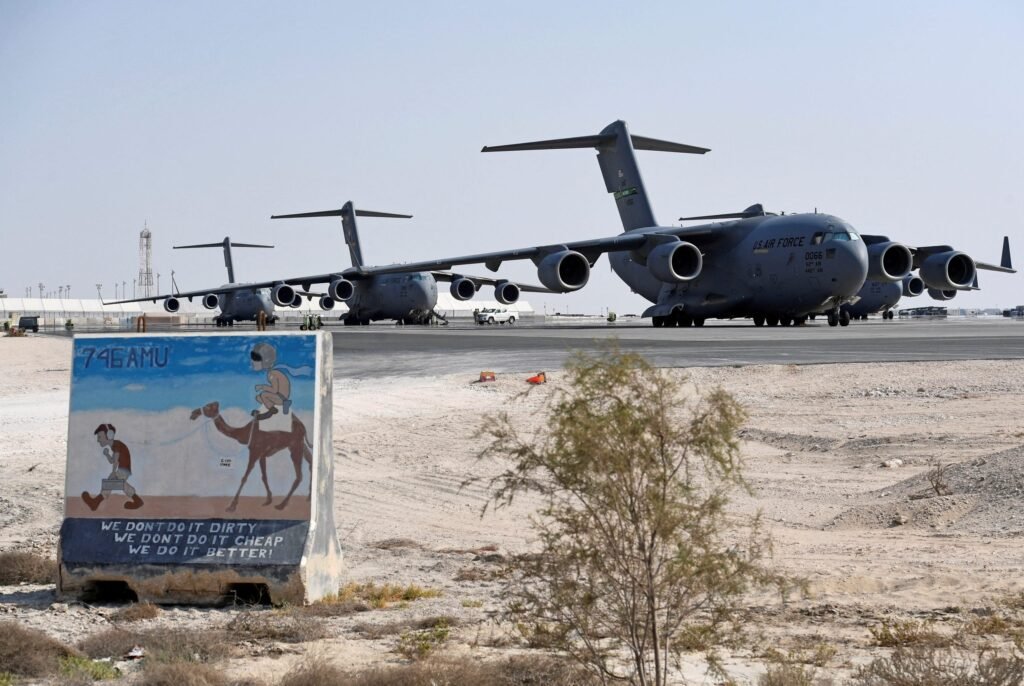
- A U.S. Iran Strike is logistically hampered by the UAE and Saudi Arabia’s refusal to provide airspace or territorial access.
- The USS Abraham Lincoln has entered CENTCOM waters, carrying F-35C Lightning IIs and Super Hornets for potential operations.
- Saudi Crown Prince Mohammed bin Salman and President Pezeshkian have engaged in rare diplomatic calls to de-escalate tensions.
- Potential disruptions in the Strait of Hormuz threaten to send global oil prices into an unprecedented inflationary spike.
The arrival of the USS Abraham Lincoln carrier strike group in the Indian Ocean on January 26, 2026, marks a critical juncture in the burgeoning Middle East standoff. Dispatched from the South China Sea by President Donald Trump, the strike group—supported by three Arleigh Burke-class destroyers, the USS Spruance, USS Michael Murphy, and USS Frank E. Petersen Jr.—is now positioned within the U.S. Central Command (CENTCOM) area of responsibility.
This “massive fleet,” as the President described it, is part of a broader “maximum pressure” campaign triggered by Tehran’s violent response to massive domestic protests that began in late December 2025.
With external estimates ranging from 3,117 to over 36,500 protesters killed, Washington has positioned these assets to signal that internal repression will no longer be insulated from external military consequences.
The Logistics of Neutrality: Airspace as a Strategic Barrier
Despite the formidable fire-power of the USS Abraham Lincoln, a U.S. Iran Strike faces a significant operational bottleneck: the refusal of regional allies to grant access to their airspace. On January 26, 2026, the United Arab Emirates (UAE) issued a formal statement through its Foreign Ministry, reaffirming that it will not permit its territory, waters, or airspace to be used for “hostile military actions” against Iran.
Iran’s Gulf Rivals Warn U.S. Against Strike on Tehran
This move was followed closely by a high-stakes diplomatic exchange between Saudi Crown Prince Mohammed bin Salman and Iranian President Masoud Pezeshkian. During the call, the Crown Prince emphasized that the Kingdom would not allow its soil or sky to be used for any military action, signaling a commitment to resolving differences through dialogue.
For U.S. planners, this “Goldilocks” neutrality creates a logistical nightmare. Modern aerial campaigns rely on sustained sorties and rapid mid-air refueling. Without the ability to fly directly over the Arabian Peninsula, U.S. carrier-based F-35C Lightning IIs and land-based F-15E Strike Eagles must take circuitous routes, significantly increasing mission duration and fuel consumption.
Global Watch Daily Briefing
This added flight time also provides Iranian radar and air defense units more time to intercept incoming threats, potentially turning a “swift and decisive” strike into a protracted and costly engagement.
Economic Risks and the Diplomacy of Stability
The hesitation from Gulf monarchies is rooted in a fundamental shift toward economic pragmatism and fear of collateral damage. Regional leaders are acutely aware that any further escalation could devastate global energy markets, particularly if the Strait of Hormuz—which carries about one-fifth of global oil shipments—is disrupted.
Tehran has already warned that it will consider any attack an act of “full-scale war,” with the IRGC issuing warnings that neighboring countries providing support will be considered hostile. Experts warn that such a conflict could trigger a global inflationary spiral, undermining the economic stability Gulf nations are trying to protect through their long-term development initiatives.
The Path Ahead: Deterrence or Conflict?
As of late January 2026, the situation remains “in flux,” according to President Trump. While he maintains that “all options are on the table,” the lack of a regional coalition for offensive action has forced a temporary pause in kinetic planning.
The administration has continued to ramp up pressure through non-military means, including new sanctions on oil transport fleets. However, with the USS Abraham Lincoln and its escorts currently in the North Arabian Sea, the military capability for action remains present.
The presence of the carrier group provides the President with a high-readiness strike option, but without the active cooperation of Saudi Arabia and the UAE, any military venture into Iran will be significantly more perilous than previous campaigns.