


- UAE Iran war attacks exceed 2,819 strikes, making it the most targeted country
- Missile and drone attacks have hit critical infrastructure and civilian areas
- Strait of Hormuz disruptions have increased oil prices by more than 35 percent
- Excluding the UAE from negotiations risks weakening any peace agreement
The world is watching the theater of diplomacy unfold, but it is missing the most important scene. As global powers rush to secure a ceasefire with Iran, one country continues to absorb the overwhelming weight of the conflict, largely overlooked in negotiations that will define the region’s future.
The United Arab Emirates is not a bystander in this war. It is the most targeted state, the most exposed economy, and the most immediate victim. The question that should unsettle every negotiator is simple: how can peace be negotiated without fully including the country that has endured the brunt of the war?
There is a dangerous omission unfolding at the heart of the latest diplomatic push to de-escalate tensions with Iran. Negotiators in Washington, facilitators in Islamabad, and backchannel envoys across the region are racing to secure ceasefires and frameworks. Yet a fundamental question remains unanswered: has anyone asked the United Arab Emirates?
If not, then the emerging diplomacy is not only incomplete—it is unjust.
For weeks, global attention has focused on the spectacle of brinkmanship: missile exchanges, naval standoffs, and the looming threat to the Strait of Hormuz. But behind the headlines lies a stark and underreported reality.
The United Arab Emirates has been the single most targeted country in this escalation. Since February 28, it has endured more than 2,819 missile and drone attacks—an extraordinary figure that surpasses the number of strikes carried out against all other affected states combined.
This is not a peripheral detail. It is the central fact of the war.
The scale alone is staggering. A total of 2,256 drones, 537 ballistic missiles, and 26 cruise missiles have been launched toward Emirati territory. These were not symbolic gestures or isolated incidents. They were sustained, calculated strikes targeting airports, ports, desalination plants, oil infrastructure, and residential communities.
Pakistan’s Quiet Diplomacy Delivers a Strategic Breakthrough
These are not merely strategic assets; they are the arteries of civilian life and global commerce. The human toll—10 civilian deaths and more than 224 injuries—only begins to capture the cost. Intercepted projectiles have scattered debris across urban areas, amplifying destruction and fear.
In any other conflict, such sustained bombardment would dominate the global narrative. Yet in this case, the UAE remains curiously underrepresented in the diplomatic equation.
This omission is not just a moral failure; it is a strategic one.
A ceasefire that does not address the primary theater of attacks is unlikely to endure. A negotiation that excludes the most targeted country risks normalizing asymmetry and emboldening future aggression. Diplomacy, if it is to succeed, must reflect realities on the ground, not abstract balances of power.
Migrant workers keep Dubai running but can’t afford to flee Iranian strikes
The consequences of ignoring this reality extend far beyond the Gulf. The attacks have coincided with mounting threats to the Strait of Hormuz, a maritime corridor through which nearly 20 percent of global oil supply flows.
Disruptions in this route have already driven oil prices up by more than 35 percent, fueling inflationary pressures worldwide and exposing vulnerabilities in global supply chains. From energy markets to food security, the ripple effects are profound.
The United Arab Emirates has been the single most targeted country in this escalation. Since February 28, it has endured more than 2,819 missile and drone attacks—an extraordinary figure that surpasses the number of strikes carried out against all other affected states combined.
An estimated 300 million people now face heightened risks of shortages due to disruptions in fertilizer shipments, fuel supplies, and maritime trade routes.
This is not a localized conflict. It is a systemic shock with global consequences.
The international community has responded with statements and resolutions, condemning attacks on civilians and infrastructure. More than 179 countries and organizations have expressed concern and solidarity. Yet condemnation without coordination is insufficient. What is missing is a diplomatic framework that fully integrates the concerns of the most affected states, particularly the UAE.
The UAE has made its position clear. A temporary ceasefire is not enough. What is required is a comprehensive approach that addresses the full spectrum of threats, including missile systems, drone warfare, proxy networks, and the disruption of maritime trade. Without such measures, any agreement risks becoming a pause rather than a solution.
Despite the intensity of attacks, the UAE has demonstrated remarkable resilience. Non-oil sectors account for approximately 75 percent of its economy, and sovereign wealth assets exceed 2.49 trillion dollars. Economic growth remains steady, supported by proactive policy measures and financial stability mechanisms. But resilience should not be mistaken for invulnerability. Prolonged instability carries long-term risks for any economy, no matter how strong.
This raises a critical issue of legitimacy. Can a deal reached without the meaningful inclusion of the UAE be considered credible? Can it ensure lasting peace if it sidelines the country that has suffered the most? These are not abstract questions. They go to the heart of whether the current diplomatic effort can succeed.
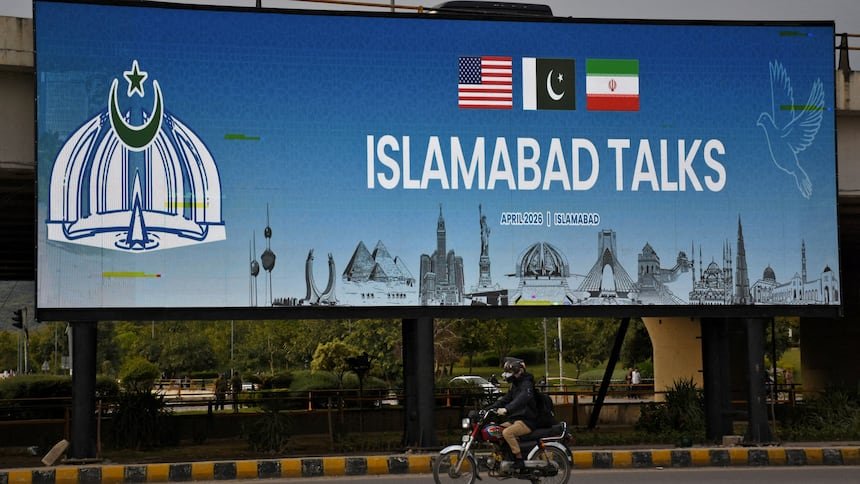
Pakistan’s role as a facilitator has been widely acknowledged, and the United States remains central to the process. Both countries have strong incentives to secure a breakthrough. However, diplomacy must be measured not by speed, but by substance. A durable agreement requires fairness, inclusion, and recognition of realities on the ground.
That begins with listening to those most affected.
The UAE has called for clear guarantees, including the full reopening of the Strait of Hormuz and the complete cessation of hostilities. It has also emphasized accountability for damages inflicted on civilian infrastructure. These are not excessive demands. They are essential conditions for lasting peace.
There is also a broader lesson for global diplomacy. In an era defined by asymmetric warfare and rapidly evolving security threats, traditional negotiation models are no longer sufficient. Stability cannot be imposed from above. It must be built with the participation of those directly impacted.
Ignoring this reality weakens diplomacy and undermines its outcomes.
As talks move forward, the key question is not whether the UAE has been consulted, but whether it has been included in a meaningful way. Without that, any agreement risks being fragile and incomplete.
The war has already revealed its most targeted country. The diplomacy must not repeat the mistake of overlooking it.
There is also a critical dimension that directly connects this conflict to Pakistan’s national interest. Nearly 1.7 to 2 million Pakistanis live and work in the United Arab Emirates, forming one of the largest expatriate communities in the region. Their economic contribution to Pakistan is immense. In 2024, remittances from the UAE reached approximately 6.7 billion dollars and are expected to exceed 7 billion dollars in 2025. Monthly inflows consistently range between 600 and 700 million dollars, making the UAE one of the most vital sources of foreign exchange for Pakistan.
These remittances sustain millions of families, support domestic consumption, and stabilize the national economy during periods of financial strain. For these overseas Pakistanis, the conflict is not distant. It is a direct threat to their safety, livelihoods, and future. Instability in the UAE means uncertainty for millions of Pakistani households that depend on income earned there.
Pakistani expatriates now expect their government to reflect their concerns in its diplomatic role. As Pakistan facilitates talks and prepares for the next round of negotiations, their demand is clear and justified: ensure that the UAE is fully included in any discussion on the Iran conflict. Safeguarding the interests of overseas citizens is not optional. It is a responsibility.
If Pakistan seeks to play a credible role in shaping peace, it must also protect those whose lives and livelihoods are tied to the region’s stability.