


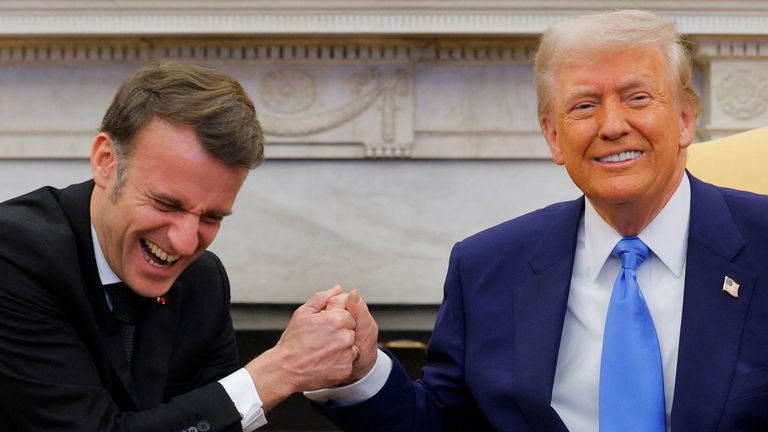
- Trump’s Ukraine peace deal is in its final stages, with European leaders increasingly supporting the initiative.
- Macron has positioned France as a key mediator, strengthening Europe’s role in post-war stabilization.
- A peace agreement would significantly reduce global energy prices and restore grain exports.
- Zelensky remains cautious, demanding stronger security guarantees before committing to the deal.
On the third anniversary of Russia’s invasion of Ukraine, a major breakthrough appears imminent in the ongoing war, with former U.S. President Donald Trump and French President Emmanuel Macron announcing substantial progress toward a peace deal. France, a key NATO member and a dominant European power, has aligned itself with Trump’s vision, increasing the likelihood of a diplomatic resolution to the conflict that has cost thousands of lives and strained global economies. The Ukraine peace deal is now at a decisive stage, with world leaders closely watching the developments.
Trump-Macron Meeting: A United Call for Peace
During a high-profile meeting at the White House on Monday, Macron emphasized Europe’s readiness to play a more active role in securing lasting peace in Ukraine. “We do share the objective of peace, but we are very aware of the necessity to have guarantees and a solid peace in order to stabilize the situation,” Macron told reporters.
European Leaders Rally to Support Ukraine Amid Transatlantic Rift
President Trump, who took office on January 20, expressed optimism about the progress made. “A lot of progress has been made so far,” he stated, hinting at a near-finalization of negotiations. Macron’s remarks also addressed growing European concerns regarding Trump’s “America First” stance, which has put pressure on European allies to step up their defense spending and take greater responsibility for regional security.
Trump’s Plan to End the Ukraine War: Key Elements and Global Impact
At the core of Trump’s Ukraine peace deal initiative is a multi-faceted approach that includes:
- Ceasefire Agreement: An immediate cessation of hostilities, similar to the Minsk agreements but with a greater emphasis on enforcement.
- Deployment of European Peacekeepers: Trump has proposed that European troops, rather than NATO forces, oversee demilitarization efforts. Reports suggest that Russian President Vladimir Putin is willing to accept this, a notable shift from past refusals to engage with Western peacekeeping forces.
- Ukraine’s Neutrality: A key sticking point in past negotiations, Trump’s plan includes formal assurances that Ukraine will not join NATO. In return, Ukraine would receive substantial security guarantees backed by France and Germany.
- Economic Reconstruction: Trump has suggested a Marshall Plan-style investment program, with European nations leading the financial efforts. The estimated cost of rebuilding Ukraine is around $500 billion, according to World Bank projections.
Ukraine Peace Deal: European Leaders Gather to Discuss the Plan
As peace negotiations gain traction, European leaders convened in Paris for an emergency summit to discuss the details of the proposed agreement. Attendees included German Chancellor Olaf Scholz, British Prime Minister Rishi Sunak, and European Commission President Ursula von der Leyen. The primary agenda was determining Europe’s role in the enforcement and economic revitalization of Ukraine post-conflict.
European Leaders Rally to Support Ukraine Amid Transatlantic Rift
Reports indicate that Europe’s annual military aid to Ukraine, which exceeded $30 billion in 2023 alone, has become a growing financial strain. European economies, still recovering from COVID-19 and energy crises, are increasingly supportive of a diplomatic resolution.
Trump-Putin Direct Talks: A Game-Changer?
A key development in the Ukraine peace deal process has been the direct dialogue between Trump and Putin. The two leaders recently held a phone conversation, where they reportedly discussed the framework of a settlement that includes territorial compromises and economic incentives.
The General and the Geopolitical Chessboard: Dan Caine’s Rise and America’s Military Future
While the details remain undisclosed, sources close to the negotiations claim that Russia is willing to consider a phased withdrawal from occupied territories in exchange for security guarantees and partial sanction relief. This would mark a significant shift from Moscow’s hardline stance since 2022.
Zelensky’s Reluctance: Why Ukraine Is Hesitant to Accept the Deal
Despite the momentum toward peace, Ukrainian President Volodymyr Zelensky remains hesitant to fully embrace Trump’s Ukraine peace deal proposal. Key reasons for his reluctance include:
- Security Concerns: Ukraine insists on binding security guarantees from Western powers, fearing that without NATO membership, it will remain vulnerable to future Russian aggression.
- Territorial Integrity: While Trump’s plan does not publicly endorse territorial concessions, some reports suggest Crimea and parts of the Donbas region may remain under Russian influence, a condition Kyiv has repeatedly rejected.
- Trust Deficit: Ukraine remains skeptical of Trump’s direct negotiations with Putin, arguing that any deal must include Ukrainian participation at all stages.
The Global Economic Impact of a Ukraine Peace Deal
A resolution to the Ukraine war would have widespread positive effects, particularly on energy and food markets. Some key projections include:
- Energy Markets Stabilization: The war caused a 250% increase in European gas prices, with some nations paying over $100 per megawatt-hour for natural gas in 2022. With peace, Russian gas exports to Europe could resume, leading to an estimated 40% reduction in energy costs across the EU.
- Oil Prices Drop: Brent crude oil surged to $130 per barrel in 2022 following Russia’s invasion. Analysts predict that a peace agreement could lower oil prices to around $60-70 per barrel, benefiting global consumers.
- Grain Exports Resume: Ukraine accounts for approximately 10% of the world’s wheat exports. The war disrupted supply chains, causing wheat prices to spike by 40%. A ceasefire would restore Ukrainian grain exports, improving global food security and reducing inflation in developing nations.
Russian Gas to Europe: A Return to Normalcy?
Prior to the war, Russia supplied over 40% of Europe’s natural gas. Sanctions and supply disruptions forced Europe to pivot toward LNG imports, leading to higher costs. If hostilities cease, Russia could gradually restore gas exports, potentially saving European consumers billions in energy costs annually.
Optimistic Outlook: A New Era for Europe and Ukraine
With Trump’s Ukraine peace deal nearing completion and Macron rallying European support, the world stands at the precipice of a historic peace agreement. A successful resolution would not only end the suffering in Ukraine but also revitalize global markets, reduce inflation, and ease geopolitical tensions.
Trump calls meeting with Macron an “important step” in ending Russia-Ukraine war
While challenges remain—particularly in securing Ukraine’s trust and finalizing Russia’s commitments—the latest developments indicate a high likelihood of success. As Trump himself put it, “We are closer than ever to peace, and we will get it done.”
If this plan materializes, it could redefine Europe’s security architecture, cement Trump’s legacy as a dealmaker, and usher in an era of stability after years of turmoil.
Key Takeaways
- Trump’s Ukraine peace deal is nearing completion, with growing European support, particularly from France.
- Macron is playing a crucial role in aligning European efforts to secure lasting peace in Ukraine.
- A peace agreement would ease global inflation, lower energy prices, and restore critical food supply chains.
- Zelensky remains hesitant, insisting on stronger security guarantees before committing to any deal.