


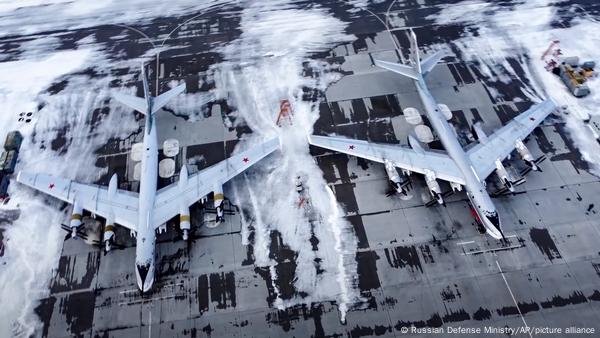
- Ukraine’s deep drone strikes hit five Russian air bases, including sites thousands of miles inside Russian territory, in a bold escalation dubbed Operation Spiderweb.
- 41 Russian aircraft—including strategic bombers and early warning planes—were reportedly destroyed, crippling Russia’s cruise missile strike capabilities.
- The attack triggered panic in Russian pro-war circles, with some likening it to “Russia’s Pearl Harbor” and calling for nuclear retaliation.
- The timing of the strikes, just before direct peace talks in Istanbul, suggests Kyiv aimed to bolster its negotiating leverage—while risking a dangerous escalation.
On Sunday, the world may have witnessed the most consequential escalation of the Russia-Ukraine war since its inception in February 2022. In a stunning move reminiscent of Japan’s audacious 1941 strike on Pearl Harbor, Ukraine launched a wave of drone attacks deep inside Russian territory—striking five air bases, including Olenya and Belaya, thousands of miles from the front lines. The comparison to Pearl Harbor may not be hyperbole; it may be a forewarning.
Just as Japan’s surprise assault on Hawaii shattered U.S. assumptions of strategic safety across oceans, Ukraine’s “Operation Spiderweb” has rewritten the rules of modern warfare. Ukrainian drones, reportedly smuggled in hidden compartments of trucks and houses, attacked bases across the Russian Far North and Siberia, destroying 41 high-value aircraft—including Tu-95 and Tu-22 bombers and A-50 airborne early warning planes. These are the same aircraft responsible for Russia’s long-range missile strikes on Ukrainian cities.
Exclusive: Changing Dynamics of Modern Warfare: Drones Redefine India-Pakistan Conflict in 2025
President Volodymyr Zelensky celebrated the operation as “perfectly prepared,” and the scale of the assault backs his claim. Ukrainian intelligence claims over a third of Russia’s cruise missile delivery capacity was neutralized. Footage released by Ukraine’s SBU intelligence agency shows flames and explosions at multiple airfields. This is more than just a tactical success; it is a strategic turning point.
But this turning point cuts both ways.
The significance of the strikes lies not only in their scale but in their timing. They came just one day before Ukraine and Russia were scheduled to resume peace talks in Istanbul. Kyiv’s position heading into negotiations is now one of psychological advantage—showcasing its ability to reach the very heart of Russia’s military-industrial complex without using Western-supplied weapons, which are restricted from deep strikes inside Russian territory. But the consequences may be more explosive than the drones themselves.
READ MORE:Ukraine attacks Russian air bases in far-reaching drone strikes
Pro-Kremlin voices quickly likened the operation to Pearl Harbor, some demanding retaliatory nuclear strikes. “We hope that the response will be the same as the U.S. response to the attack on their Pearl Harbor or even harsher,” wrote one popular Russian military blogger. Another declared, “This is a reason to launch nuclear strikes on Ukraine.” A Kremlin-linked channel described the drone strikes as “a very sensitive blow to Russia’s nuclear shield.”
The danger here is real. In recent months, the conflict had stabilized into a war of attrition—bloody and grinding, but largely contained within known limits. Sunday’s operation has now blasted open new geographic and strategic dimensions. The strike into Russian heartland territory signals that no part of the country is immune. Ukraine’s use of indigenous FPV (First-Person View) drones reflects its increasing domestic capability and innovation, making it less dependent on Western systems—and less constrained by Western caution.
Russia, on the other hand, has responded by highlighting what it called a “terrorist attack.” But behind the bluster, there is quiet fury. For a nation that prides itself on its air defense and intelligence depth, Ukraine’s success in penetrating Siberia exposes major cracks. More worrying for the Kremlin is the psychological impact: if Ukrainian drones can reach thousands of miles into Russia, what’s next?
The timing of these attacks also coincided with two bridge collapses in Russia’s Bryansk and Kursk regions—killing seven and injuring dozens. While Ukraine has not claimed responsibility, Russian officials were quick to blame Kyiv, deepening the sense of insecurity across Russia’s border regions. Whether linked or not, the cumulative effect of these events is a Russian perception that their homeland is under siege.
READ MORE:Exclusive News Analysis: Russia and Ukraine’s Massive Prisoner Swap—A Prelude to Trump-Brokered Peace?
Zelensky’s insistence on peace terms—complete ceasefire, prisoner exchange, and return of abducted Ukrainian children—reflects diplomatic strength. But Moscow’s response remains muted and vague, insisting its peace memorandum won’t be made public. This suggests a reluctance to negotiate from a position of perceived weakness.
What happens next may define the trajectory of this war. If Russia escalates—militarily or with renewed strategic bombing—it could trigger a wider conflict. If it retaliates unpredictably, especially in line with the rhetoric from hardline pro-war circles, the world could be thrust into a far more dangerous phase.
Ukraine’s drone campaign demonstrates strategic ingenuity, but it has also tested the limits of escalation. History remembers Pearl Harbor not just for the surprise, but for the global conflagration that followed. Sunday’s operation could either mark a high point in Ukraine’s asymmetric defense—or the start of a broader, bloodier phase of war.
President Trump’s administration has backed direct talks, and Secretary of State Marco Rubio reaffirmed that position in a call with Russian Foreign Minister Sergei Lavrov. Yet without real de-escalation, diplomacy may prove hollow.
For now, the skies over Siberia may seem distant. But the echoes of this new kind of warfare could soon be felt far beyond.