


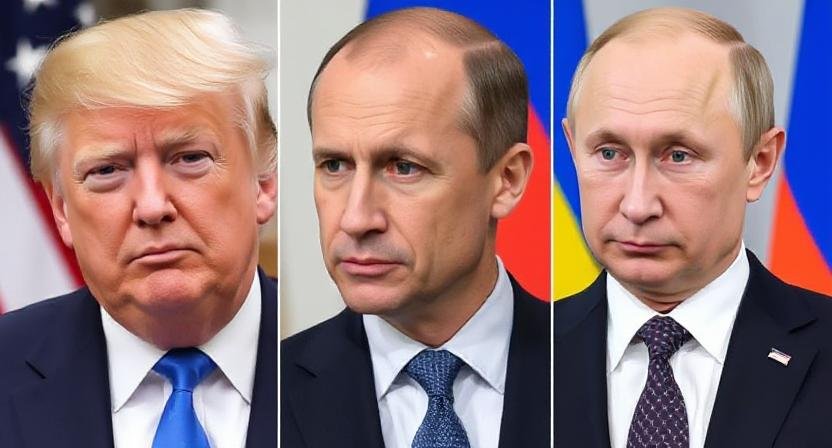
- Zelensky formally proposes peace talks with Russia mediated by U.S. President Donald Trump, seeking a cease-fire and humanitarian action including prisoner swaps.
- Kremlin confirms it is “evaluating” the offer, but reiterates that any agreement must meet Russia’s strategic demands, including NATO neutrality and territorial concessions.
- Trump eyes a major diplomatic win, pushing for a quick cease-fire and offering weapons deals, while European nations show division over a long-term settlement.
- Experts warn of a dangerous impasse, as all sides want peace—but only if it reflects their own narratives, red lines, and geopolitical ambitions.
In a dramatic and high-stakes shift, Ukraine’s President Volodymyr Zelensky has formally proposed resuming peace negotiations with Russia — this time under the direct mediation of U.S. President Donald J. Trump — in a move that signals growing urgency among world powers to bring the devastating conflict to a close. But the key players, including Europe and Russia, are each pushing for peace strictly on their own terms, threatening to turn diplomacy into yet another battlefield.
The new diplomatic overture, confirmed by two Ukrainian government officials and acknowledged by the Kremlin, is being framed in Kyiv as a test of Russia’s intentions and of Trump’s promise to “end the war in 24 hours.” According to senior Ukrainian national security sources, President Zelensky offered to convene a high-level summit in Istanbul — where previous talks took place in May and June — focusing initially on a cease-fire, prisoner exchanges, and the repatriation of Ukrainian children deported to Russia.
EXCLUSIVE | NATO Allies to Funnel U.S. Weapons to Ukraine Under Trump’s New Arms Deal
“Ukraine is ready to talk. But not to surrender.”
“We are ready for talks, but not for capitulation,” a senior Ukrainian official involved in the negotiations told The Islamabad Telegraph, speaking on condition of anonymity due to the sensitivity of the discussions. “President Zelensky has conveyed a clear proposal to President Trump’s team: we want a mediated process that includes the U.S. as a security guarantor, and we are prepared to discuss immediate humanitarian steps.”
READ MORE: Faint Signs of Life Appear in Effort to Halt Ukraine War
Another Ukrainian diplomat confirmed that National Security Adviser Rustem Umerov had personally delivered the proposal to Russian representatives via neutral intermediaries. “We hope this opens a channel — but we are not naive,” the diplomat said.
Moscow Confirms It’s Reviewing the Offer
Kremlin spokesman Dmitry Peskov, speaking on Russian state television, acknowledged the offer and said Moscow is “carefully evaluating the proposal for negotiations under American mediation.”
“President Putin has consistently expressed his interest in a peaceful settlement,” Peskov said. “However, the terms must reflect the new realities on the ground. Russia’s goals remain unchanged, and we expect our concerns to be understood — especially by the Americans.”
ALSO READ: In-Depth News Analysis: NATO’s Washington Visit Could Redefine U.S. Role in Ukraine War and Future of Transatlantic Alliance
Russian officials have long demanded that any peace deal recognize Crimea and parts of eastern Ukraine as Russian territory, permanently block Ukraine’s NATO membership, limit Ukraine’s military size, and grant Russian language official status within Ukrainian borders.
Trump: The Self-Styled Peacemaker
President Trump, who returned to power promising to bring the Ukraine war to an “immediate end,” is now in a precarious but powerful position. His administration has already facilitated a landmark weapons deal that provided Ukraine with advanced air defense systems, including Patriots, through European donations. In return, Kyiv agreed to share profits from future natural resource contracts and pledged to engage in a Trump-led diplomatic process.
“The world’s watching to see if Trump delivers,” said retired General Mark Douglas, a former NATO commander. “But there’s a catch: everyone wants peace, but only if they get to define what peace looks like.”
Trump’s team has publicly pushed for an unconditional cease-fire — a position Ukraine accepted in March — as a prerequisite to broader talks. However, Russia has yet to commit to such terms, and skepticism persists over whether Moscow is truly interested in halting its offensive, or simply buying time.
Europe’s Growing Dilemma
Across Europe, political fatigue over the war is spreading. While EU leaders continue to publicly back Ukraine’s sovereignty, internal divisions are widening.
France and Hungary, in particular, are reportedly urging Trump to support a phased freeze of hostilities, essentially locking the current front lines in place. That idea is gaining quiet traction in Brussels, where energy and economic disruptions continue to pile pressure on leaders.
“Europeans want peace, yes — but they also want their gas, their trade, and their political stability,” said Sergei Rabinovych, a Brussels-based political analyst. “For many, ending the war is becoming more important than winning it.”
Yet Eastern European nations, including Poland and the Baltic states, remain firmly opposed to any deal that could be seen as rewarding Russian aggression.
Putin Plays the Long Game
Within the Kremlin, there is growing confidence that Trump’s flexibility can be leveraged to extract a more favorable settlement. According to Western intelligence assessments, Moscow views the Trump administration as more pragmatic — and more concerned with optics than strategic containment.
“They believe Trump might be willing to accept a cold peace — one that leaves Russia with some territorial gains — as long as he gets to declare victory and bask in the glory of ‘ending the war,’” a senior European diplomat based in Kyiv told The Islamabad Telegraph.
Indeed, Putin’s recent shift in tone — signaling openness to negotiation, while continuing drone and missile strikes across eastern Ukraine — appears calculated. The Kremlin is gambling that Ukraine’s defenses will eventually wane, that Western support will erode, and that Trump’s hunger for a geopolitical win could lead him to press Kyiv into concessions.
A Fragile Opening — or a Dangerous Illusion?
For now, Zelensky’s proposal, Trump’s mediation, and Russia’s tentative response offer a fragile glimmer of diplomatic movement. But few in Kyiv believe a breakthrough is near.
“This war is no longer just about borders — it’s about narratives, survival, and control of the postwar order,” said Col. Richard Stein of the U.S. Army War College. “Trump wants the legacy, Zelensky wants justice, and Putin wants recognition. That’s a very combustible triangle.”
Still, Ukrainian officials are determined to test the waters. “We’ve done our part,” the Ukrainian source close to the president said. “Now we’ll see if Trump is serious — and if Russia is honest.”
Until then, air raid sirens continue to wail across Ukraine, missiles continue to fall, and soldiers on both sides continue to die. Peace, for now, remains a moving target — pulled in different directions by three powerful men and their incompatible ambitions.