


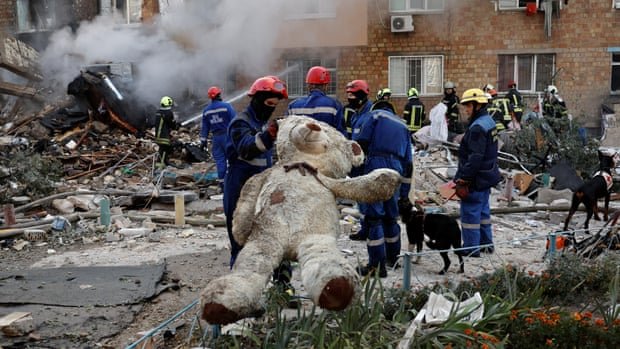
- Ukraine war: 52 civilians killed in latest Russian strikes, including Lviv and Kyiv regions.
- Russian missile and drone attacks disrupted energy and transport networks across Ukraine.
- NATO and EU face growing internal divisions over sanctions and strategic support.
- Nuclear threats rise as Russia prioritizes force modernization amid the Ukraine war.
The Ukraine war entered another violent phase this week as Russian strikes intensified across multiple regions.
At least 52 people died in fresh attacks, underscoring the conflict’s relentless human and economic toll.
Officials reported widespread destruction targeting energy infrastructure, housing, and transport networks already weakened by years of fighting.
President Volodymyr Zelenskyy blamed Moscow for a deadly strike in Lviv near Poland’s border.
The attack killed a 23-year-old policewoman and injured at least 24 civilians, according to regional authorities.
Lviv Mayor Andriy Sadovyi described the incident as terrorism aimed at breaking civilian morale.
The Ukraine war increasingly targets critical infrastructure, especially power systems essential for winter survival and industrial activity.
Ukraine’s grid operator Ukrenergo confirmed outages across Kyiv and several surrounding regions.
Russian forces launched 345 aerial weapons overnight, including 50 missiles and 297 drones.
Ukraine’s air force intercepted 33 missiles and destroyed 274 drones before impact.
What We Know So Far
- At least 52 people were killed in the latest Russian attacks across Ukraine.
- Russia launched 345 aerial weapons in a single overnight assault.
- Energy infrastructure remains a primary target, causing widespread power outages.
- Drone warfare increasingly defines battlefield tactics on both sides.
- Political divisions inside Europe complicate sanctions and coordinated responses.
- Nuclear rhetoric has intensified following treaty expirations between Russia and the United States.
Despite interceptions, damage spread across Dnipro, Mykolaiv, Sumy, Poltava, and Kirovohrad regions.
The Ukraine war now places immense strain on Ukraine’s economy, once a major global exporter of grain and agricultural products.
Millions remain displaced internally or abroad, while reconstruction costs continue rising beyond sustainable national capacity.
Critics increasingly argue Ukraine’s leadership underestimated long-term risks when confronting Russia militarily.
Supporters counter that Kyiv faced limited alternatives after sovereignty violations and territorial seizures.
Meanwhile, the Ukraine war exposes widening cracks inside Western alliances supporting Ukraine’s defense.
Former U.S. President Donald Trump has focused heavily on Middle East tensions, especially Iran, reshaping Washington’s strategic priorities.
Analysts say shifting American attention weakens cohesion inside NATO at a critical moment.
Trump previously argued NATO lacked independent capability to deter Russia without direct American leadership.
Recent battlefield developments have revived debate over alliance readiness and burden sharing.
The Ukraine war also escalates beyond Ukraine’s borders through drone and missile exchanges.
Russian authorities reported Ukrainian strikes damaging infrastructure in Belgorod and disrupting electricity, heating, and water supplies.
Drone attacks forced temporary airport suspensions in Moscow after air defenses intercepted incoming aircraft threats.
Russia’s defense ministry claimed 130 Ukrainian drones were destroyed within four hours across central regions.
Russian President Vladimir Putin declared modernization of nuclear forces an absolute national priority after treaty limits expired.
His remarks signal a broader strategic shift linking the Ukraine war to global nuclear deterrence competition.
Diplomatic momentum remains fragile despite appeals from international figures.
Pope Leo XIV urged immediate negotiations, warning that continued fighting risks generational instability across Europe.
The Ukraine war increasingly intersects with European political divisions over sanctions and energy supplies.
Hungarian Prime Minister Viktor Orban threatened to block new European Union sanctions packages against Russia.
Hungary and Slovakia demand restored oil transit through the Druzhba pipeline before approving further support measures.
Kyiv rejected those demands, calling them political pressure benefiting Moscow’s strategic objectives.
Ukraine’s foreign minister Andrii Sybiha urged stronger sanctions, saying international hesitation normalizes continued violence.
The Ukraine war therefore evolves into both a military confrontation and a test of Western political unity.
Looking ahead, analysts expect prolonged attrition rather than decisive battlefield breakthroughs.
Russia maintains manpower advantages and adapts drone warfare faster than many Western planners anticipated.
Ukraine relies heavily on external funding, weapons transfers, and intelligence sharing to sustain resistance.
If U.S. political priorities continue shifting, Kyiv could face reduced military assistance within months.
The Ukraine war may ultimately reshape European security architecture, energy markets, and global food supply chains.
Strategists warn that prolonged stalemate increases risks of escalation, miscalculation, or expanded regional confrontation.
For now, civilians continue bearing the heaviest burden as diplomacy struggles to match battlefield realities.