


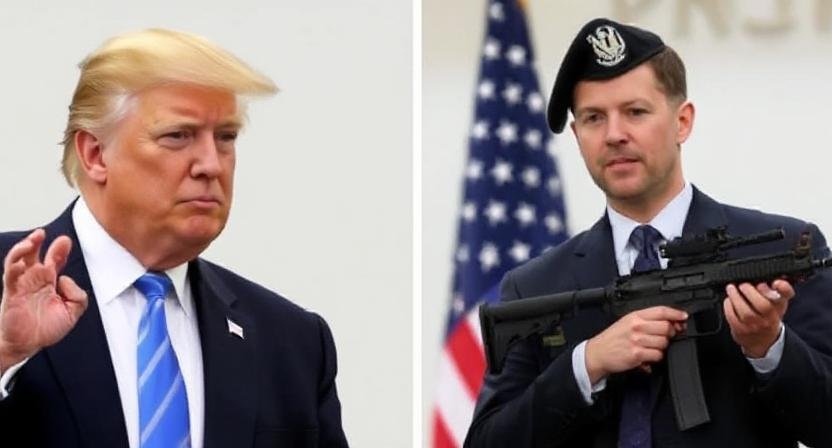
- U.S. pauses vital arms shipments to Ukraine, including Patriot interceptors and F-16 missiles, due to concerns over depleting American stockpiles.
- Decision signals potential shift in U.S. commitment, raising fears that President Putin may exploit the pause to prolong the conflict.
- Political divide deepens in Washington, as Vice President JD Vance and GOP voices back the pause, while Democrats warn of dire battlefield consequences.
- Uncertainty clouds Ukraine’s defense strategy, with European allies under pressure to fill the growing gap in military aid.
In a move sending shockwaves through diplomatic and military circles, the Trump administration has paused the delivery of several key categories of U.S. weapons to Ukraine, raising serious questions about the future of the war with Russia and America’s long-term strategic commitments in Europe.
According to officials at the White House and the Pentagon, the delay affects a number of high-value systems critical to Ukraine’s defense—Patriot air defense interceptors, precision-guided artillery rounds, and advanced missiles compatible with F-16 fighter jets. These weapons have been central to Ukraine’s ability to defend against intensified Russian assaults.
Pentagon officials said the decision stems from concerns that U.S. stockpiles of such weapons are nearing dangerously low levels. The move reflects growing unease inside the Defense Department about the ability of the United States to meet its global military commitments if it continues to supply Ukraine at current rates.
Musk Threatens New “America Party” in Stark Challenge to Trump’s Spending Agenda
“This decision was made to put America’s interests first following a Department of Defense review of our nation’s military support and assistance to other countries across the globe,” said White House spokeswoman Anna Kelly in a statement on Tuesday. “The strength of the United States armed forces remains unquestioned — just ask Iran.”
A Shift in U.S. Strategy
While the administration maintains that the pause is temporary, many foreign policy analysts see it as a turning point—a possible step toward disengagement from the Ukraine conflict, or at least a sharp scaling back of U.S. involvement. The timing of the announcement is especially significant: it comes just days after President Trump met with Ukrainian President Volodymyr Zelensky at a NATO summit in The Hague, where he appeared supportive of Ukraine’s requests for more arms.
“It’s deeply concerning,” said Senator Jeanne Shaheen (D-NH), the top Democrat on the Senate Foreign Relations Committee. “The Pentagon is significantly weakening Ukraine’s defense against aerial attacks even as Russia pounds Ukrainian cities night after night, with numerous civilians dead and wounded.”
Some weapons included in the pause were not scheduled for delivery until later this year or early 2026, but the psychological impact of the announcement may be felt immediately — in both Kyiv and Moscow.
A Signal to Putin?
Military experts and intelligence officials warn that Russian President Vladimir Putin could interpret the U.S. decision as a sign of weakening Western resolve.
READ MORE: Trump Pauses Some Weapons Transfers to Ukraine
“This move gives Putin exactly what he wants: time,” said Michael Kofman, a senior fellow at the Center for Strategic and International Studies. “If he believes the West is losing the will to arm Ukraine, he will dig in, hoping to grind Ukraine down through attrition.”
Ukrainian officials expressed muted frustration but stopped short of open criticism. “We continue to count on our partners and allies,” said a Ukrainian Ministry of Defense spokesperson. “We are confident the Ukrainian people will stand strong regardless of external support.”
ALSO READ: Trump’s Tariff Whiplash Shakes U.S.-China Trade and Global Supply Chains
Behind the scenes, Ukrainian diplomats are scrambling to clarify the full scope and timeline of the pause. According to U.S. defense insiders, the munitions affected include both stockpile-based deliveries and longer-term contracted weapons under the Ukraine Security Assistance Initiative.
A Political Battle at Home
Domestically, the pause reflects the growing influence of isolationist voices within the Trump administration. Vice President JD Vance and several key Republican advisors have questioned the long-term value of military support to Ukraine, particularly since Ukraine is not a NATO member.
“America cannot continue writing blank checks for wars that have no clear endgame,” Vance said in a recent Fox News interview. “Our first obligation is to keep America safe and ready.”
Still, critics argue that cutting support to Ukraine now not only weakens Kyiv, but emboldens adversaries around the globe.
“This decision plays right into Putin’s hands,” warned Senator Mark Warner (D-VA). “And it sends a troubling message to our allies that U.S. commitments can be reversed overnight.”
The Road Ahead
Despite the current pause, shipments already in progress will continue. However, the Trump administration has not requested additional funding for Ukraine military aid since taking office earlier this year. Unless Congress intervenes, the flow of new U.S. arms could slow to a trickle by early 2026.
The Pentagon insists that the pause will not jeopardize U.S. global security posture.
“We are confident that our military remains fully capable of responding to any threat,” said Elbridge A. Colby, under secretary of defense for policy. “At the same time, we are taking a hard look at how to balance our responsibilities abroad with our readiness at home.”
What This Means for the Ukraine-Russia War
In the short term, the impact may be limited. But in the long run, military analysts warn that Ukraine could face growing shortages of critical munitions as Russian forces continue relentless aerial and missile attacks.
“If the U.S. continues down this path, Ukraine may find itself unable to hold the line,” said Lt. Gen. (Ret.) Ben Hodges, former commander of U.S. Army Europe. “That could change the entire trajectory of the war.”
The pause may also encourage European nations to pick up the slack. Already, NATO allies like Germany and Poland have pledged to increase their support. But whether they can do so quickly and at scale remains uncertain.
As the war enters its fourth year, the United States’ recalibration of its role marks a pivotal moment—not just for Ukraine, but for the credibility of Western deterrence as a whole.