


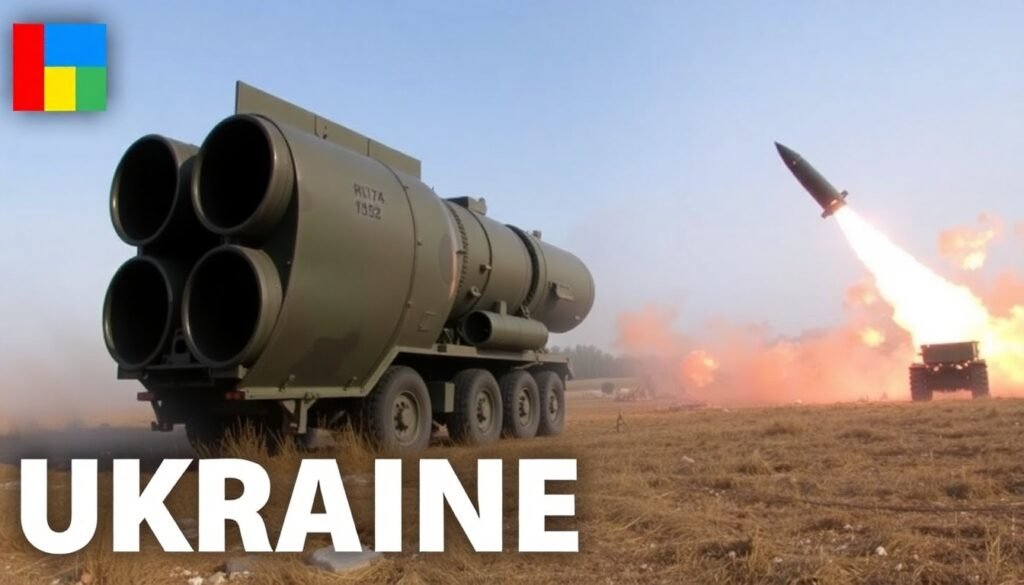
Ukraine War: Russia escalates the Ukraine war with an experimental hypersonic missile strike.
Oreshnik missile attack reveals NATO’s vulnerabilities amid growing geopolitical tension.
Ukraine and the West scramble to respond to Russia’s new missile capabilities.
Expert analysis on the conflict’s potential to reshape global power dynamics.
KYIV, Ukraine — The war in Ukraine, now nearing 33 months, has reached a startling new phase with Russia’s deployment of the experimental hypersonic ballistic missile, Oreshnik. Striking the city of Dnipro, the missile’s debut sent ripples of alarm across the globe—from Kyiv to Brussels, Washington to London. The attack, seen as a turning point in the conflict, raises questions about the balance of power in this war and NATO’s readiness to respond to such advanced weaponry.
A Decisive Moment
In a grim acknowledgment of the unfolding crisis, Polish Prime Minister Donald Tusk described the conflict as entering a “decisive phase” with “dramatic dimensions.
” Russia’s use of the Oreshnik missile underscores its evolving military strategy, combining technological superiority with psychological warfare. The hypersonic missile, capable of traveling at Mach 11 and equipped with six non-nuclear warheads, represents a quantum leap in Russia’s arsenal. Each warhead releases six submunitions, making it capable of massive destruction while avoiding traditional air defenses.
Russia fired new ballistic missile at Ukraine, Putin says
Ukraine’s parliament was forced to cancel its session in response to the attack, while heightened security enveloped central Kyiv. The move demonstrates the psychological impact of Russia’s escalating measures, aiming to undermine both Ukraine’s governance and Western solidarity.
A Warning to the West:
Russian President Vladimir Putin justified the missile strike as retaliation for Ukraine’s use of U.S.- and British-supplied long-range missiles, which have targeted Russian territory. In a televised address, Putin issued a stark warning: Western air defense systems are powerless against the Oreshnik.
Has Putin Already Won the Russia-Ukraine War?
“This missile demonstrates our capabilities. No one else has such weapons,” Putin said, hinting at the broader strategic implications. While not intercontinental, the Oreshnik’s power rivals that of a nuclear strike when used en masse, according to Russian military officials.
Putin’s rhetoric amplifies fears of an arms race. He stated that testing and production of the missile would continue, emphasizing its combat readiness. General Sergei Karakayev, head of Russia’s Strategic Missile Forces, echoed these claims, suggesting the missile’s conventional warheads could replicate the devastating effects of nuclear weapons.
The West’s Response:
In NATO capitals, the reaction was one of alarm and urgency. Emergency talks are set to take place, with Western leaders grappling with the strategic implications of Russia’s technological leap. The missile’s capabilities render many existing defense systems ineffective, raising critical questions about NATO’s preparedness.
US Naval Amphibious Group Completes Gibraltar Transit, Heads Home After Seven-Month Deployment

Hungarian Prime Minister Viktor Orbán, often sympathetic to Moscow, raised concerns about the extent of U.S. involvement in Ukraine’s military operations. He argued that the sophistication of Western-supplied weapons implies direct American assistance, potentially escalating tensions further.
Meanwhile, Czech Foreign Minister Jan Lipavský condemned the missile strike as an “escalatory step,” calling for enhanced air defense systems to protect Ukrainian civilians. “This attack is not just about Ukraine; it’s a message to all of Europe,” Lipavský warned during a joint press conference with his Ukrainian counterpart.
A Shift in Military Dynamics:
The Oreshnik missile marks a significant shift in the dynamics of the Russia-Ukraine war. Previously, the focus had been on conventional weapons and drone technology. Ukraine, for instance, has developed a robust drone industry, using inexpensive, domestically produced drones for both frontline operations and strikes deep into Russian territory.
However, Russia’s hypersonic missile introduces a new layer of complexity. Unlike drones or traditional missiles, hypersonic weapons combine speed, maneuverability, and precision, making them almost impossible to intercept. Their deployment could force NATO and Ukraine to reconsider their strategies, including the need for new missile defense systems capable of countering such threats.
The Broader Geopolitical Landscape:
The Oreshnik missile not only shifts the military landscape in Ukraine but also sends a broader geopolitical message. Russia’s display of technological might serves as a warning to NATO and its allies about the risks of further involvement in the conflict.
China and other global powers are likely watching closely. The missile’s deployment could influence Beijing’s military ambitions, particularly regarding hypersonic technology. For the United States, the challenge is twofold: deterring Russian aggression while ensuring that NATO remains united in the face of a rapidly evolving threat.
The Human Cost
While the missile strike on Dnipro did not result in fatalities, it caused significant disruption. The targeted area, including the Pivdenmash plant, a key military facility, was cordoned off, with residents resorting to dark humor on social media about the missile’s name, “Oreshnik,” meaning hazelnut tree.
Elsewhere in Ukraine, Russian attacks continued unabated. In Sumy, Iranian-designed Shahed drones killed two people and injured 13 in a residential district. These drones, filled with shrapnel elements, underscore the brutal nature of the conflict, where civilian areas are increasingly under siege.
Analysis: A Turning Point or a Bluff?
The deployment of the Oreshnik missile raises several critical questions:
Technological Superiority vs. Strategic Overreach:
While the missile showcases Russia’s technological advancements, its use also signals desperation. Hypersonic missiles are expensive and complex to produce. If Russia overextends its resources in producing such weapons, it could weaken its broader military capabilities.
NATO’s Strategic Dilemma:
The attack exposes vulnerabilities in NATO’s missile defense systems, forcing the alliance to prioritize technological innovation. However, developing countermeasures to hypersonic missiles is a long-term endeavor, leaving NATO in a precarious position in the short term.
Psychological Warfare:
Beyond its physical impact, the Oreshnik missile serves as a psychological weapon, aiming to instill fear and uncertainty. The cancellation of Ukraine’s parliamentary session highlights the missile’s effectiveness in disrupting governance and morale.
Global Implications:
The Oreshnik’s deployment could accelerate an arms race, with other nations rushing to develop similar capabilities. This raises the stakes for global security, particularly as hypersonic technology blurs the line between conventional and nuclear warfare.
Future Prospects:
For Ukraine, the path forward involves bolstering its air defense systems and maintaining international support. President Volodymyr Zelenskyy continues to rally Western nations for military and financial aid, emphasizing the broader implications of the conflict for global security.
For NATO, the challenge lies in adapting to a rapidly changing battlefield. The alliance must invest in next-generation defense systems while maintaining unity among its members, particularly as political divisions threaten to weaken its resolve.
For Russia, the use of the Oreshnik missile is a gamble. While it demonstrates military strength, it also risks further isolating the Kremlin on the world stage. Sanctions, economic strain, and a protracted conflict could undermine Putin’s long-term strategy.
Conclusion:
The Oreshnik missile’s deployment marks a pivotal moment in the Russia-Ukraine war. It showcases the evolving nature of modern warfare, where technological advancements can tilt the scales in unexpected ways.
As NATO and Ukraine grapple with this new threat, the global community must consider the broader implications for international security. Whether this escalation leads to a resolution or further chaos remains to be seen, but one thing is clear: the stakes have never been higher.