


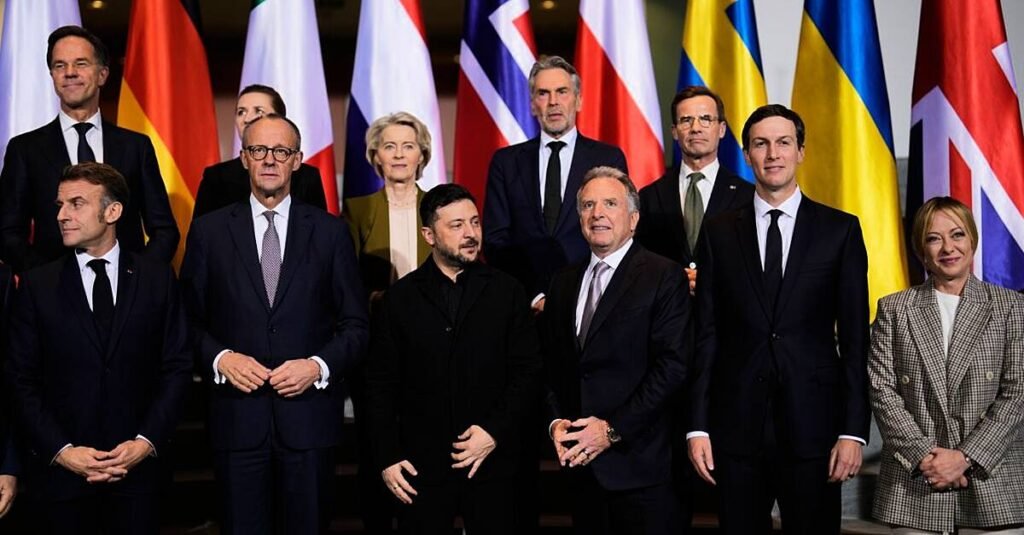
- Ukraine war negotiators in Paris have finalized a draft for a U.S.-led ceasefire monitoring system.
- Binding commitments for the Ukraine war peace deal include military support, intelligence, and logistical aid.
- U.S. envoys Steve Witkoff and Jared Kushner represent President Trump’s “America First” pivot at the summit.
- The “Coalition of the Willing” aims to deploy a multinational force to deter future Russian aggression.
As the geopolitical clock ticks toward a historic resolution, the Ukraine war has entered its most decisive diplomatic phase. In the wake of dramatic U.S. interventions in Venezuela and shifting focus toward Cuba and Iran, the Paris Summit on January 6, 2026, has emerged as the staging ground for a final peace framework.
The following 700-word analysis explores the intricate “Coalition of the Willing” draft and the new global hierarchy established by the Trump administration.
Trump’s Cuba Comments Signal a New Phase of Hemispheric Tension
The Paris Summit: A Final Pivot for the Ukraine War
The Ukraine war, now entering its fourth year of full-scale conflict, is undergoing a radical transformation. At the Élysée Palace today, President Volodymyr Zelenskyy joined over 27 world leaders and high-level U.S. envoys, including Steve Witkoff and Jared Kushner, to finalize a draft that would effectively end active hostilities.
Russia-Ukraine war: List of key events, day 1,412
This diplomatic sprint is no coincidence. It follows the U.S. military’s recent capture of Nicolás Maduro in Venezuela—a move that signaled to the world that the Trump administration has deprioritized the European theater in favor of “Hemispheric Defense.” With Cuba and Iran now squarely in the crosshairs of U.S. foreign policy, the pressure on Kyiv and its European allies to reach a “90% ready” peace deal has become absolute.
The “Coalition of the Willing” Peace Draft
The cornerstone of this new peace architecture is a draft statement from the so-called Coalition of the Willing. Unlike previous vague assurances, this document outlines “politically and legally binding commitments” designed to act as a surrogate for NATO membership—a goal Kyiv has been forced to pause to secure U.S. backing.
Ukraine War 2026 Update: European Backbone: How Countries Are Arming Ukraine Through Local Production Amid Trump’s Peace Efforts and Russian New Year Drone Strikes
According to the leaked draft, the security guarantees include:
- Binding Military Commitments: Allies pledge the use of military capabilities, intelligence, and logistical support if Russia launches a future attack.
- U.S.-Led Ceasefire Monitoring: A verification mechanism led by the United States will oversee the line of contact, ensuring any breaches are met with immediate diplomatic and economic consequences.
- A Multinational Peace Force: Plans for a stabilization force of up to 30,000 troops, primarily from France, the UK, and Turkey, are being discussed to bolster deterrence on the ground.
- The “Don-roe” Doctrine Influence: The Trump administration’s shift toward a corollary of the Monroe Doctrine has left Europe to shoulder more of the burden for regional security, with the U.S. providing “intelligence and logistics” rather than boots on the ground.
Zelenskyy’s Strategic Recalibration
President Zelenskyy’s presence in Paris, following a major leadership reshuffle in Kyiv including the appointment of Kyrylo Budanov as Chief of Staff, reflects a pragmatism born of necessity. By accepting the draft “in letter and spirit,” Ukraine is betting that binding Western guarantees—even outside of NATO—are better than a perpetual war of attrition while U.S. attention drifts to the Caribbean and the Persian Gulf.
While Moscow has yet to publicly signal its acceptance of these “binding” terms, the unified front presented in Paris by Kushner, Witkoff, and European leaders like Macron and Merz suggests that the window for negotiation is closing. For the first time since 2022, the roadmap to ending the Ukraine war is no longer a set of possibilities, but a structured, enforceable legal draft.