


- Kyiv’s hopes for tough new U.S. sanctions on Russia are fading.
- Only 18% of Ukrainians believe the war could end this year.
- Moscow holds about 20% of Ukraine’s territory and shows no signs of compromise.
- Zelenskiy’s UNGA speech may rally attention, but not alter the war’s trajectory.
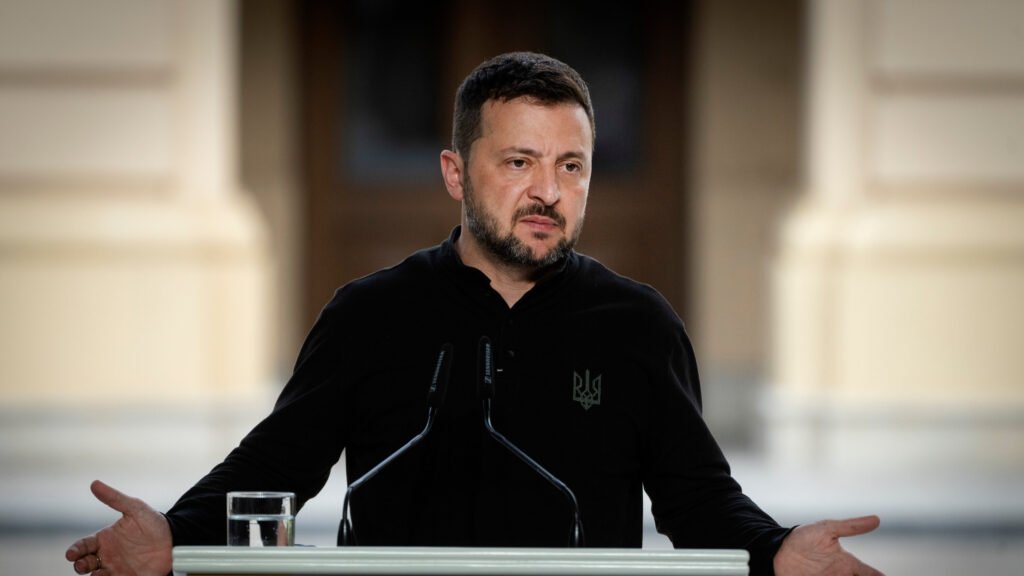
Ukrainian President Volodymyr Zelenskiy will step onto the stage of the United Nations General Assembly this week with a familiar mission: rallying support for his embattled nation. He will meet allies, deliver another impassioned speech, and sit down with U.S. President Donald Trump in the hope of persuading Washington to tighten the screws on Moscow. Yet for all the symbolism and choreography of the trip, few in Kyiv believe it will produce the breakthrough needed to shift the trajectory of the war.
Nearly three years into Russia’s invasion, the conflict has settled into a grinding stalemate, and Ukraine’s expectations from its allies have tempered. The dream of sweeping new American sanctions designed to cripple Russia’s war economy is fast receding. Zelenskiy arrives in New York with lessons learned from a disastrous White House visit in February, when tensions with U.S. officials spilled into the open. This time, Kyiv is taking a quieter, more pragmatic approach, focusing on sustaining what support it has rather than demanding the impossible.
That realism stems from a sobering truth: Ukrainians themselves no longer expect quick results. A survey by the Kyiv International Institute of Sociology found that only 18 percent of citizens believe hostilities could end this year. Most foresee a long war that demands more reliance on Ukraine’s own resources. And in many ways, the government is already adapting. Analysts who once prepared sanction targets for Western governments now work directly with the military to identify Russian positions for drone strikes.
Meanwhile, Moscow has been racking up diplomatic points. President Vladimir Putin received a red-carpet welcome at a summit with Trump in Alaska earlier this year, a reminder that Washington’s priorities are shifting. Russia’s oil industry continues to churn out profits despite sanctions, and Moscow has even warned of possible output cuts after Ukraine’s drone attacks on refineries and ports.
In New York, Zelenskiy will likely press Trump for new measures against Russia while also championing Ukraine’s “Crimea Summit,” designed to reassert Kyiv’s refusal to cede the peninsula in any future peace talks. Yet expectations are modest. Even Kyiv’s own diplomats are blunt about what this week means. “New York is the platform every September. It’s a super important place to be,” First Deputy Foreign Minister Sergiy Kyslytsya said. “But you will never have easy solutions to conflicts of this magnitude.”
The battlefield situation underscores that grim assessment. Russian forces, though slowed, have made incremental gains in eastern Ukraine. They continue to press on Pokrovsk, a city that has withstood months of assaults but remains under threat. Moscow now claims 700,000 troops are deployed along the front, while it still controls roughly a fifth of Ukraine’s territory. Kyiv insists it will never accept a settlement that ratifies those land grabs, leaving little room for genuine negotiation.
Zelenskiy’s real focus is on securing steady flows of weapons and intelligence rather than expecting dramatic policy shifts. A new U.S. mechanism allowing Ukraine to directly purchase American arms has already provided missiles for Patriot air defenses and HIMARS rockets, with over $2 billion in financing secured. U.S. intelligence-sharing—temporarily disrupted earlier this year—has resumed, helping Ukrainian forces withstand Russia’s advances. As one European diplomat put it, Ukraine’s footing is “less desperate” than before, even if it is still precarious.
Former Ukrainian defense minister Andriy Zagorodnyuk summed up Kyiv’s outlook bluntly: Russia is not interested in deterrence or compromise. Ukraine’s task, he said, is simply to deny Russia victory. That means bleeding Russian forces, disrupting their economy with long-range drone strikes, and holding the line until conditions shift. It is a strategy of survival, not of swift victory.
Some in Kyiv are even more skeptical of the diplomatic theater. A former senior official, speaking anonymously, dismissed the weeks of trilateral talks between Europe, the United States, and Ukraine over post-war security guarantees. “It’s like a ritual dance,” he said. “It would be very beautiful if people weren’t being killed.” His view echoes a growing sentiment: that the war’s outcome will be decided less in conference rooms than on the battlefield.
In that sense, Zelenskiy’s appearance at the UNGA is less about changing the course of the war than about maintaining visibility. For Ukraine, visibility itself has strategic value—it keeps allies engaged, ensures Kyiv is not forgotten amid global crises, and signals defiance to Moscow. But the substance, for now, remains elusive.
When Zelenskiy takes the podium in New York, the applause will be loud and the rhetoric stirring. Yet once the lights fade, Ukraine will return to the same hard realities: an enemy dug in, allies hesitant to escalate further, and a war that grinds on with no clear end in sight.