


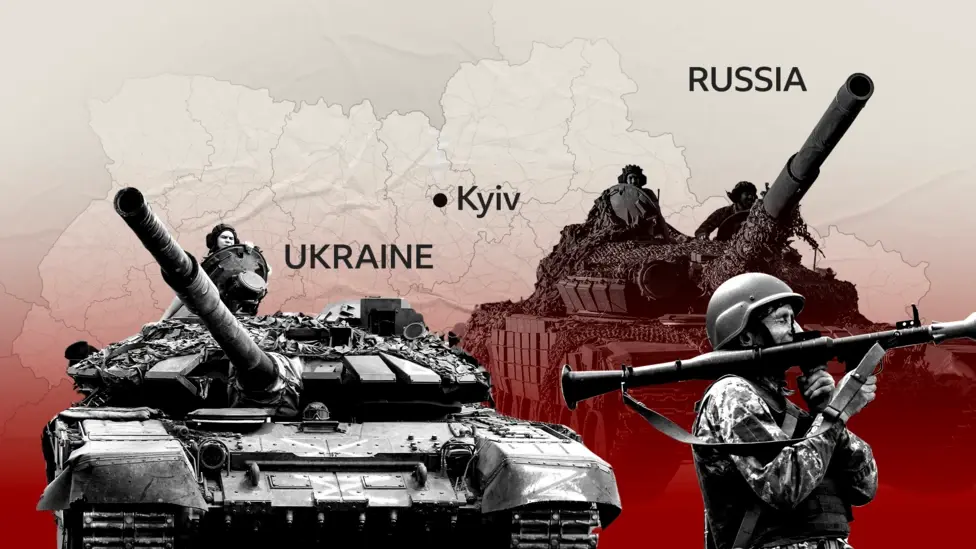
- Ukraine is negotiating legally binding security guarantees with the U.S. and Europe.
- Trump’s pledge to defend Ukraine hailed as a “breakthrough moment.”
- Europe divided on troop deployments and financial commitments.
- Kyiv escalates drone strikes on Russian refineries to offset battlefield disadvantages.
After nearly four years of unrelenting war, Kyiv has grown accustomed to living on the edge. The sound of drones humming overhead, the crack of artillery at night, and the constant rotation of soldiers to and from exhausted front lines have all become part of daily life. Yet behind the scenes, away from the mud and the trenches, Ukraine is quietly mounting a new offensive—this time in the diplomatic corridors of Washington, Brussels, and Berlin.
First Deputy Foreign Minister Sergiy Kyslytsya, a seasoned negotiator who has represented Ukraine in both Istanbul talks with Russia and in tense backroom huddles with allies, revealed this week that Kyiv is making “real progress” in securing legally binding security guarantees. These negotiations, he insisted, are not about hopeful rhetoric but about concrete commitments: foreign troops on Ukrainian soil, guaranteed flows of weapons and finance, and intelligence-sharing on par with NATO operations.
It is an ambitious agenda, shaped by the battlefield reality. Ukraine cannot match Russia in manpower or industrial capacity. Instead, it seeks to hardwire Western support into its defense infrastructure, ensuring that Moscow faces not a lone adversary but a coalition of democracies capable of deterring aggression long after the current war ends.
The Trump Factor
The most striking element of Kyslytsya’s remarks was his reference to U.S. President Donald Trump’s recent pledge to participate in Ukraine’s defense. For Kyiv, this was not just another statement but a “breakthrough moment.”
For months, Trump’s position on Ukraine has been ambiguous, at times questioning the scale of U.S. aid. His new commitment signals a recalibration—and for Ukrainian officials, it offers hope of moving beyond temporary aid packages to long-term security guarantees enshrined in law. U.S. logistical muscle, air support, and intelligence remain unmatched, and Kyiv knows its European allies, however well-meaning, cannot substitute for American capabilities.
Yet Trump’s promise also carries political weight. It will need to survive scrutiny in Congress, where war fatigue and domestic priorities loom large. Binding guarantees are not handshakes or photo opportunities—they must pass through legislatures, demanding difficult conversations with voters already weary of economic strain and high energy prices.
Europe’s Dilemma
Kyslytsya did not mince words when addressing Europe. If European leaders are serious about their own security, he argued, they must explain to their citizens why Ukrainian resilience is directly tied to the safety of Paris, Warsaw, and Berlin.
It is a hard sell. Across Europe, inflation has bitten deep, and protests against rising living costs have become commonplace. Convincing voters that their economic pain is the price of protecting European sovereignty is a political gamble. But Ukraine’s warning is stark: if Russia is not stopped in Donbas, it will not stop at the Dnipro either.
This tension defines Europe’s dilemma. Nations like Poland and the Baltic states, with fresh memories of Soviet rule, see Ukraine’s fight as existential. Others, particularly in southern Europe, hesitate at the idea of deploying troops or committing vast sums for Kyiv’s defense. The result is a patchwork of offers—some financial, some military, others limited to training and humanitarian aid.
A War of Attrition
The backdrop to these diplomatic maneuvers is a battlefield stalemate that is slowly tilting in Russia’s favor. Russian forces continue grinding advances in the east and south, threatening strategic towns that form the backbone of Ukraine’s defense network. Exhaustion is visible on both sides, but Ukraine is outnumbered, and its supply lines remain vulnerable.
To offset these disadvantages, Kyiv has escalated its long-range drone campaign deep into Russia’s energy infrastructure. Strikes on refineries and oil depots remain Ukraine’s most effective weapon against Moscow’s war machine, disrupting supplies and raising costs for the Kremlin.
Still, Kyslytsya acknowledged an uncomfortable truth: Russia’s economy is unlikely to collapse. Sanctions and strikes may cause pain, but Putin’s regime has weathered hardship before. Ukraine’s best hope is to increase that pain to a point where the Kremlin’s appetite for endless war diminishes.
The Road Ahead
Ukraine’s push for binding security guarantees is not just about survival today—it is about shaping tomorrow. For a nation weary from war, polls show growing support for a ceasefire, yet most Ukrainians remain unwilling to concede land to Russia. Diplomats like Kyslytsya must bridge this gap, pursuing peace without sacrificing sovereignty.
What is at stake is not only Ukraine’s independence but also the credibility of Western security architecture. If Europe and the United States cannot defend a democracy on NATO’s doorstep, what message does that send to adversaries elsewhere?
For now, Ukraine fights on two fronts: one of mud, drones, and artillery, and another of treaties, parliaments, and promises. Both are equally crucial. And in the words of a weary Ukrainian officer I once met near Bakhmut, “We cannot hold the line forever. But with real guarantees, maybe our children won’t have to fight the same war again.”