


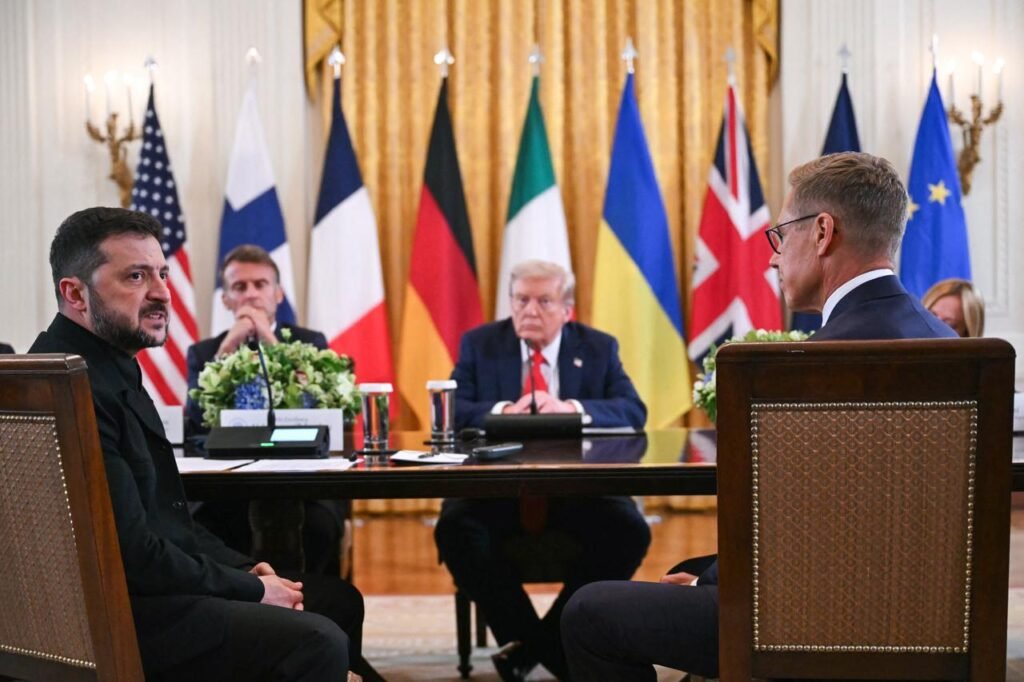
- Ukraine seeks legally binding security guarantees from U.S. and Europe.
- Deputy FM Sergiy Kyslytsya hails Trump’s defense pledge as a “breakthrough moment.”
- European allies called “best friends,” but U.S. support remains the backbone.
- Ukraine continues deep drone strikes on Russian energy targets to pressure Moscow.
- Kyiv warns Europe that Russian aggression won’t stop at Ukraine’s borders.
- Public exhaustion grows in Ukraine, but polls show no support for giving up land.
KYIV – Ukraine’s First Deputy Foreign Minister Sergiy Kyslytsya has delivered one of the most candid assessments yet of Kyiv’s war diplomacy, admitting that Ukraine is nowhere close to quick-fix solutions and instead is banking on legally binding security guarantees from the United States and European allies to build a credible deterrent against Russia.
In an interview this week, Kyslytsya confirmed that Ukraine has entered a phase of “intense and pragmatic” talks with roughly 30 countries, crafting what officials describe as a security safety net designed to keep Russia at bay long after the guns fall silent. The diplomat, who has been at the frontlines of both negotiations with Western allies and earlier talks with Moscow in Istanbul, called U.S. support “a breakthrough moment,” especially after President Donald Trump’s recent public pledge to participate in Ukraine’s defense.
But beneath the optimism lies a darker reality: Ukraine’s forces remain outmanned and outgunned on the battlefield, and the war—now dragging into its fourth year—shows no signs of ending soon. Russian troops are pressing forward in eastern and southern sectors, inching closer to strategic towns. Kyiv’s only asymmetric edge has come through long-range drone strikes on Russian oil refineries and energy infrastructure, operations that have rattled Moscow’s economy but failed to force Vladimir Putin into serious negotiations.
Europeans as “Best Friends,” But America as Backbone
Kyslytsya’s words reveal a brutal truth: while European allies may call themselves Ukraine’s “best friends,” it is American intelligence, air cover, and logistical muscle that remains indispensable. Kyiv is lobbying not just for weapons, but for treaty-bound commitments—agreements that would have to pass through national parliaments to ensure they carry the weight of law.
“We are making progress,” he said, but quickly added that each ally has its own red lines. Some are ready to provide financial guarantees and intelligence-sharing, others are weighing whether to commit troops on the ground. “If Europeans are serious about their security, they have to take difficult decisions,” he warned.
The deputy minister did not shy away from a stark warning: Putin will not stop at Ukraine’s borders. For European leaders, he argued, the debate is no longer about charity for Kyiv but survival of the continent itself.
Between Exhaustion and Resolve
Inside Ukraine, public sentiment reflects both resilience and fatigue. Polls show rising support for a potential ceasefire, yet overwhelming opposition to Russian demands for territorial concessions. Kyslytsya acknowledged this paradox, but insisted that security guarantees are precisely what would give Ukraine space to negotiate without surrender.
The “coalition of the willing,” as he described it, is being forced to grapple with a reality they long avoided: Russia’s war is not just about Ukraine, it is a test of the entire post-Cold War order. The slow pace of Western decision-making, he implied, risks emboldening Moscow to redraw borders by force.
Strategy of Attrition
Ukraine’s military strategy now hinges on sustaining pressure where it can—deep strikes against Russia’s energy lifeline. These drone attacks, some reaching more than 1,000 miles inside Russian territory, are Kyiv’s single most effective tool to inflict pain. “We will continue as long as Russia is not showing any meaningful signs of readiness to negotiate,” Kyslytsya said.
He dismissed the notion that Russia would collapse economically, but argued that increasing pain could erode the Kremlin’s ability to finance the war. “The pain for the regime should increase,” he stressed.
A Fragile Future
As Ukraine battles both exhaustion at home and hesitation abroad, the road ahead looks perilous. Whether through bilateral pacts with Washington or a multilateral treaty involving European capitals, Kyiv is gambling its survival on securing iron-clad guarantees.
For now, the negotiations continue in back rooms across European capitals, while Russian artillery pounds Ukrainian frontlines. In the end, the question remains the same: will the West put its promises into law—or leave Ukraine to fight alone?