


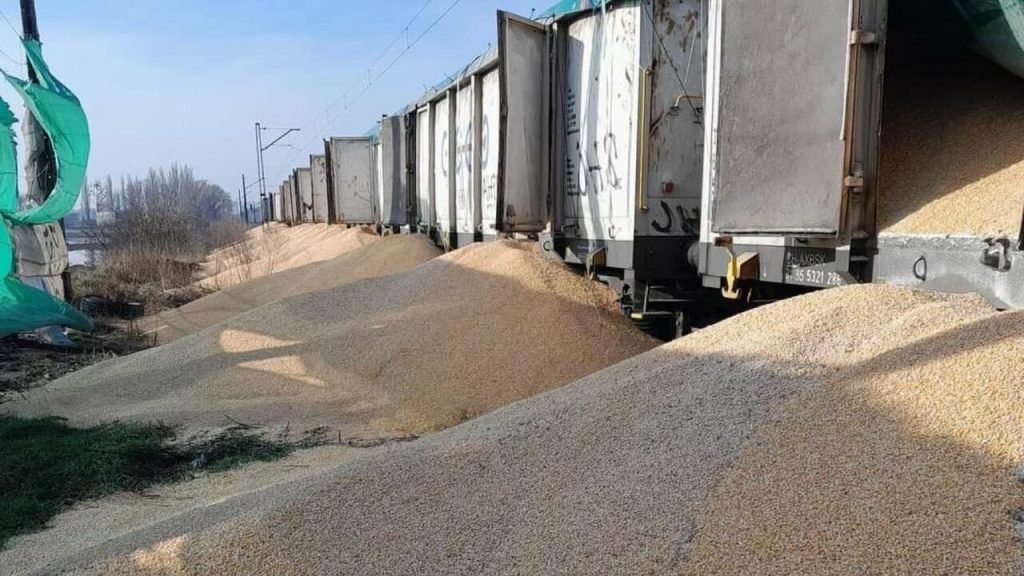
- 160 tons of Ukrainian grain were destroyed at a Polish railway station.
- The incident highlights tensions between Ukraine and Poland regarding agricultural trade.
- Destruction raises concerns about global food security.
- The international community urges dialogue and cooperation to address the issue.
In the heartland of Eastern Europe, where fertile Ukrainian plains stretch like a golden tapestry, the echoes of conflict reverberate far beyond the battlefield. On a recent Sunday morning, amidst the ongoing war, news of a seemingly unrelated incident sent shockwaves through the region: 160 tons of Ukrainian grain lay destroyed at a Polish railway station. This seemingly isolated event, however, serves as a stark reminder of the interconnectedness of the world and the complex web of challenges arising from geopolitical tensions.
The destroyed grain, a symbol of Ukrainian agricultural resilience in the face of war, became a focal point of simmering tensions between Ukraine and Poland, two nations traditionally bound by shared history and cultural ties. Deputy Prime Minister Oleksandr Kubrakov’s condemnation, laced with accusations of “impunity and irresponsibility,” resonated with the anguish of Ukrainian farmers who had poured their sweat and labor into cultivating the now-wasted harvest.
Switzerland decides To Impose Ban On Hamas
The incident, however, cannot be understood solely through the lens of Ukrainian grievances. Polish farmers, grappling with their own economic struggles, perceived the influx of Ukrainian grain as an unfair competition, threatening their livelihoods. Their frustration manifested in a series of protests, including blocking border crossings and spilling Ukrainian produce, highlighting the intricate interplay of economic anxieties and national interests.
While the Polish government officially condemned the destruction of the grain, acknowledging the legitimacy of its farmers’ concerns, the incident lays bare the complexities of navigating international trade amidst geopolitical turmoil. The war in Ukraine has disrupted global supply chains, impacting agricultural production and exacerbating pre-existing food security concerns in many parts of the world. Ukraine, a major exporter of wheat and other essential commodities stands at the center of this precarious situation.
The destruction of the grain, therefore, transcends a mere bilateral issue and carries significant global ramifications. Analysts and international organizations warn of potential domino effects, with disruptions to Ukrainian agricultural exports potentially triggering food shortages in vulnerable regions. This underscores the urgent need for international cooperation and coordinated efforts to ensure the stability of global food supplies, particularly in the face of ongoing geopolitical uncertainties.
While both nations share a common interest in countering Russian aggression, the grain standoff exposes the fragility of their partnership and the potential for economic anxieties to overshadow shared strategic objectives.
Moving forward, fostering open communication, addressing underlying economic concerns, and exploring mutually beneficial trade solutions will be crucial in strengthening their bilateral ties and navigating the complex geopolitical landscape.
The path toward a sustainable resolution necessitates a multifaceted approach. On the one hand, immediate measures are required to address the specific issue of Ukrainian grain exports to Poland. This could involve establishing clear regulations, facilitating smoother border crossings, and exploring alternative transportation routes to minimize disruptions.
Furthermore, fostering dialogue and establishing channels for open communication between Ukrainian and Polish authorities, as well as representatives of the agricultural sectors in both countries, is crucial. Addressing the concerns of Polish farmers through targeted economic support and exploring potential avenues for collaboration, such as joint marketing initiatives or knowledge exchange programs, could foster a sense of shared prosperity and mitigate the perception of unfair competition.
On a broader level, the incident underscores the need for a global response to the looming food security crisis. International organizations, such as the Food and Agriculture Organization (FAO), play a vital role in coordinating efforts, providing technical assistance to affected regions, and facilitating dialogue between nations to ensure equitable access to essential food supplies. Additionally, promoting sustainable agricultural practices and investing in long-term solutions to improve food production and distribution systems are crucial steps towards building resilience against future disruptions.
In conclusion, the destruction of Ukrainian grain in Poland serves as a potent symbol of the far-reaching consequences of geopolitical conflicts. It highlights the intricate interplay of economic anxieties, national interests, and global food security concerns. Moving forward, a multi-pronged approach, encompassing immediate solutions, bilateral dialogue, and international cooperation, is essential to navigate this complex situation and ensure a stable and sustainable future for all stakeholders involved. As the world grapples with the challenges arising from the Ukraine war, the lessons learned from the shattered grains in Poland offer valuable insights for building a more resilient and cooperative global community.