


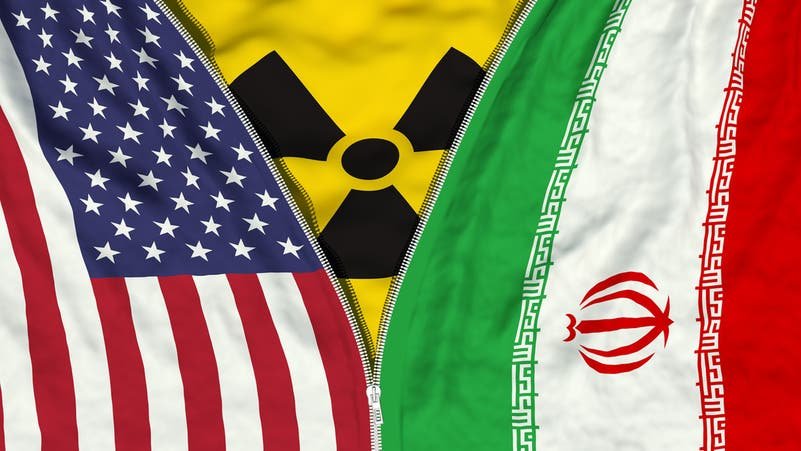
- US Iran military escalation intensifies as Washington deploys over 150 aircraft across Europe and the Middle East.
- Iran launches major IRGC military drills along Gulf coast amid rising threat perceptions.
- Israeli officials warn a potential U.S. strike on Iran could be imminent.
- Analysts warn conflict could disrupt global energy markets and trigger regional retaliation.
Fresh satellite imagery, corroborated by flight-tracking intelligence and defense logistics data, is revealing what senior military planners increasingly describe as a “structural repositioning” of American power across Europe and the Middle East — a deployment pattern that resembles pre-conflict shaping operations rather than routine deterrence.
For policymakers, intelligence chiefs, and strategic planners watching closely, the question is no longer whether tensions between Washington and Tehran are escalating, but whether the United States is quietly preparing the operational architecture for a sustained military campaign against Iran.
According to defense assessments cited by The Washington Post, more than 150 U.S. aircraft — including strategic bombers, aerial refueling platforms, intelligence surveillance assets, and fighter squadrons — have been redeployed to forward bases stretching from Eastern Europe to the Gulf region.
Analysts note that the pace and scale of these deployments mark one of the largest American force concentrations in the theater in decades, surpassing even several phases of the post-ISIS military posture.
The timing is critical. The surge accelerated immediately after the February 17 collapse of the second round of U.S.–Iran nuclear negotiations, which ended without agreement on enrichment limits, sanctions relief mechanisms, or missile program constraints. Diplomacy stalled; military signaling intensified.
Simultaneously, signals emerging from Israel suggest alignment rather than coincidence. An Israeli official quoted by Yedioth Ahronoth described a potential U.S. strike on Iran as having “become imminent,” while Israel’s Channel 12 reported that Tel Aviv has finalized contingency planning for the opening of multiple operational fronts — a development that underscores regional expectations of escalation rather than de-escalation.
For Gulf capitals, European security establishments, and Asian energy markets, these developments represent more than military maneuvering. They indicate a strategic inflection point capable of reshaping the geopolitical balance of the Middle East and the global economic order.
A REGION SHIFTING INTO WAR FOOTING
Iran’s response has been swift and unmistakably military.
State media confirmed that the Islamic Revolutionary Guard Corps (IRGC) has launched the “Combined 1404” military exercises across Iran’s southern coastline along the Gulf. The drills involve drones, naval units, amphibious assault systems, ground-to-sea missile batteries, rocket artillery, and armored formations — a full-spectrum rehearsal designed not for symbolic messaging but for asymmetric defense and retaliation scenarios.
IRGC Ground Forces Commander Mohammad Karami stated that the exercises were being conducted “based on existing threats,” a phrase widely interpreted by intelligence analysts as direct acknowledgment of anticipated Western or Israeli military action.
The geographic focus of the drills is particularly telling. Iran’s southern theater encompasses the Strait of Hormuz — the world’s most critical maritime energy chokepoint through which roughly one-fifth of global oil supplies transit daily. Any disruption there would instantly reverberate through global markets, threatening energy security from Europe to East Asia.
Military analysts warn that Tehran does not need to defeat the United States militarily to impose strategic costs. Instead, Iran’s doctrine emphasizes calibrated escalation: targeting shipping routes, energy infrastructure, regional bases, and allied vulnerabilities to transform a limited strike into a prolonged geopolitical crisis.
TRUMP’S STRATEGIC CALCULUS — AND ITS RISKS
Inside Washington, confidence reportedly remains high that President Donald Trump can control escalation following a limited strike. This confidence reflects a pattern that has shaped Trump’s foreign policy decision-making throughout his presidency: warnings from the foreign policy establishment followed by norm-breaking action that produces fewer immediate consequences than predicted.
The relocation of the U.S. embassy to Jerusalem in 2018, participation in Israeli strikes against Iranian nuclear infrastructure, and aggressive regime pressure campaigns elsewhere reinforced a belief within the White House that decisive action produces deterrence rather than chaos.
But senior Iran specialists argue that current conditions differ fundamentally from previous crises.
Iran today perceives an existential threat rather than episodic pressure. Israeli operations have weakened Tehran’s regional proxy network, degraded air defenses, and damaged elements of its nuclear infrastructure. More critically, Iranian leadership believes that future strikes may repeatedly target its ballistic missile program — the core pillar of its deterrence architecture and regime survival strategy.
This perception alters Tehran’s risk tolerance.
Rather than absorbing limited attacks and de-escalating, Iran may calculate that failing to respond decisively would invite continuous strikes designed to gradually dismantle the Islamic Republic’s defensive capacity.
In strategic terms, deterrence stability is eroding.
THE SELF-MADE STRATEGIC TRAP
Washington’s negotiating posture has also contributed to the current impasse. U.S. demands reportedly include sweeping concessions: elimination of uranium enrichment capabilities and dismantlement of Iran’s missile program — conditions Tehran interprets as equivalent to strategic surrender.
Iranian negotiators historically favor incremental, technical agreements built on reciprocal concessions. By contrast, the current American approach emphasizes symbolic, large-scale diplomatic victories — a mismatch that has widened negotiating gaps.
Iran’s Supreme Leader Ali Khamenei faces internal political constraints that further narrow compromise space. Domestic hardliners increasingly frame negotiations as existential capitulation, making even modest concessions politically dangerous.
The result is a classic escalation trap: diplomacy fails because demands are maximalist; military pressure rises because diplomacy fails.
WHAT RETALIATION COULD LOOK LIKE
Iran cannot win a conventional war against the United States. But it retains powerful asymmetric options capable of reshaping the conflict environment.
Strategic planners identify several likely retaliation pathways:
- Targeting U.S. regional bases, where approximately 40,000 American troops remain stationed across the Middle East.
- Attacks on maritime shipping via proxy forces or naval harassment operations in the Red Sea and Gulf.
- Missile strikes against Israeli urban centers, stretching Israeli air defense systems.
- Energy infrastructure sabotage targeting Gulf oil facilities — a tactic previously demonstrated during the 2019 Abqaiq attack in Saudi Arabia.
- Selective disruption of the Strait of Hormuz, triggering immediate spikes in global oil prices.
Even limited success in these areas could generate economic shockwaves, political pressure in Western capitals, and fractures among U.S. allies dependent on energy stability.
A DIFFERENT STRATEGIC MOMENT
Perhaps the most dangerous variable is ambiguity. Unlike past crises triggered by specific Iranian actions, the current escalation appears driven by strategic signaling, negotiation frustration, and political calculations rather than an immediate battlefield provocation.
From Tehran’s perspective, this ambiguity suggests that future strikes could occur at any time for domestic or diplomatic reasons — incentivizing a harsher initial response to reestablish deterrence credibility.
Meanwhile, U.S. domestic opinion remains cautious. Polling indicates strong public skepticism toward another Middle Eastern war, complicating Washington’s ability to sustain prolonged conflict should American casualties occur.
THE GLOBAL STAKES
For Europe, already grappling with security pressures linked to Ukraine, a Middle East conflict would strain NATO logistics and energy markets simultaneously. For China and India, energy supply disruptions threaten economic stability. For Gulf monarchies, escalation risks transforming economic modernization projects into frontline vulnerabilities.
In intelligence circles, the emerging consensus is sobering: the current military buildup resembles not merely coercive diplomacy but contingency preparation for escalation management after a strike has already occurred.
History shows that wars often begin not with declarations but with incremental decisions that narrow political off-ramps until confrontation becomes structurally inevitable.
The United States and Iran now appear perilously close to that threshold.
Whether this moment becomes another episode of controlled brinkmanship — or the opening chapter of a wider regional conflict — may depend less on military capability than on whether either side still believes restraint serves its survival.