


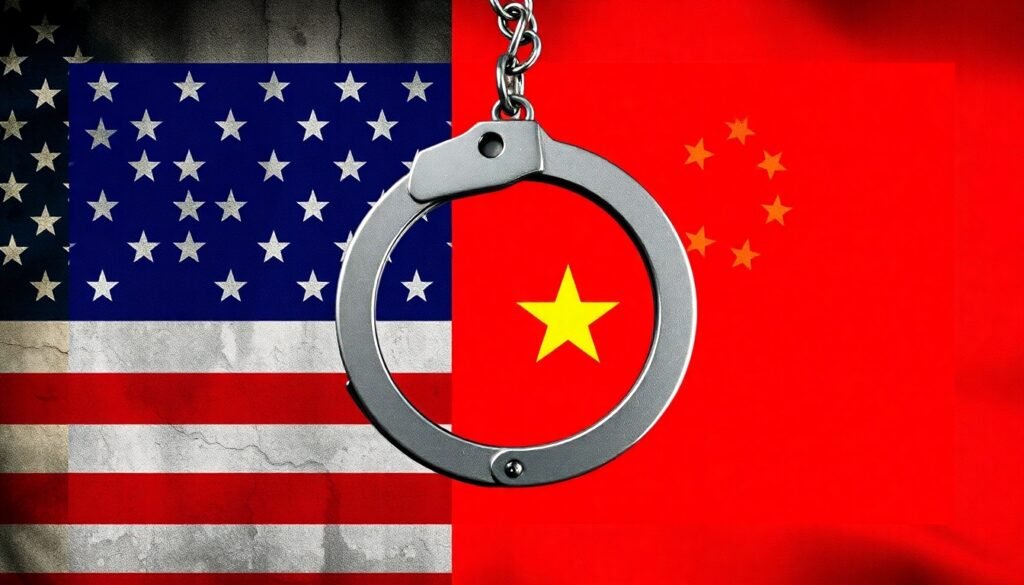
In a dramatic escalation of the United States’ efforts to curb the transfer of military expertise to geopolitical rivals, Australia’s Attorney General confirmed the extradition of former US Marine Daniel Duggan to face charges in the United States. This move underscores the growing determination of the US and its allies to monitor their former military personnel and prevent them from aiding adversaries such as China in acquiring advanced military knowledge and technology.
Daniel Duggan, an Australian citizen and former US Marine pilot, was accused of training Chinese military pilots in violation of a US arms embargo. His arrest in New South Wales in 2022 followed a 2017 US grand jury indictment. The charges allege Duggan conspired with others, including the Test Flying Academy of South Africa (TFASA), to provide defense services to China. If convicted, Duggan faces up to 65 years in prison.
Australia’s Attorney General, Mark Dreyfus, announced Monday that Duggan “should be extradited to face prosecution for the offences of which he is accused.” In his statement, Dreyfus emphasized that Duggan had been given an opportunity to contest the extradition decision, and all material submitted in his defense had been considered.
US and Allies Target Former Military Personnel
The US Marine case has highligted a complex U.-China rivaalry once again. The extradition of Duggan is not an isolated incident. It is part of a broader strategy by the US and its allies to prevent their former military personnel from transferring advanced skills to nations like China. This reflects an ongoing effort to counteract Beijing’s attempts to close the technological and tactical gap with Western militaries. The crackdown also signals to ex-servicemen that engaging with adversarial nations will not be tolerated, no matter how lucrative the opportunities might seem.
The arrest coincides with tightening security measures under agreements like AUKUS—a trilateral pact among the US, UK, and Australia formed in 2021 to bolster Pacific defenses against China’s growing assertiveness. In the wake of AUKUS, the UK and Australia have implemented stricter regulations governing the post-service activities of their military personnel.
Is Trump Opening a New Front Against China Over the Panama Canal?
Duggan’s arrest highlights the US strategy to deprive it’s rivals including China and Russia of access to cutting-edge military expertise and technology. By targeting individuals like US Marine Duggan, the US sends a strong message that such actions will not go unnoticed or unpunished.
The Geopolitical Context: US-China Rivalry
The extradition of Duggan takes place against a backdrop of escalating tensions between the US and China. The two nations are locked in a fierce rivalry across multiple domains—economic, technological, and military. Central to this geopolitical struggle is the issue of Taiwan, a self-governing island that Beijing considers a breakaway province. The US, while adhering to its “One China” policy, maintains unofficial ties with Taiwan and is its largest arms supplier.
Ex-US fighter pilot accused of training Chinese military will be extradited to the United States
In recent years, China’s aggressive military posturing near Taiwan has raised alarms in Washington. The US has responded by increasing arms sales to Taiwan and conducting freedom-of-navigation operations in the Taiwan Strait, moves that Beijing views as provocative. This tug-of-war over Taiwan has brought the Pacific region to the brink of conflict, making the prevention of military expertise leakage to China a critical priority for the US.
China’s rapid military modernization has been fueled in part by its ability to acquire foreign expertise and technology. Analysts believe that Beijing actively seeks out former military personnel from Western nations to bolster its military capabilities. Duggan’s alleged activities fit into this broader pattern, making his case a focal point in the US-China rivalry.
Family Outcry and Allegations of Sinophobia
Duggan’s family has strongly criticized the Australian government’s decision to extradite him, calling it “inhumane.” His wife, Saffrine Duggan, expressed shock and heartbreak, accusing the government of abandoning an Australian citizen and failing to protect their family. “We feel abandoned by the Australian Government and deeply disappointed that they have completely failed in their duty to protect an Australian family,” she said in a statement.
US-China Power Struggle: Strategies, Challenges, and the Global Fallout
Duggan’s legal team has also framed the case as a politically motivated act of “Sinophobia.” His lawyer, Bernard Collaery, argued that the charges against Duggan serve as a warning to other Western pilots. In an 89-page submission to the Australian government, Collaery stated, “The extradition request is a brutal response to US Sinophobia.” He further warned that sending Duggan to the US could constitute a “profound moral and foreign policy failure” by Australia.
Duggan’s defense maintains that his training activities in China were strictly civilian, aligned with the country’s burgeoning aviation sector. However, US authorities allege that Duggan knowingly violated export controls and arms embargoes by providing military training to Chinese pilots.
US Marine’s Legal and Political Implications
Duggan’s legal troubles began when he renounced his US citizenship in 2016, a move that his lawyers argue complicates the case. His citizenship was retroactively backdated to 2012 to reflect when he became an Australian citizen, but US authorities claim that he was already in violation of export laws years earlier.
Exclussive: U.S. and Iraqi Forces Prepare for Major Offensive Against Iran-Backed Militants
The legal proceedings against Duggan raise questions about the extraterritorial reach of US laws and the role of allies like Australia in enforcing them. Critics argue that the extradition undermines Australia’s sovereignty by prioritizing US geopolitical interests over the welfare of its citizens. Supporters of the extradition, however, view it as a necessary step to uphold international arms control agreements and counter the growing threat posed by China.
AUKUS and the Pacific Power Play
The Duggan case also underscores the significance of the AUKUS pact in shaping security policies across the Pacific. Under AUKUS, the US, UK, and Australia have committed to sharing advanced technologies and coordinating their defense strategies to counter China. The pact has drawn criticism from Beijing, which views it as an effort to encircle China and curb its rise as a global power.
Since the signing of AUKUS, Australia has tightened its laws governing former military personnel. These measures aim to prevent ex-servicemen from inadvertently or deliberately aiding China’s military modernization. Similar steps have been taken in the UK, where authorities have launched investigations into former Royal Air Force pilots accused of training Chinese pilots.
The Duggan case serves as a stark example of how AUKUS and similar initiatives are shaping the strategic calculus of the US and its allies. By restricting access to military expertise, these nations aim to maintain their technological edge and deter aggression from adversarial powers.
Implications for US-China Relations
The extradition of Duggan is likely to exacerbate tensions between the US and China, further straining a relationship already fraught with conflict. Beijing is expected to view the case as another example of US efforts to contain China’s rise. The move also highlights the broader struggle for dominance in the Indo-Pacific, where both nations are vying for influence.
For the US, the case of US Marine represents a critical test of its ability to enforce arms embargoes and protect its military secrets. By prosecuting Duggan, the US hopes to deter others from engaging in similar activities and reinforce its commitment to safeguarding national security.
Verdict On US Marine
The extradition of US Marine Mr. Daniel Duggan is more than just a legal proceeding; it is a microcosm of the broader geopolitical struggle between the US and China. The case underscores the lengths to which the US and its allies will go to prevent the transfer of military expertise to adversarial nations. It also highlights the role of international alliances like AUKUS in shaping security policies and countering the influence of rising powers like China.
As the world watches the outcome of US Marine Mr. Duggan’s trial, the case serves as a reminder of the high stakes involved in the US-China rivalry. With tensions over Taiwan and other flashpoints continuing to simmer, the battle for technological and military dominance shows no signs of abating.