


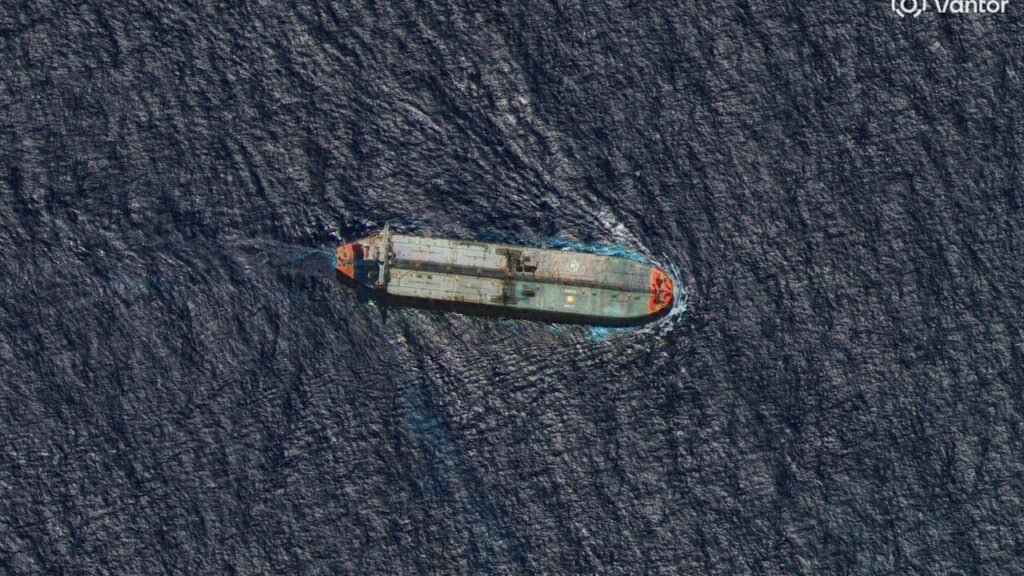
- The Venezuela oil blockade of December 2025 has reduced exports from nearly 1 million bpd to an estimated 258,000 bpd.
- China, the primary buyer of Venezuelan crude, has condemned the blockade as “international piracy” but has avoided military escalation.
- Brent crude remains stable near $60/bbl due to global oversupply, despite the naval interdictions in the Caribbean.
- The legal dispute centers on unpaid arbitration awards from the Venezuela oil nationalization of 2007, involving billions owed to ExxonMobil and ConocoPhillips.
As of December 21, 2025, the Caribbean has become the flashpoint of a high-stakes geopolitical drama. Following President Donald Trump’s declaration of a “total and complete blockade” on sanctioned Venezuelan oil tankers, the global energy market and international diplomatic circles are bracing for a systemic shift.
The move, ostensibly aimed at recovering billions in assets from the Venezuela oil nationalization era, has forced a direct confrontation between Washington’s “Maximum Pressure” campaign and Beijing’s energy security.
The Pricing Paradox: Why Oil Isn’t Spiking
Despite the naval interdiction of major tankers like the Skipper, global oil prices have remained remarkably resilient. Brent crude settled at approximately $60.47 per barrel this week—a modest rise of roughly 1%, but far from the catastrophic spike many predicted.
The reason lies in a two-tiered market. Venezuela’s 900,000 barrels per day (bpd) constitutes only about 1% of global supply. Furthermore, much of this crude is already sold at steep discounts (roughly $15 below Brent) to specific buyers. Because the global market is currently oversupplied, the removal of “sanctioned” barrels primarily affects “teapot” refiners in Asia rather than the broader consumer index in the West.
The China-US Tussle: Will Beijing Blink?
China is the linchpin in this conflict. As the recipient of over 76% of Venezuelan oil exports, Beijing has the most to lose. The interception of a second China-bound cargo on Saturday has escalated the rhetoric, with Chinese Foreign Minister Wang Yi labeling the blockade “unilateral bullying.”
READ MORE: https://www.washingtonpost.com/world/2025/12/20/venezuela-oil-nationalization-expropriation/
Will China Intervene? While the blockade disturbs China’s supply, a military response in the Caribbean is unlikely. Beijing is currently practicing “strategic caution,” opting for diplomatic and economic maneuvers rather than a naval showdown.
ALSO READ? U.S. Siege of Venezuela Gives China a Golden Opening to Reclaim Taiwan
China can temporarily offset losses by increasing imports from Russia or Iran, but it is using the blockade as a legal lever at the UN to condemn U.S. “piracy” and protect its long-term investments in Latin America.
The Ownership Controversy: “Getting Back” the Oil
President Trump’s claim that Venezuela “stole” American oil and land refers to the expropriations under Hugo Chávez in 2007. This has led to speculation about whether the U.S. could physically reclaim oil-rich regions like the Orinoco Belt.
1. The Legal Reality of “Theft”
Legally, the U.S. government never owned Venezuelan land. Private American companies like ExxonMobil and ConocoPhillips held extraction rights (concessions). When these were nationalized, it created a debt rather than a territorial claim. ConocoPhillips alone holds a $12 billion claim, which is currently being partially settled through the court-ordered auction of Citgo, PDVSA’s U.S.-based refining arm.
2. Sovereignty vs. Seizure
The possibility of the U.S. “taking back” a region of Venezuela is virtually non-existent under modern international law. Such a move would be classified as an act of war and an annexation. Instead, the Trump administration appears to be using the Venezuela oil blockade as a form of “collateral seizure.” By stopping the oil at sea, they are effectively holding the country’s revenue hostage until Caracas pays the multi-billion dollar arbitration awards owed to U.S. firms.
3. The Future of Production
If a regime change or a settlement occurs, analysts suggest Venezuela could return to 2 million bpd within two years. However, this would require an estimated $15 billion to $20 billion in new investment—ironically, the very “American sweat and ingenuity” the administration claims was stolen decades ago.