


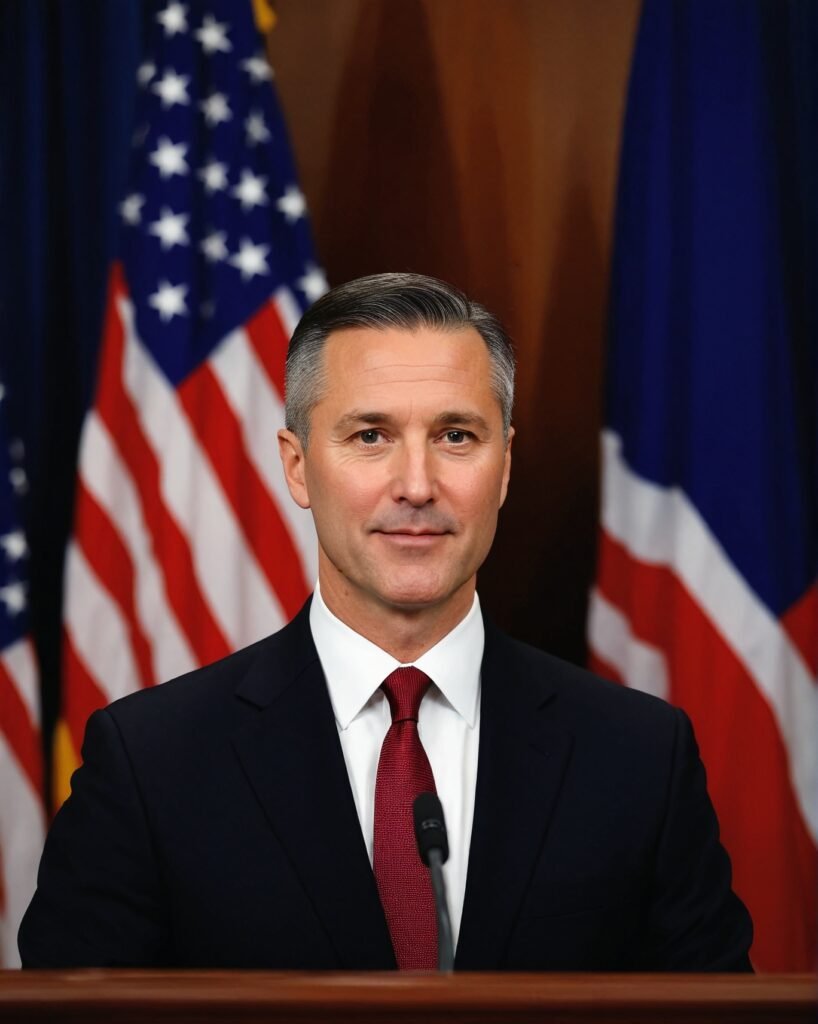
- Waltz’s Background: Former Green Beret and decorated combat veteran, Waltz brings extensive military and policy experience to his role as national security adviser.
- Waltz on China: Known for his strong anti-China stance, Waltz has consistently advocated for policies that counter Beijing’s global influence and human rights abuses.
- Waltz’s Legislative Influence: As a congressman, Waltz has chaired the House Armed Services Subcommittee on Readiness and served on key intelligence and foreign affairs committees.
- Waltz’s Vision for the Military: Committed to strengthening U.S. military readiness, Waltz aims to prioritize combat effectiveness and focus on security over “woke” policies.
Former President Donald Trump has signaled his intention to adopt a firmer stance on China if he secures a second term, selecting U.S. Representative Michael Waltz, an outspoken China hawk and retired Army National Guard officer, to serve as his national security adviser. This decision underscores Trump’s strategy to counter China’s growing influence and presents the U.S. with a defense team poised to confront perceived threats from Beijing.
Background and Concerns in Washington
The choice to appoint Waltz, currently a three-term congressman from Florida and the first Green Beret elected to the House, was not without political risks. Trump’s reliance on a member of the House has raised concerns among GOP leaders on Capitol Hill. Pulling a member from the House could create a vacancy in the GOP-held chamber, necessitating a potentially challenging special election, especially as Republicans work to preserve their narrow majority. Despite these concerns, Trump appears committed to leveraging Waltz’s experience to address the international challenges of a second Trump administration.
News Analysis: Pakistan-China Strengthen Ties Amid Rising Security Concerns
Waltz, known for his aggressive foreign policy stance, is expected to navigate complex crises, from the U.S. commitment to Ukraine amid Russia’s aggression to the implications of the growing alliance between Moscow and Pyongyang. His role will also encompass addressing persistent turmoil in the Middle East, including heightened threats from Iranian proxies and ongoing conflicts involving Israel, Hamas, and Hezbollah.
Waltz’s Perspective on China and Global Security
A prominent Trump ally, Waltz has consistently championed a hardline approach toward China. He previously led efforts to protest the 2022 Winter Olympics in Beijing, highlighting China’s human rights abuses against the Uighur Muslim minority and linking China’s secrecy around the COVID-19 pandemic to broader concerns over transparency. His track record positions him as a vocal critic of Beijing’s policies and an advocate for strategies aimed at containing China’s global ambitions.
Trump asks Rep. Mike Waltz, China hawk, to be his national security adviser
Waltz’s stance aligns with Trump’s focus on revamping national security by countering what both have referred to as a “woke” culture within the U.S. military. In various statements, Waltz has voiced his commitment to “winning wars” and criticized recent diversity and equity programs in the military, claiming that such programs detract from its combat readiness. This outlook reflects Trump’s own emphasis on restructuring the military to prioritize combat effectiveness over social reform, signaling potential shifts in military policy if Trump returns to office.
Military Experience and Legislative Accomplishments
Michael Waltz’s credentials as a decorated combat veteran lend weight to his nomination. A graduate of Virginia Military Institute and a former Green Beret, Waltz has completed multiple combat tours in Afghanistan, the Middle East, and Africa.
Trump’s Comeback: Impact on Asia: Opportunities & Risks
His commendable service record, which includes four Bronze Stars—two with valor—highlights a career steeped in firsthand experience of America’s foreign conflicts. Beyond his battlefield accomplishments, Waltz also served as a policy adviser at the Pentagon under Defense Secretaries Donald Rumsfeld and Robert Gates, roles that gave him insight into defense strategy from both operational and policy perspectives.
In Congress, Waltz has been influential as chairman of the House Armed Services Subcommittee on Readiness and has served on the House Foreign Affairs Committee and the Permanent Select Committee on Intelligence. His legislative background positions him well to bridge the divide between military strategy and government policy, giving Trump a key ally to support his foreign policy objectives. Notably, Waltz has criticized the Biden administration’s handling of the U.S. withdrawal from Afghanistan, arguing that poor planning led to the loss of American lives and abandoned allies. He has since called for accountability for the chaotic exit, signaling that Afghanistan’s lessons may inform his approach to future U.S. military engagements.
Trump’s Broader National Security Vision
By selecting Waltz, Trump aims to bolster his administration’s foreign policy strategy with a focus on countering China’s economic and military influence. As China’s role in global affairs grows, Trump’s re-election campaign has underscored his commitment to reducing U.S. economic dependence on Beijing and challenging Chinese territorial ambitions, particularly in the Indo-Pacific region. Waltz’s appointment signals that this commitment may extend to more assertive military strategies aimed at containing China’s regional dominance.
Waltz’s hawkish views also extend to other global security challenges. His support for Trump’s efforts to overturn the 2020 election demonstrates his alignment with the former president’s views, and his outspoken critique of what he describes as an overly politicized military has resonated with Trump’s base. This alignment could pave the way for a recalibration of U.S. military priorities, with a stronger emphasis on traditional defense preparedness over social reforms.
Implications for U.S.-China Relations and Global Security
The nomination of Waltz is a clear message to Beijing that a second Trump administration would prioritize a more adversarial relationship with China. Waltz’s track record suggests he may advocate for expanding the U.S. military presence in the Asia-Pacific region, reinforcing alliances with countries such as Japan, South Korea, and the Philippines. His recent statements indicate a strong opposition to China’s handling of internal and regional issues, from the militarization of the South China Sea to human rights abuses within its borders.
As Trump’s potential security adviser, Waltz would play a central role in shaping U.S. policy responses to China’s growing influence, working to counter its military buildup and economic initiatives. This approach aligns with Trump’s stance of “America First” but with a sharper focus on international military engagement than in Trump’s first term. With Waltz’s expertise, Trump’s team would likely emphasize a strategy that combines military readiness with diplomatic maneuvering to deter Chinese expansion.
Looking Forward
If Trump’s nomination of Waltz signals anything, it’s a shift toward an uncompromising approach to U.S. national security, with China at the top of the agenda. According to Richard Goldberg, a former National Security Council member, Waltz’s blend of combat experience and legislative savvy makes him “well-positioned to help the President put out those fires,” underscoring his potential impact on Trump’s global policy framework.
As international tensions grow, particularly in Asia and the Middle East, Trump’s pick of Waltz suggests a prioritization of seasoned, security-focused leadership aimed at confronting emerging threats with forceful and direct policies.