


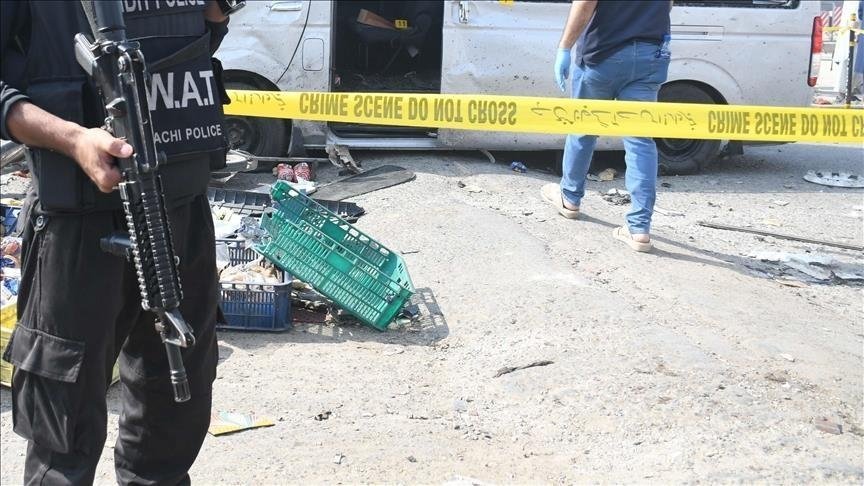
- A deadly IED blast in Wana killed 2 policemen and injured 22, including civilians.
- The attack targeted police patrols and demonstrates terrorists’ continued threat.
- Pakistan has lost nearly 100,000 citizens in the fight against terrorism.
- Military operations extend into Afghanistan to dismantle militant sanctuaries.
- Pakistan’s efforts have global significance in countering transnational terrorism.
Wana, South Waziristan – In the latest escalation of militancy in Pakistan, an improvised explosive device (IED) struck the bustling Rustam Bazaar area of Wana on Saturday afternoon, killing two policemen and injuring 22 others, including four law enforcement personnel and 18 civilians.
According to local police, the attack occurred around 5:00 pm, targeting officers on routine patrol. Investigators believe the explosive material had been strategically planted near the main entrance of a supermarket and detonated either via remote control or a timed mechanism. Wana Circle Deputy Superintendent of Police (DSP) Asghar Ali Shah described the blast as a deliberate attempt to target law enforcement personnel while civilians were present, underscoring the terrorists’ disregard for human life.
Immediate response efforts were launched by local residents, police, and emergency teams. The injured were rushed to the district headquarters hospital, where medical staff worked under emergency conditions to stabilize victims. Dr. Jan Mohammad, the hospital’s medical superintendent, confirmed that two policemen were killed instantly, while the remaining injured, ranging from children to the elderly, received urgent medical treatment. Among the critically injured was an additional station house officer who was transferred to the South Waziristan Scouts Hospital.
Bomb Attack Kills Five, Injures Fifteen in Dera Ismail Khan, Pakistan
Khyber Pakhtunkhwa Chief Minister Sohail Afridi condemned the attack in the strongest terms. He expressed condolences to the families of the fallen and directed authorities to provide the best possible medical care to the injured. Afridi emphasized that such acts of terror could not undermine the resilience of the people or the government’s commitment to ensuring security in the region.
While this attack is a tragic event, it is emblematic of a broader and enduring challenge: Pakistan’s relentless fight against terrorism. Over the past two decades, the country has been on the frontline of the global war on terror, facing both domestic and cross-border threats. Following the 9/11 attacks and the U.S.-led intervention in Afghanistan, Pakistan emerged as a key partner in counterterrorism efforts, conducting coordinated operations to dismantle terrorist networks that threatened both regional and global security.
Terrorist attack in Karachi kills nine, several injured
The human cost of this struggle has been staggering. Estimates suggest that close to 100,000 Pakistanis – including security personnel, military officials, and civilians – have lost their lives in the fight against extremist groups. Cities, towns, and remote border regions have borne the brunt of repeated militant assaults, from suicide bombings to targeted attacks on law enforcement and critical infrastructure.
Pakistan’s security forces have not limited their efforts to domestic operations. Across the border in Afghanistan, the Pakistani military has undertaken operations to curb militancy and dismantle sanctuaries used by terrorist groups. These efforts, often conducted in coordination with international partners, aim to prevent the spread of extremism that could destabilize the wider region. Despite persistent challenges, Pakistan continues to take proactive measures to prevent terrorist networks from regrouping and to safeguard its citizens.
Analysts emphasize that Pakistan’s counterterrorism efforts are not merely a regional concern but have global significance. By confronting militant networks directly, Pakistan is helping to prevent the export of terrorism beyond its borders, protecting the international community from attacks that could have far-reaching consequences. Unlike many countries that face isolated incidents, Pakistan has endured a decades-long campaign, confronting sophisticated militant organizations while simultaneously rebuilding the social and economic fabric of affected regions.
The Wana incident underscores the enduring threat posed by extremist elements and the courage required by Pakistani security forces to confront them daily. Even as the frequency of attacks has slowed in recent years, thanks to stringent security measures, the risk remains, particularly in areas historically used by militants as operational bases. This continuing struggle highlights Pakistan’s dual role: defending its own sovereignty while contributing to the broader fight against terrorism that began in the early 2000s and continues to this day.
As international observers monitor developments in South Asia, Pakistan’s commitment to counterterrorism offers a critical perspective on global security dynamics. The sacrifices of its security forces and civilians are a reminder of the persistent challenges in stabilizing a region long plagued by extremism. The Wana blast, though a tragic event, serves as a stark illustration that the fight against terrorism is far from over, and that Pakistan remains resolute in confronting threats that endanger both national and international security.