


-
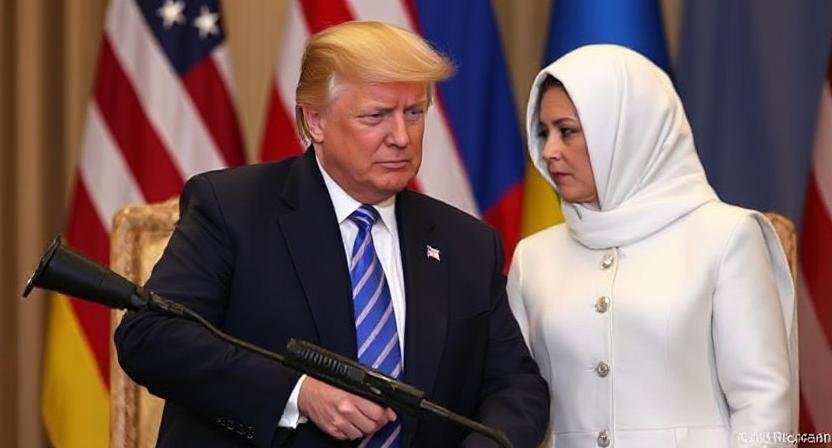
President Trump’s decision to resume weapons supply to Ukraine marks a significant shift in U.S. policy after months of suspended aid.
-
The renewed weapons supply to Ukraine includes critical air defense systems, potentially altering battlefield dynamics.
-
Kyiv welcomes the decision, emphasizing that the weapons supply to Ukraine is crucial for defending against intensified Russian attacks.
-
The future of the conflict may hinge on how sustained and robust the weapons supply to Ukraine remains in the coming months.
WASHINGTON— In a decisive shift that could alter the trajectory of the ongoing war in Ukraine, President Donald Trump announced on Monday that the United States will resume weapons shipments to Kyiv, ending months of ambiguity and frustration for Ukrainian leaders and America’s European allies.
“We have to, they have to be able to defend themselves,” Trump said during a meeting with Israeli Prime Minister Benjamin Netanyahu. “They are getting hit very hard. Now they are getting hit very hard. We’re gonna have to send more weapons.”
Trump’s statement signals the strongest indication yet that despite his well-known skepticism about America’s role in Ukraine, geopolitical realities—and persistent Russian aggression—have forced his hand.
A Tactical Pivot, a Strategic Gamble
The resumption of weapons deliveries, including Patriot air-defense systems, Himars rockets, and antiaircraft missiles, could have an immediate impact on the battlefield. Ukraine has suffered brutal missile and drone attacks in recent weeks, with Russian forces intensifying bombardments after a reported tense phone call between Trump and Russian President Vladimir Putin.
“Frankly, I’m disappointed that President Putin hasn’t stopped,” Trump admitted in rare criticism of the Russian leader.
Is Russia Winning the Ukraine War? Moscow Tightens Grip as F-16 Destroyed, West Wavers
The shift comes after the Pentagon, under Trump’s directive, conducted a review of U.S. munitions stockpiles following American strikes on Iran’s nuclear infrastructure last month. That review temporarily paused arms shipments to Ukraine, triggering alarm in Kyiv and among NATO partners. The Pentagon, in a statement Monday, confirmed that “additional defensive weapons” were being sent to ensure Ukraine’s capacity to “defend themselves while we work to secure a lasting peace.”
The Stakes for Ukraine
For Ukrainian President Volodymyr Zelensky, Trump’s apparent turnaround offers a rare glimmer of hope in a war that has ground on for more than two years at a horrific human and economic cost. After his latest conversation with Trump, Zelensky told his nation: “This was probably the best conversation in all this time, it was maximally productive. I am grateful for the readiness to help.”
READ MORE: US to send more weapons to Ukraine, Trump says
The suspended arms included vital systems like Patriot missile interceptors—arguably the most effective defense Ukraine has against Russian ballistic missile strikes—as well as Stinger missiles, grenade launchers, and precision munitions for Himars rocket systems. Their absence in recent months left Ukraine vulnerable to some of the largest Russian air assaults since the war began.
The White House National Security Council is expected to convene this week to finalize the details of the renewed arms shipments.
“We’re going to see if we can make some available,” Trump said regarding the Patriot missiles, though he added candidly, “They are very hard to get. We need them too.”
Trump’s Calculus: Pressure, Diplomacy, and Domestic Politics
Trump’s foreign policy instincts have often tilted towards transactionalism and skepticism about military entanglements abroad. He has previously blamed Zelensky for the prolongation of the war and expressed frustration over what he calls Europe’s failure to bear the lion’s share of the costs.
ALSO READ: BREAKING NEWS: Trump Administration Pauses Key Weapons Shipments to Ukraine, Citing U.S. Stockpile Concerns
His administration’s decision to lift the pause may have been influenced by multiple factors: the sheer scale of Russia’s latest missile barrages, bipartisan pressure in Congress, and the desire to prevent further battlefield losses by Ukrainian forces that could embolden Moscow ahead of any future negotiations.
Trump’s phone calls with both Zelensky and Putin last week underscore his ongoing aspiration to broker a peace deal—an outcome he believes could bolster his legacy as a statesman and peacemaker. Yet so far, Putin has refused to budge. According to the Kremlin, Trump’s appeals to end the war were met with firm rejection.
David Shimer, who previously led Ukraine policy at the National Security Council under President Biden, described the decision as necessary but insufficient. “Lifting the pause is just a necessary first step,” Shimer said. “Now is the time for this administration to go further.”
The War’s Trajectory: A Potential Turning Point?
The resumption of U.S. arms deliveries could shift the battlefield dynamics in the short term. Ukrainian forces desperately need air defenses to protect civilian infrastructure and frontline troops from Russia’s long-range missile strikes. The supply of more advanced weaponry could also help Kyiv prepare for any renewed offensive operations, especially as both sides are expected to test each other’s resolve during the coming months.
However, the question remains whether this military assistance will be enough to tilt the broader strategic balance. Russia continues to hold significant swathes of Ukrainian territory, and its economy, though under strain, has proven more resilient than many Western analysts predicted.
There are also concerns that Trump’s renewed military aid could be temporary or tied to further political calculations as the U.S. election season intensifies. His critics warn that without a clear, sustained strategy, the danger of an endless stalemate—or worse, escalation—remains.
Future Prospects: Peace or Protraction?
Trump’s ultimate goal, as he repeatedly states, is to bring the war to an end through negotiations. Yet Putin’s intransigence and Ukraine’s existential need to defend its sovereignty make any such outcome elusive.
For now, the weapons will flow again, buying Ukraine time, resilience, and perhaps a stronger negotiating position. Whether this proves to be the beginning of the end—or merely a pause before new escalation—will depend on how far Trump is willing to go and whether Moscow can be swayed.
“Peace is the goal,” Trump said Monday night, “but peace doesn’t come when one side can’t defend itself.”
The coming weeks will test whether this new course can shape not only the future of the Ukraine war but also the geopolitical balance of Europe itself.